THE ADVENTURE COLLECTIVE® · Independent discovery and booking for outdoor travel

A five-hour private walk through Paraisópolis offers direct contact with community-led art, radio and youth programs. Explore workshops, a sculptor’s stone house and a rooftop café while learning local history from association guides.
A five-hour private walk through Paraisópolis offers direct contact with community-led art, radio and youth programs. Explore workshops, a sculptor’s stone house and a rooftop café while learning local history from association guides.
You step out of a vehicle and into a maze of stairs, alleys and painted walls—Paraisópolis’ lanes immediately pull you sideways from São Paulo’s glass-and-granite skyline into a dense neighborhood that hums with rhythm and invention.
Verified experiences and guided adventures in the surrounding area.
Operated by Gregtur Turismo · São Paulo, São Paulo
You step out of a vehicle and into a maze of stairs, alleys and painted walls—Paraisópolis’ lanes immediately pull you sideways from São Paulo’s glass-and-granite skyline into a dense neighborhood that hums with rhythm and invention.
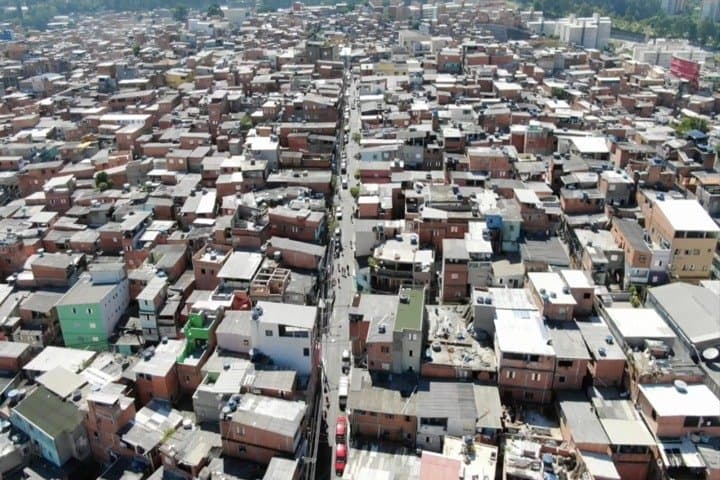
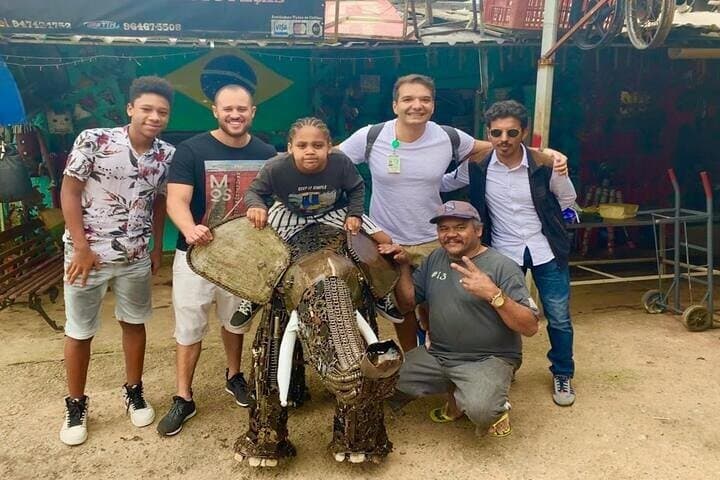
The five-hour private tour begins at the Community Association, where guides outline Paraisópolis’ growth from mid-20th-century informal settlement to a community of roughly 100,000 people, and describe projects that broker education, culture and radio outreach. Walks take you past a working radio studio, Berbéla’s metal workshop—where discarded auto parts are coaxed into sculpture—and the stone house of Estevão, nicknamed the “Gaudí of Paraisópolis,” whose mosaicked rooms climb like a built sculpture.
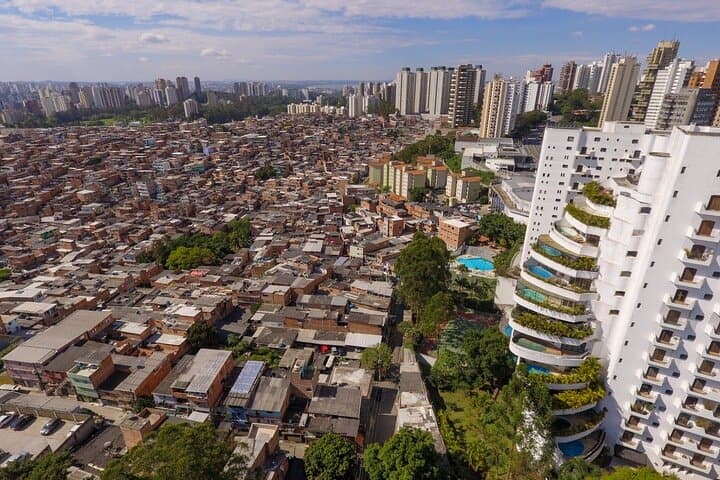
Topography here matters: steep, compacted hills and narrow drainage corridors shape the alleys and offer abrupt viewpoints back toward the affluent Morumbi district—visual contrast that frames ongoing social and spatial history.
Beyond art, you’ll see community infrastructure: Palmeirinha football field, the BECEI community library and a ballet project that doubles as a youth program. Guides and local monitors lead conversations; listening and permission are part of the visit.
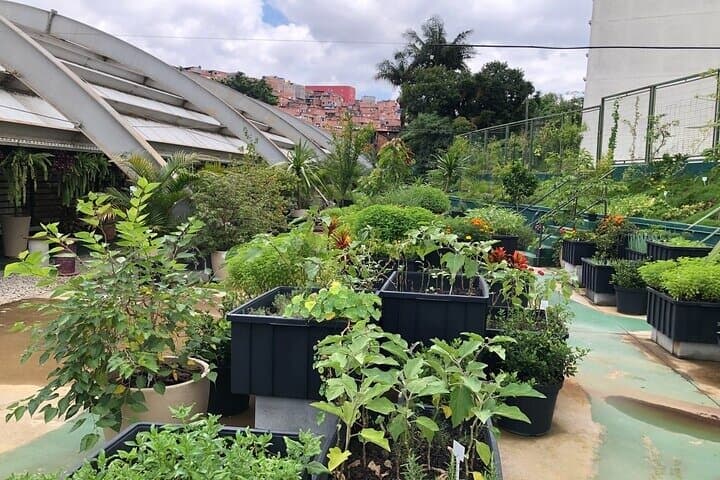
Practical notes: wear sturdy shoes for uneven steps, carry water and cash for rooftop snacks, and leave bulky bags in the vehicle. Photography is usually welcome but ask when people are nearby. The route is urban and accessible for most fitness levels, but expect multiple short stair sections and busy pedestrian traffic—move deliberately, listen to your guide, and let the neighborhood’s energy guide your pace.
easy.
5 hours.
Suitable for most people who can walk short stretches on uneven terrain and climb stairs occasionally.
The experience runs about five hours, including transport from central pick-up points and multiple 20–40 minute visits within the community.
Tours are run with licensed guides and local monitors; staying with the group and following guide directions maintains a safe visit.
Yes—artists often sell pieces at workshops or nearby stalls; bring cash for small to medium purchases and ask the guide about fair-pricing.
Children are welcome, but narrow alleys and stairs make strollers impractical; discuss specific needs with the operator at booking.
Paraisópolis grew rapidly during the mid-20th century and evolved into one of São Paulo’s largest favelas, with community associations driving cultural and social projects.
Responsible tourism supports community-led programs; avoid litter, ask before photographing residents and consider buying directly from local artisans to keep economic benefits local.
Gregtur Turismo operates guided outdoor trips and adventures with an emphasis on safety, stewardship, and memorable experiences.
You step out of a vehicle and into a maze of stairs, alleys and painted walls—Paraisópolis’ lanes immediately pull you sideways from São Paulo’s glass-and-granite skyline into a dense neighborhood that hums with rhythm and invention.
You step out of a vehicle and into a maze of stairs, alleys and painted walls—Paraisópolis’ lanes immediately pull you sideways from São Paulo’s glass-and-granite skyline into a dense neighborhood that hums with rhythm and invention.
The five-hour private tour begins at the Community Association, where guides outline Paraisópolis’ growth from mid-20th-century informal settlement to a community of roughly 100,000 people, and describe projects that broker education, culture and radio outreach. Walks take you past a working radio studio, Berbéla’s metal workshop—where discarded auto parts are coaxed into sculpture—and the stone house of Estevão, nicknamed the “Gaudí of Paraisópolis,” whose mosaicked rooms climb like a built sculpture.
Topography here matters: steep, compacted hills and narrow drainage corridors shape the alleys and offer abrupt viewpoints back toward the affluent Morumbi district—visual contrast that frames ongoing social and spatial history.
Beyond art, you’ll see community infrastructure: Palmeirinha football field, the BECEI community library and a ballet project that doubles as a youth program. Guides and local monitors lead conversations; listening and permission are part of the visit.
Practical notes: wear sturdy shoes for uneven steps, carry water and cash for rooftop snacks, and leave bulky bags in the vehicle. Photography is usually welcome but ask when people are nearby. The route is urban and accessible for most fitness levels, but expect multiple short stair sections and busy pedestrian traffic—move deliberately, listen to your guide, and let the neighborhood’s energy guide your pace.