THE ADVENTURE COLLECTIVE® · Independent discovery and booking for outdoor travel

Spend a day exploring Paradise Cave’s cathedral-like chambers and a river passage in Phong Nha. This full-day from Dong Hoi pairs easy climbs and a dragonboat ride with local history and striking karst geology.
Spend a day exploring Paradise Cave’s cathedral-like chambers and a river passage in Phong Nha. This full-day from Dong Hoi pairs easy climbs and a dragonboat ride with local history and striking karst geology.
Morning light breaks over limestone ridges as the van eases out of Dong Hoi, the road narrowing into jungle that smells of wet earth and wild ginger. By the time you reach the Paradise Cave entrance the air has cooled; a short golf-cart ride through secondary forest brings you to a climb that opens onto the cave mouth — a yawning corridor whose polished stalactites and pillars rise like an ancient hall.
Verified experiences and guided adventures in the surrounding area.
Operated by your indochina travel · Phong Nha Village, Quang Binh
Morning light breaks over limestone ridges as the van eases out of Dong Hoi, the road narrowing into jungle that smells of wet earth and wild ginger. By the time you reach the Paradise Cave entrance the air has cooled; a short golf-cart ride through secondary forest brings you to a climb that opens onto the cave mouth — a yawning corridor whose polished stalactites and pillars rise like an ancient hall.
Paradise Cave (Thien Duong) is one of Asia’s longest dry caves and part of Phong Nha–Ke Bang, a UNESCO-recognized karst landscape carved by underground rivers for millions of years. Nearby Phong Nha Cave once sheltered floating bridges and served as a clandestine hospital during the Vietnam War, its scars visible around valley rims. Geologically, the region is Permian–Triassic limestone: slow dissolution created chambers up to 72 meters high and 150 meters across.
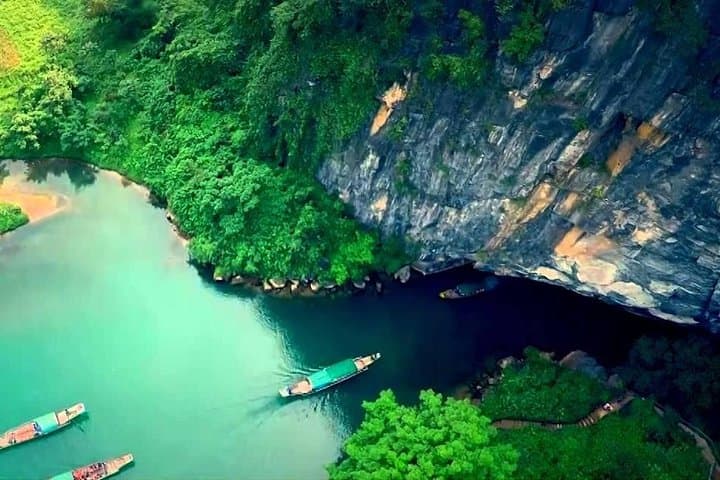
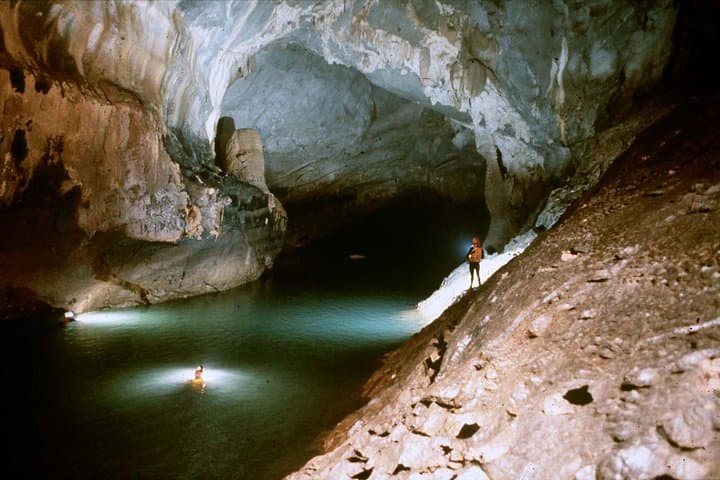
The full-day tour pairs a 1.6 km electric-cart approach and a layered stair ascent into Paradise Cave with a boat trip into Phong Nha water cave, where a calm river carries you beneath sculpted ceilings and named formations.
Practical edge: wear sturdy, grippy shoes for uneven steps and damp rock, carry a lightweight rain shell during the monsoon months, and budget ten hours for a round trip from Dong Hoi with lunch in Phong Nha village. Follow your guide’s route inside the cave, avoid touching formations (oils stop growth), and keep lights low to protect bat colonies. Expect moderate walking, some stairs and short seated boat legs—an accessible but immersive karst experience.
moderate.
9–10 hours.
Suitable for travelers in average fitness who can manage stair climbs and short walks; not strenuous but requires steady footing.
The tour runs about 9–10 hours and typically includes pickup from Dong Hoi or Phong Nha Village with hotel transfers by air-conditioned van.
Paradise Cave involves a climb to the entrance and walking on stairs and boardwalks inside; it’s generally moderate and accessible to most visitors without major mobility issues.
Yes—this full-day tour includes entrance tickets, the golf-cart transfer to Paradise Cave, and the dragonboat ride into Phong Nha Cave, plus lunch and bottled water.
Children typically can join, but this operator advises against participation for pregnant travelers and those with serious back or heart conditions; check medical suitability before booking.
Phong Nha caves were used as shelter, hospital and supply points during the Vietnam War and sit within a karst region that preserves geological records spanning hundreds of millions of years.
Phong Nha–Ke Bang is a protected geopark; stick to marked paths, avoid flash photography on wildlife, and use refillable water to reduce single-use plastic.
your indochina travel operates guided outdoor trips and adventures with an emphasis on safety, stewardship, and memorable experiences.
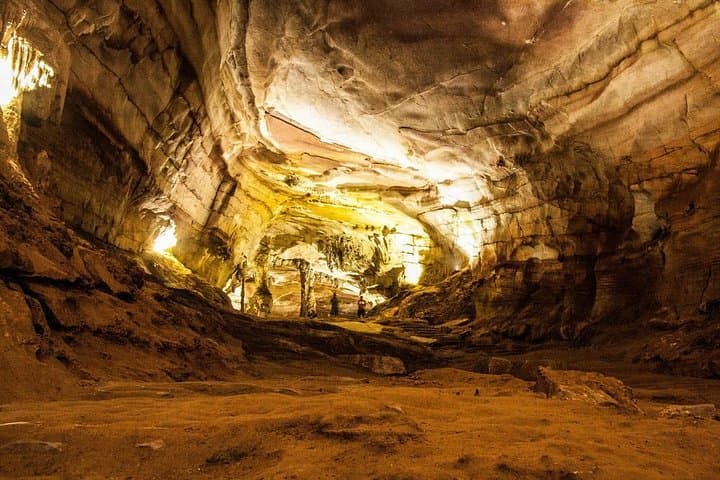
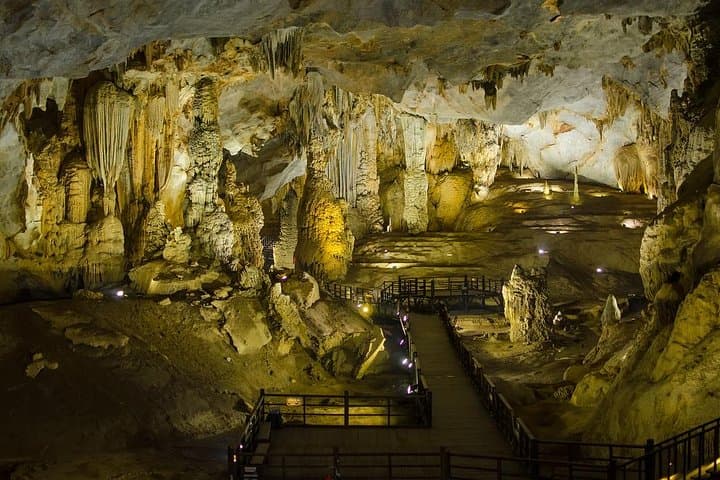
Morning light breaks over limestone ridges as the van eases out of Dong Hoi, the road narrowing into jungle that smells of wet earth and wild ginger. By the time you reach the Paradise Cave entrance the air has cooled; a short golf-cart ride through secondary forest brings you to a climb that opens onto the cave mouth — a yawning corridor whose polished stalactites and pillars rise like an ancient hall.
Morning light breaks over limestone ridges as the van eases out of Dong Hoi, the road narrowing into jungle that smells of wet earth and wild ginger. By the time you reach the Paradise Cave entrance the air has cooled; a short golf-cart ride through secondary forest brings you to a climb that opens onto the cave mouth — a yawning corridor whose polished stalactites and pillars rise like an ancient hall.
Paradise Cave (Thien Duong) is one of Asia’s longest dry caves and part of Phong Nha–Ke Bang, a UNESCO-recognized karst landscape carved by underground rivers for millions of years. Nearby Phong Nha Cave once sheltered floating bridges and served as a clandestine hospital during the Vietnam War, its scars visible around valley rims. Geologically, the region is Permian–Triassic limestone: slow dissolution created chambers up to 72 meters high and 150 meters across.
The full-day tour pairs a 1.6 km electric-cart approach and a layered stair ascent into Paradise Cave with a boat trip into Phong Nha water cave, where a calm river carries you beneath sculpted ceilings and named formations.
Practical edge: wear sturdy, grippy shoes for uneven steps and damp rock, carry a lightweight rain shell during the monsoon months, and budget ten hours for a round trip from Dong Hoi with lunch in Phong Nha village. Follow your guide’s route inside the cave, avoid touching formations (oils stop growth), and keep lights low to protect bat colonies. Expect moderate walking, some stairs and short seated boat legs—an accessible but immersive karst experience.