THE ADVENTURE COLLECTIVE® · Independent discovery and booking for outdoor travel

Descend into Paradise Cave’s cool halls for an up-close look at one of Asia’s largest cave systems—multi-colored stalactites, underground streams and a 4 km guided route that mixes lit boardwalks with personal-flashlight exploration. Practical tips and what to expect on the trail.
Descend into Paradise Cave’s cool halls for an up-close look at one of Asia’s largest cave systems—multi-colored stalactites, underground streams and a 4 km guided route that mixes lit boardwalks with personal-flashlight exploration. Practical tips and what to expect on the trail.
You step off the electric tram where sunlight thins at the cave mouth and cool, mineral-scented air rolls out to meet you. The wooden staircase drops into shadow and the first kilometer unfurls beneath your boots—stalactites drip like frozen chandeliers and a thin underground stream dares you forward.
Verified experiences and guided adventures in the surrounding area.
Operated by SOVABA TRAVEL · Phong Nha, Quang Binh
You step off the electric tram where sunlight thins at the cave mouth and cool, mineral-scented air rolls out to meet you. The wooden staircase drops into shadow and the first kilometer unfurls beneath your boots—stalactites drip like frozen chandeliers and a thin underground stream dares you forward.
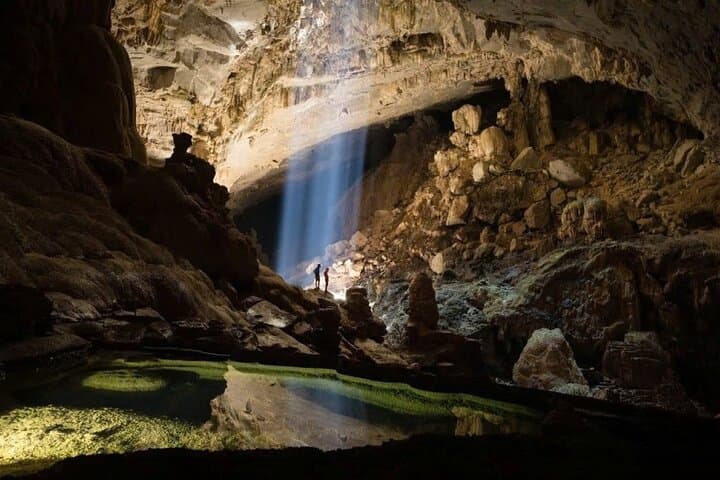
Paradise Cave (Hang Thien Duong) sits in Phong Nha–Ke Bang National Park, carved from karst limestone laid down over 400 million years. Discovered by locals and surveyed by scientists in the 20th century, its multi-colored calcite formations record long pulses of water, mineral flow and shifting air. The underground halls host their own microclimate and a sparse ecosystem adapted to low light. Local guides often weave in Quang Binh history—how these caves sheltered people and shaped trade routes—while pointing out rare flowstone features and the “Sky Well,” an open chamber that frames a shaft of muted daylight.
Expect about 4 km of guided walking (the cave system extends roughly 7 km), wooden steps, narrow passages and flat streambeds; parts are lit but the tour also uses personal flashlights. Lunch beside the subterranean stream is included, and the route can include short stretches of shallow water.
Practical notes: wear sturdy, closed shoes with grip; pack a headlamp or spare batteries; bring a light rain layer and insect repellent for the park approach. Hydrate before entry—once inside, carry only what’s essential. Aim for morning departures to avoid crowds and to take advantage of cooler cave air.
easy.
8–9 hours.
Able to walk several hours, manage stairs and short uneven sections; suitable for most fitness levels.
The guided portion you traverse is approximately 4 km total, with the larger Thien Duong system extending about 7 km; the tour balance includes transit and lunch stops.
Yes—operators mark the route as suitable for most fitness levels, though guests should be able to manage stairs and some uneven ground; check medical restrictions for those with back or heart issues.
Some sections are lit but personal flashlights or headlamps are recommended; bring your own to ensure adequate visibility in darker passages.
The standard route includes short shallow stream crossings and mud areas but does not require swimming; waterproof footwear is recommended.
Found and mapped in the late 20th century, Paradise Cave sits within Phong Nha–Ke Bang, a UNESCO-listed karst landscape whose geology influenced local settlement and wartime shelter use.
The park limits access and uses boardwalks to protect fragile calcite formations; visitors should avoid touching speleothems and follow guide directions to minimize impact.
SOVABA TRAVEL operates guided outdoor trips and adventures with an emphasis on safety, stewardship, and memorable experiences.
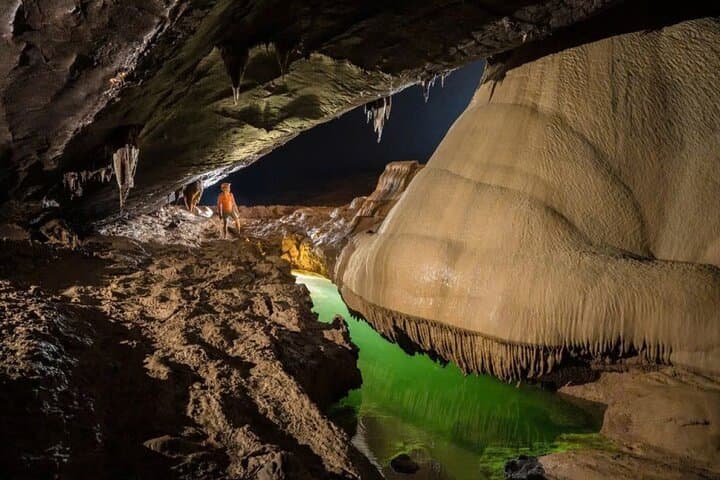
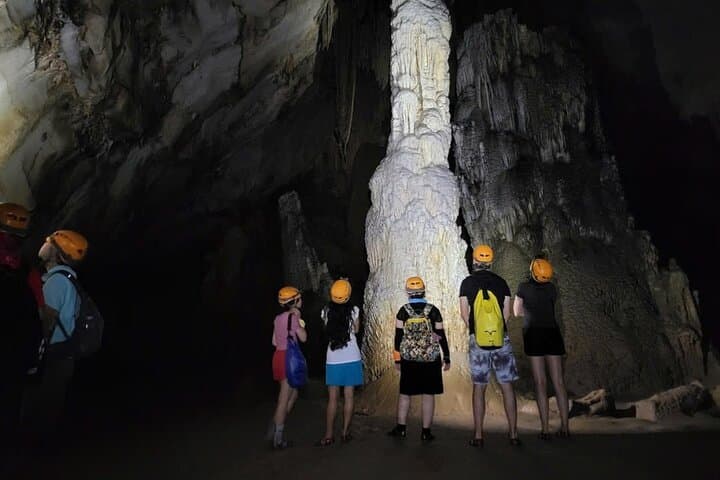
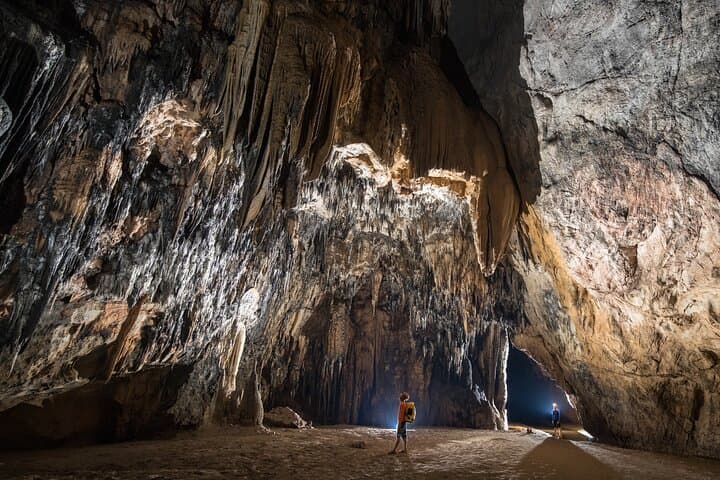
You step off the electric tram where sunlight thins at the cave mouth and cool, mineral-scented air rolls out to meet you. The wooden staircase drops into shadow and the first kilometer unfurls beneath your boots—stalactites drip like frozen chandeliers and a thin underground stream dares you forward.
You step off the electric tram where sunlight thins at the cave mouth and cool, mineral-scented air rolls out to meet you. The wooden staircase drops into shadow and the first kilometer unfurls beneath your boots—stalactites drip like frozen chandeliers and a thin underground stream dares you forward.
Paradise Cave (Hang Thien Duong) sits in Phong Nha–Ke Bang National Park, carved from karst limestone laid down over 400 million years. Discovered by locals and surveyed by scientists in the 20th century, its multi-colored calcite formations record long pulses of water, mineral flow and shifting air. The underground halls host their own microclimate and a sparse ecosystem adapted to low light. Local guides often weave in Quang Binh history—how these caves sheltered people and shaped trade routes—while pointing out rare flowstone features and the “Sky Well,” an open chamber that frames a shaft of muted daylight.
Expect about 4 km of guided walking (the cave system extends roughly 7 km), wooden steps, narrow passages and flat streambeds; parts are lit but the tour also uses personal flashlights. Lunch beside the subterranean stream is included, and the route can include short stretches of shallow water.
Practical notes: wear sturdy, closed shoes with grip; pack a headlamp or spare batteries; bring a light rain layer and insect repellent for the park approach. Hydrate before entry—once inside, carry only what’s essential. Aim for morning departures to avoid crowds and to take advantage of cooler cave air.