THE ADVENTURE COLLECTIVE® · Independent discovery and booking for outdoor travel

Move beyond Oxford’s tourist routes on a two-hour guided walk through college gardens and hidden quads. Learn botanical and literary connections—from medieval herb beds to Tolkien’s stomping grounds—while visiting at least one college interior.
Move beyond Oxford’s tourist routes on a two-hour guided walk through college gardens and hidden quads. Learn botanical and literary connections—from medieval herb beds to Tolkien’s stomping grounds—while visiting at least one college interior.
You step off a busy High Street and the soundscape changes: clipped lawns, distant bell chimes, and the low murmur of students become the guide's metronome as you move from gate to green.
Verified experiences and guided adventures in the surrounding area.
Operated by Visit Oxford Tours · Oxford, England
You step off a busy High Street and the soundscape changes: clipped lawns, distant bell chimes, and the low murmur of students become the guide's metronome as you move from gate to green.
This two-hour walking tour threads through college gardens that most visitors only see from a distance. Expect cloistered quadrangles, medieval chapel façades, and herb beds that still recall monastic medicine. The route takes in colleges with foundations from the 13th and 14th centuries—places tied to figures from Adam Smith to J.R.R. Tolkien—and it moves alongside the Cherwell, whose slow current nudges riverside willows and swans.
Geologically, Oxford sits on low limestone and clay; the compact soils and sheltered courtyards have shaped how gardens were planted and paths routed over centuries. Culturally, college gardens reflect academic life: kitchen plots and medicinal herbs once supplied halls, while formal lawns signalled status. Guides often point out links to Victorian artists and the Inklings writers when you pass Addisons Walk and Magdalen’s meadow.
Practically: the tour covers mostly paved and gravel paths with short flights of stone steps; it’s flat overall but includes uneven flagstones. Wear comfortable shoes and bring a light rain layer; the guide can arrange entry to at least one college (fees noted in the tour description) and will tailor any herbalism focus if requested in advance. Morning and late-afternoon slots reduce crowds and offer better light for photos. Respect college hours and planted beds—stay on paths and keep voices low inside quads.
easy.
2 hours.
Suitable for most fitness levels; requires steady walking on paved and gravel surfaces and short flights of steps.
Entry inside at least one college is included; some colleges (like Magdalen) may require an additional on-the-day fee that the guide will arrange.
The tour description lists wheelchair-accessible options; contact the operator in advance so the guide can plan a fully accessible route where possible.
Yes—the guide can emphasize botanical and herbal history if you note this when booking or tell the guide at the start of the tour.
Full refunds are available if you cancel at least 24 hours before departure; see your booking confirmation for details on last-minute refunds.
Many colleges date from the 13th–14th centuries; several have links to figures like Tolkien, CS Lewis, and Victorian artists who used these green spaces for study and inspiration.
Colleges manage fragile planting schemes and historic turf—stick to pathways, avoid picking specimens, and follow guide instructions to limit wear on lawns and borders.
Visit Oxford Tours operates guided outdoor trips and adventures with an emphasis on safety, stewardship, and memorable experiences.

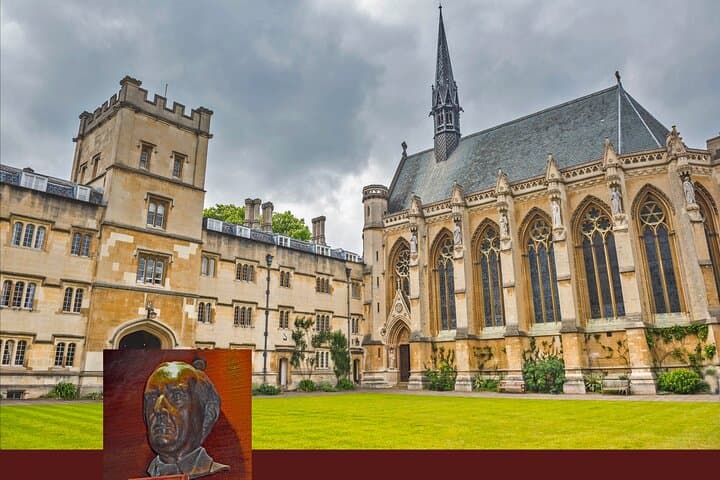

You step off a busy High Street and the soundscape changes: clipped lawns, distant bell chimes, and the low murmur of students become the guide's metronome as you move from gate to green.
You step off a busy High Street and the soundscape changes: clipped lawns, distant bell chimes, and the low murmur of students become the guide's metronome as you move from gate to green.
This two-hour walking tour threads through college gardens that most visitors only see from a distance. Expect cloistered quadrangles, medieval chapel façades, and herb beds that still recall monastic medicine. The route takes in colleges with foundations from the 13th and 14th centuries—places tied to figures from Adam Smith to J.R.R. Tolkien—and it moves alongside the Cherwell, whose slow current nudges riverside willows and swans.
Geologically, Oxford sits on low limestone and clay; the compact soils and sheltered courtyards have shaped how gardens were planted and paths routed over centuries. Culturally, college gardens reflect academic life: kitchen plots and medicinal herbs once supplied halls, while formal lawns signalled status. Guides often point out links to Victorian artists and the Inklings writers when you pass Addisons Walk and Magdalen’s meadow.
Practically: the tour covers mostly paved and gravel paths with short flights of stone steps; it’s flat overall but includes uneven flagstones. Wear comfortable shoes and bring a light rain layer; the guide can arrange entry to at least one college (fees noted in the tour description) and will tailor any herbalism focus if requested in advance. Morning and late-afternoon slots reduce crowds and offer better light for photos. Respect college hours and planted beds—stay on paths and keep voices low inside quads.