THE ADVENTURE COLLECTIVE® · Independent discovery and booking for outdoor travel

Descend into one of Africa’s most concentrated wildlife arenas on a private day trip from Arusha. This guided tour pairs sunrise departures with full-day game drives across the crater floor, where geology, Maasai culture and the Big Five coexist.
Descend into one of Africa’s most concentrated wildlife arenas on a private day trip from Arusha. This guided tour pairs sunrise departures with full-day game drives across the crater floor, where geology, Maasai culture and the Big Five coexist.
A low dawn light slices across the rim as the minivan winds toward Ngorongoro; the crater's bowl opens like a natural amphitheater below. Visitors step from the vehicle with the feel of altitude and space—the rim sits around 2,286 meters and the crater floor about 1,800 meters, a descent of roughly 400–500 meters that drops them into concentrated plains, woodlands and soda lakes.
Verified experiences and guided adventures in the surrounding area.
Operated by NaturalLand Expeditions · Arusha, Arusha Region
A low dawn light slices across the rim as the minivan winds toward Ngorongoro; the crater's bowl opens like a natural amphitheater below. Visitors step from the vehicle with the feel of altitude and space—the rim sits around 2,286 meters and the crater floor about 1,800 meters, a descent of roughly 400–500 meters that drops them into concentrated plains, woodlands and soda lakes.
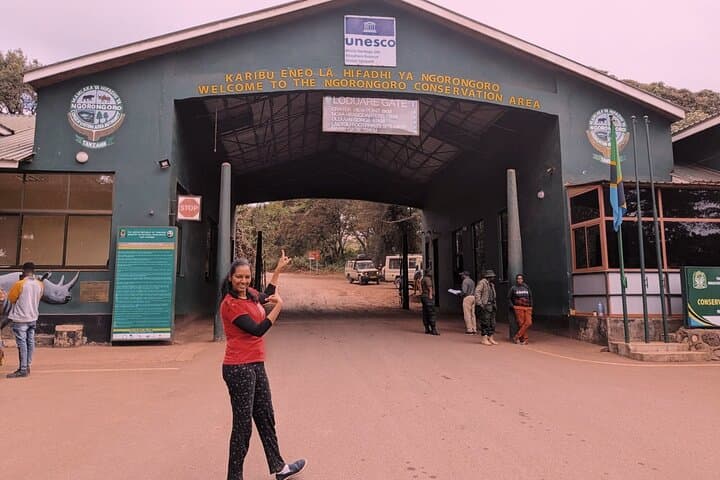
Geologically the Ngorongoro is an ancient volcanic caldera, its steep walls a record of catastrophic collapse millions of years ago. Culturally the area is shared with Maasai communities who graze cattle on designated slopes; the site is also a UNESCO World Heritage site recognized for its unique mix of human habitation and wildlife protection.
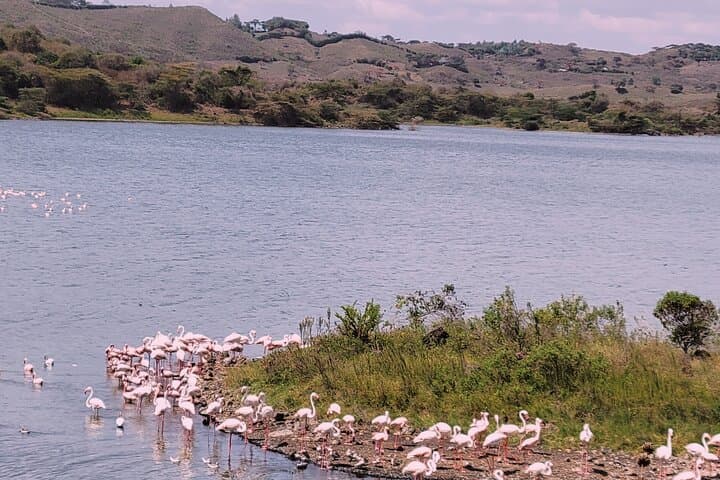
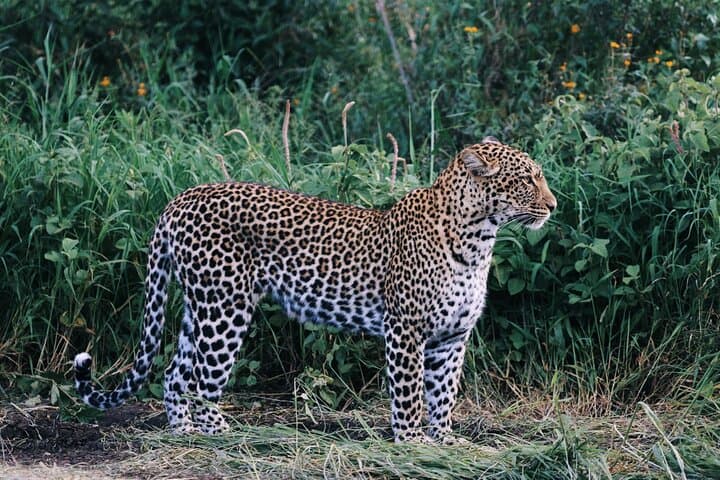
Wildlife is the draw: lions, elephants, black rhino, buffalo and leopard move across short grass and shallow marshes; Lake Magadi can host bands of flamingos on calmer days. Birdlife is abundant—over 400 recorded species—and the crater's variety of microhabitats concentrates sightings into a single long day.
Practically, the standard private day starts around 5:00 a.m. from Arusha, includes a descent and full game drive, a picnic lunch near the crater floor around 1:00 p.m., then an afternoon loop before returning to the rim by late afternoon. Roads inside are rutted; expect many stop-and-scan moments rather than long hikes. Bring binoculars, layered clothing for temperature swings, sun protection and camera gear with a telephoto lens. Respect park rules—stay in your vehicle, keep noise low and follow your guide’s lead to protect both animals and local grazing practices.
easy.
10 hours.
Suitable for most fitness levels; involves long periods in a vehicle with short, optional walks at picnic stops
The private day trip is approximately 10 hours; most departures from Arusha are around 5:00 a.m. with return in the late afternoon.
According to the itinerary, crater admission and government fees are included in the tour price—confirm at booking for any recent fee changes.
Ngorongoro has high concentrations of Big Five species, but wildlife sightings cannot be guaranteed in a single day—guides maximize chances by targeting key habitats.
Yes; the tour is rated easy and suitable for a range of ages, though the day is long and involves vehicle rides on uneven roads—check mobility needs before booking.
Ngorongoro is part of a conservation area created to balance Maasai land use with wildlife protection and was inscribed as a UNESCO World Heritage Site for its cultural and natural values.
The Ngorongoro Conservation Area integrates pastoral Maasai life with wildlife management; visitors are expected to follow strict park rules to minimize disturbance and support sustainable tourism.
NaturalLand Expeditions operates guided outdoor trips and adventures with an emphasis on safety, stewardship, and memorable experiences.
A low dawn light slices across the rim as the minivan winds toward Ngorongoro; the crater's bowl opens like a natural amphitheater below. Visitors step from the vehicle with the feel of altitude and space—the rim sits around 2,286 meters and the crater floor about 1,800 meters, a descent of roughly 400–500 meters that drops them into concentrated plains, woodlands and soda lakes.
A low dawn light slices across the rim as the minivan winds toward Ngorongoro; the crater's bowl opens like a natural amphitheater below. Visitors step from the vehicle with the feel of altitude and space—the rim sits around 2,286 meters and the crater floor about 1,800 meters, a descent of roughly 400–500 meters that drops them into concentrated plains, woodlands and soda lakes.
Geologically the Ngorongoro is an ancient volcanic caldera, its steep walls a record of catastrophic collapse millions of years ago. Culturally the area is shared with Maasai communities who graze cattle on designated slopes; the site is also a UNESCO World Heritage site recognized for its unique mix of human habitation and wildlife protection.
Wildlife is the draw: lions, elephants, black rhino, buffalo and leopard move across short grass and shallow marshes; Lake Magadi can host bands of flamingos on calmer days. Birdlife is abundant—over 400 recorded species—and the crater's variety of microhabitats concentrates sightings into a single long day.
Practically, the standard private day starts around 5:00 a.m. from Arusha, includes a descent and full game drive, a picnic lunch near the crater floor around 1:00 p.m., then an afternoon loop before returning to the rim by late afternoon. Roads inside are rutted; expect many stop-and-scan moments rather than long hikes. Bring binoculars, layered clothing for temperature swings, sun protection and camera gear with a telephoto lens. Respect park rules—stay in your vehicle, keep noise low and follow your guide’s lead to protect both animals and local grazing practices.