THE ADVENTURE COLLECTIVE® · Independent discovery and booking for outdoor travel

Explore Milan’s Duomo with a licensed guide, fast-access entry, and optional rooftop terraces. Learn construction history, navigate elevator and stair logistics, and get practical tips for the best visit.
Explore Milan’s Duomo with a licensed guide, fast-access entry, and optional rooftop terraces. Learn construction history, navigate elevator and stair logistics, and get practical tips for the best visit.
You step into Piazza del Duomo and the cathedral lifts upward—an array of spires and statues cut against the Milan sky. The square hums with tram clicks and voices while the western façade, carved in Candoglia marble, holds centuries of work and weather. Take the guided route and the interior opens: bronze portals, vaulted aisles, and light filtered through stained glass that stages scenes of city and faith.
Verified experiences and guided adventures in the surrounding area.
Operated by Citywalkers · Milan, Lombardy
You step into Piazza del Duomo and the cathedral lifts upward—an array of spires and statues cut against the Milan sky. The square hums with tram clicks and voices while the western façade, carved in Candoglia marble, holds centuries of work and weather. Take the guided route and the interior opens: bronze portals, vaulted aisles, and light filtered through stained glass that stages scenes of city and faith.
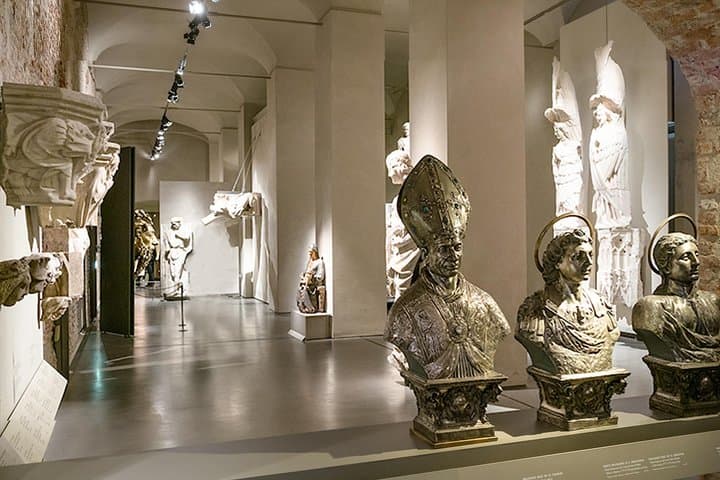
Construction on the Duomo began in 1386 under Genoese and Lombard influence and proceeded in phases for nearly six centuries; the Veneranda Fabbrica still cares for its stone and sculptures. Geologically the building’s pale sheen comes from Candoglia marble quarried north of Milan—material chosen both for durability and its capacity for fine carving. Culturally the Duomo has been a civic stage for coronations, rallies, and quiet devotion; the attached museum presents sculptures and relics pulled from its storerooms.
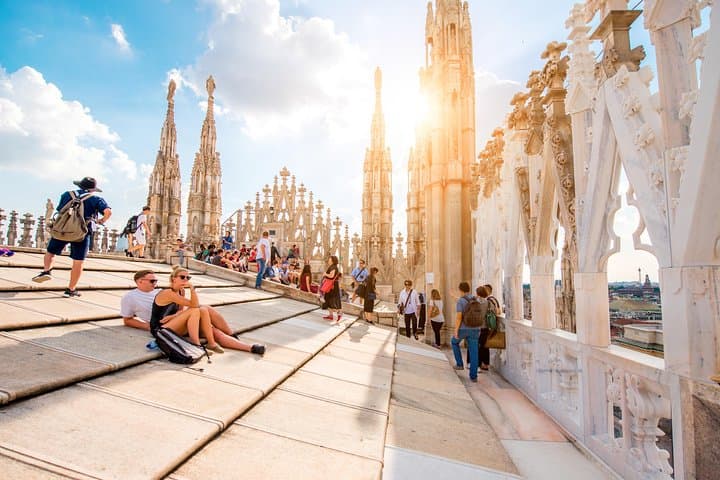
Practical guidance is straightforward: the standard tour runs about 1–2 hours and includes fast-access Duomo entry and the museum; rooftop access is optional and uses an elevator with a seven-person capacity, then roughly 50 stairs to the highest viewing terraces. Expect queues at peak times, limited space in the lift, and modest dress requirements inside. Wear comfortable shoes for stone floors and terraces, bring water, and plan early or late visits to avoid midday crowds. Photo rules and conservation signage are enforced—do not climb on monuments or touch fragile reliefs.
Whether you linger over a stained-glass scene or step onto a rooftop to read the city grid below, the experience balances carefully curated history with immediate, tactile access to Milan’s architectural spine.
easy.
1–2 hours.
Suitable for most visitors; rooftop access requires climbing ~50 stairs so moderate mobility is helpful
Rooftop access is optional—select the rooftop option when booking; note the elevator is available but there are still ~50 stairs to reach the highest terraces.
The main cathedral interior and museum have limited accessibility; rooftop terraces are reached by a small-capacity lift but final stairs mean full access may not be possible—contact the operator with specific needs.
The guided Duomo tour typically covers about 60 minutes of the cathedral interior, plus additional time for the museum and optional rooftop access within the overall 1–2 hour duration.
Yes—Duomo is well served by Milan’s metro (Duomo stop), trams, and buses; public transit is recommended to avoid Piazza del Duomo traffic and limited parking.
Construction began in 1386 and spanned centuries; the Veneranda Fabbrica has overseen the cathedral’s maintenance since its inception, preserving its Candoglia marble fabric.
Ongoing restoration is managed by the Veneranda Fabbrica and donations support conservation; visitors are asked not to touch carvings and to follow signage to minimize wear.
Citywalkers operates guided outdoor trips and adventures with an emphasis on safety, stewardship, and memorable experiences.
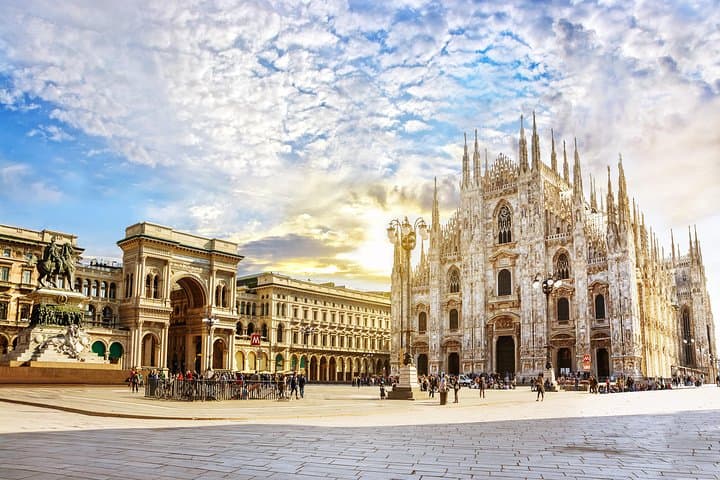
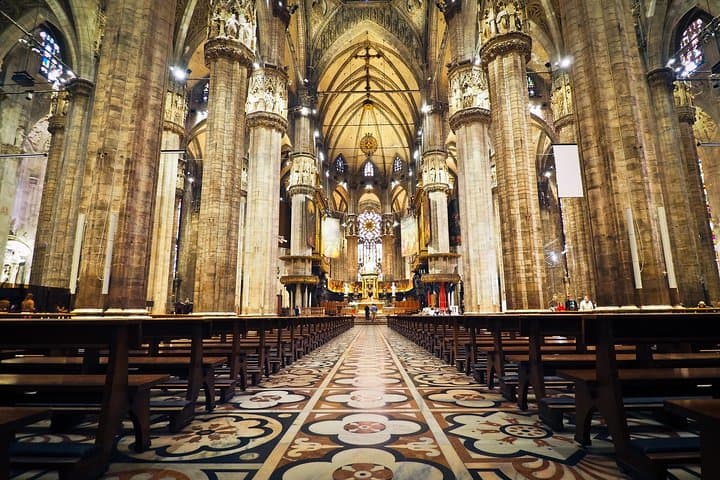
You step into Piazza del Duomo and the cathedral lifts upward—an array of spires and statues cut against the Milan sky. The square hums with tram clicks and voices while the western façade, carved in Candoglia marble, holds centuries of work and weather. Take the guided route and the interior opens: bronze portals, vaulted aisles, and light filtered through stained glass that stages scenes of city and faith.
You step into Piazza del Duomo and the cathedral lifts upward—an array of spires and statues cut against the Milan sky. The square hums with tram clicks and voices while the western façade, carved in Candoglia marble, holds centuries of work and weather. Take the guided route and the interior opens: bronze portals, vaulted aisles, and light filtered through stained glass that stages scenes of city and faith.
Construction on the Duomo began in 1386 under Genoese and Lombard influence and proceeded in phases for nearly six centuries; the Veneranda Fabbrica still cares for its stone and sculptures. Geologically the building’s pale sheen comes from Candoglia marble quarried north of Milan—material chosen both for durability and its capacity for fine carving. Culturally the Duomo has been a civic stage for coronations, rallies, and quiet devotion; the attached museum presents sculptures and relics pulled from its storerooms.
Practical guidance is straightforward: the standard tour runs about 1–2 hours and includes fast-access Duomo entry and the museum; rooftop access is optional and uses an elevator with a seven-person capacity, then roughly 50 stairs to the highest viewing terraces. Expect queues at peak times, limited space in the lift, and modest dress requirements inside. Wear comfortable shoes for stone floors and terraces, bring water, and plan early or late visits to avoid midday crowds. Photo rules and conservation signage are enforced—do not climb on monuments or touch fragile reliefs.
Whether you linger over a stained-glass scene or step onto a rooftop to read the city grid below, the experience balances carefully curated history with immediate, tactile access to Milan’s architectural spine.