THE ADVENTURE COLLECTIVE® · Independent discovery and booking for outdoor travel

Walk into a cathedral of light and stone with a Navajo guide, then stand above a horseshoe-shaped sweep of the Colorado River. This half-day tour from Page pairs the intimate drama of Lower Antelope Canyon with the wide, dizzying panorama of Horseshoe Bend.
Walk into a cathedral of light and stone with a Navajo guide, then stand above a horseshoe-shaped sweep of the Colorado River. This half-day tour from Page pairs the intimate drama of Lower Antelope Canyon with the wide, dizzying panorama of Horseshoe Bend.
You step off the air-conditioned van and the desert hits like a dry exhale: sun on sandstone, wind that carries grit, and a silence that is nearly architected. The group threads toward a narrow slit in the red wall—Lower Antelope Canyon—and the temperature drops as soon as you descend the 74 metal steps. Light slivers into the chambers and the canyon walls glow from within; the guide points out where water carved the curves and where salt pushed minerals into streaks of rust and gold.
Verified experiences and guided adventures in the surrounding area.
Operated by Dineh Tours · Page, Arizona
You step off the air-conditioned van and the desert hits like a dry exhale: sun on sandstone, wind that carries grit, and a silence that is nearly architected. The group threads toward a narrow slit in the red wall—Lower Antelope Canyon—and the temperature drops as soon as you descend the 74 metal steps. Light slivers into the chambers and the canyon walls glow from within; the guide points out where water carved the curves and where salt pushed minerals into streaks of rust and gold.
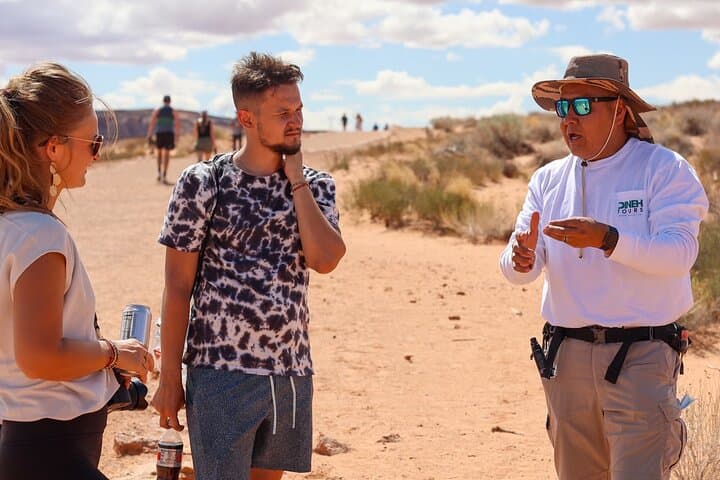
Lower Antelope is Navajo-owned and guided. The guides move deliberately between storytelling and safety: they explain Dineh cultural ties to the land, the canyon’s role in seasonal ceremonies, and the practical risks of slot canyons—flash floods are the canyon’s metronome. Geologically, both attractions are Navajo Sandstone shaped by millennia of wind and water; the Colorado River, visible from Horseshoe Bend, has been the region’s primary sculptor, cutting the dramatic meander visible from the rim.
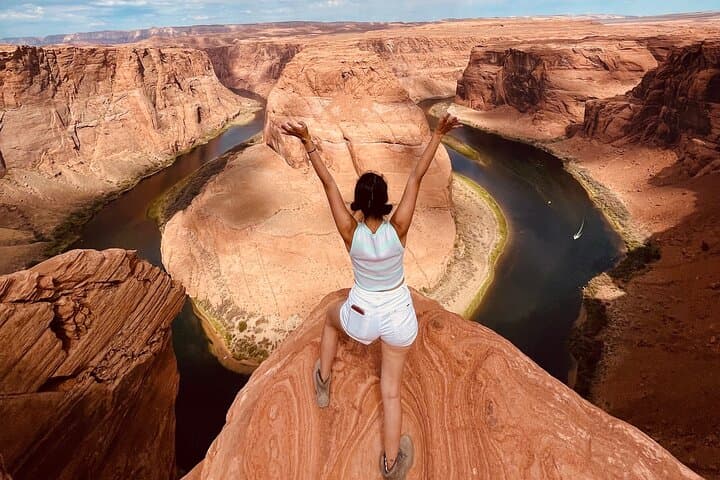
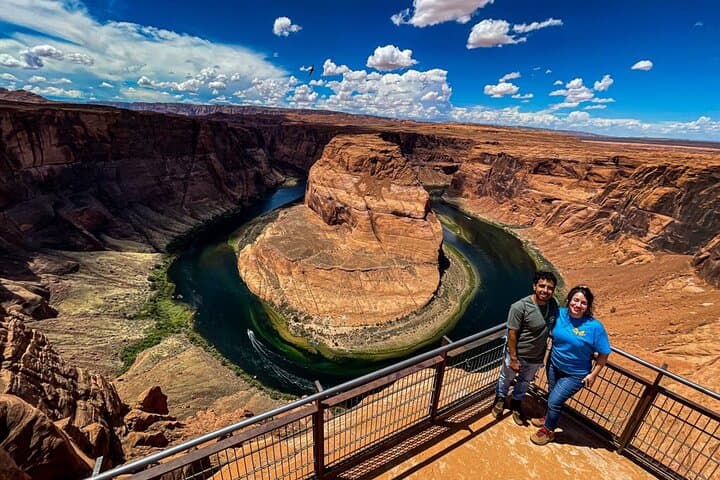
After roughly 1.1 miles of walking inside winding passageways and climbing five ladders and two small stairs, the tour pauses at a shaded picnic area for restrooms and snacks. Then the group moves to Horseshoe Bend for a contrasting kind of vertigo: a broad overlook and a smooth, flat trail that leads to a cliff-edge view of the Colorado River 1,000 feet below. The overlook walk is about 1.5 miles roundtrip on compacted sand and paved sections, suitable for most travelers.
Practical essentials: the combined experience runs about 3–4 hours (the operator lists 215 minutes), includes bottled water, snacks, and round-trip pickup from many Page hotels or a meet point at the Walmart Supercenter. Lower Antelope prohibits bags, backpacks, tripods, monopods, GoPros, and large camera rigs—plan to bring only a small camera or phone with a secure strap. Wear sturdy closed-toe shoes; the canyon floor is sand and occasional slick rock. Hydration and sun protection are non-negotiable at Horseshoe Bend, where shade is minimal.
Timing matters. Midday brings the famous light beams into Lower Antelope during summer, but also larger crowds; early morning or late afternoon offers gentler light and fewer people. The tour is a moderate walk—expect standing, stooping, and stairs. Because it’s Navajo Nation land, respect guides’ cultural notes, avoid touching petroglyphs or canyon walls, and follow leave-no-trace practices. Weather can close the canyon; operators cancel for safety during storms. If you want sculpted rock up close and a wide, vertical sweep of the Colorado, this half-day pairing delivers a compact, culturally informed taste of the Colorado Plateau.
moderate.
3–4 hours.
Moderate fitness—able to walk up to 2 miles total, handle stairs and short ladders, and stand for photo stops.
No—tripods, monopods, and selfie sticks are prohibited. Guides will offer photo tips and time for smartphone and handheld camera shots.
No. Lower Antelope requires descending 74 steps and negotiating ladders and stairs; Horseshoe Bend has uneven sandy paths and a short climb to the overlook.
The operator lists about 215 minutes (roughly 3.5 hours). Pickup is provided from many Page hotels/Airbnbs; otherwise meet at the Walmart Supercenter in Page.
Yes—children can join but must be able to handle stairs and confined canyon spaces; consult the operator about age limits and safety guidance.
Tours can be canceled for safety due to flash flood risk. The operator’s policy allows full refunds if canceled at least 24 hours prior or when unsafe conditions occur.
Yes—there is a picnic area stop with restrooms between the canyon and Horseshoe Bend where you can buy additional snacks and drinks.
Lower Antelope and the surrounding canyons are on Navajo (Dineh) land; the guides share cultural stories while explaining the canyons’ formation from Navajo Sandstone and seasonal floods.
Tours operate under Navajo Nation regulations—respect cultural sites, avoid touching fragile rock surfaces, and follow leave-no-trace rules to protect these fragile formations.
Dineh Tours operates guided outdoor trips and adventures with an emphasis on safety, stewardship, and memorable experiences.
You step off the air-conditioned van and the desert hits like a dry exhale: sun on sandstone, wind that carries grit, and a silence that is nearly architected. The group threads toward a narrow slit in the red wall—Lower Antelope Canyon—and the temperature drops as soon as you descend the 74 metal steps. Light slivers into the chambers and the canyon walls glow from within; the guide points out where water carved the curves and where salt pushed minerals into streaks of rust and gold.
You step off the air-conditioned van and the desert hits like a dry exhale: sun on sandstone, wind that carries grit, and a silence that is nearly architected. The group threads toward a narrow slit in the red wall—Lower Antelope Canyon—and the temperature drops as soon as you descend the 74 metal steps. Light slivers into the chambers and the canyon walls glow from within; the guide points out where water carved the curves and where salt pushed minerals into streaks of rust and gold.
Lower Antelope is Navajo-owned and guided. The guides move deliberately between storytelling and safety: they explain Dineh cultural ties to the land, the canyon’s role in seasonal ceremonies, and the practical risks of slot canyons—flash floods are the canyon’s metronome. Geologically, both attractions are Navajo Sandstone shaped by millennia of wind and water; the Colorado River, visible from Horseshoe Bend, has been the region’s primary sculptor, cutting the dramatic meander visible from the rim.
After roughly 1.1 miles of walking inside winding passageways and climbing five ladders and two small stairs, the tour pauses at a shaded picnic area for restrooms and snacks. Then the group moves to Horseshoe Bend for a contrasting kind of vertigo: a broad overlook and a smooth, flat trail that leads to a cliff-edge view of the Colorado River 1,000 feet below. The overlook walk is about 1.5 miles roundtrip on compacted sand and paved sections, suitable for most travelers.
Practical essentials: the combined experience runs about 3–4 hours (the operator lists 215 minutes), includes bottled water, snacks, and round-trip pickup from many Page hotels or a meet point at the Walmart Supercenter. Lower Antelope prohibits bags, backpacks, tripods, monopods, GoPros, and large camera rigs—plan to bring only a small camera or phone with a secure strap. Wear sturdy closed-toe shoes; the canyon floor is sand and occasional slick rock. Hydration and sun protection are non-negotiable at Horseshoe Bend, where shade is minimal.
Timing matters. Midday brings the famous light beams into Lower Antelope during summer, but also larger crowds; early morning or late afternoon offers gentler light and fewer people. The tour is a moderate walk—expect standing, stooping, and stairs. Because it’s Navajo Nation land, respect guides’ cultural notes, avoid touching petroglyphs or canyon walls, and follow leave-no-trace practices. Weather can close the canyon; operators cancel for safety during storms. If you want sculpted rock up close and a wide, vertical sweep of the Colorado, this half-day pairing delivers a compact, culturally informed taste of the Colorado Plateau.