THE ADVENTURE COLLECTIVE® · Independent discovery and booking for outdoor travel

Step into London's monumental Natural History Museum with a private guide for a focused half-day tour. Explore dinosaur giants, geological vaults and living research labs with reserved entry and expert commentary.
Step into London's monumental Natural History Museum with a private guide for a focused half-day tour. Explore dinosaur giants, geological vaults and living research labs with reserved entry and expert commentary.
You step from Kensington's damp air into a cavernous hall of stone and light — vaulted arches frame a suspended blue whale that seems to sail above you while fossilized teeth and bones sit like weathered witnesses on display.
Verified experiences and guided adventures in the surrounding area.
Operated by Travel Curious · London, England
You step from Kensington's damp air into a cavernous hall of stone and light — vaulted arches frame a suspended blue whale that seems to sail above you while fossilized teeth and bones sit like weathered witnesses on display.
The Natural History Museum's Romanesque façade, completed by architect Alfred Waterhouse in the late 19th century, houses 4.6 billion years of planetary history: ancient minerals that record deep time, dinosaur skeletons that reconfigure your sense of scale, and cultural objects that chart encounters between people and natural science. The Darwin Centre's modern cocoon and the museum's fossil preparation labs reveal ongoing scientific work; the earthquake simulator and the plaster casts from Vesuvius add experiential layers beyond static cases.
Geology fans will appreciate the mineral vaults and the chronological layout that traces sedimentary processes and mass extinctions, while cultural context appears in specimen provenance and Victorian-era display practices — the building itself is a piece of museum history.
Practically, a private guide makes a three-hour visit efficient: expect a curated route through highlights, reserved entry at your time slot, and the chance to linger at specific specimens. Wear comfortable shoes and plan for standing and short stair sections; photography is allowed but flash may be restricted. Midweek mornings are quieter; if mobility is a concern the museum is wheelchair-accessible and the guide can tailor the itinerary. Bring a refillable water bottle, check temporary exhibition schedules, and leave extra time if you want to explore the Darwin Centre or the shop after the tour.
easy.
3 hours.
Comfortable walking and standing for several hours; moderate fitness recommended due to museum scale
Yes — the tour includes reserved entrance to the Natural History Museum for your scheduled time slot and access to the public galleries covered by that ticket.
The tour is private for your booking; check the operator's booking details for maximum group size and ticket-per-booking rules.
Yes — the museum provides step-free access and lifts; inform the operator of accessibility needs so the guide can plan an appropriate route.
The tour listing specifies an English-speaking professional guide for your private group; request language options when booking if needed.
The current museum building, designed by Alfred Waterhouse in a Romanesque style, opened in the late 19th century and was intended to house an expanding national collection of natural history specimens.
The museum is both a research and conservation institution—visitors are encouraged to use public transit and practice low-impact behaviors; the museum also manages specimen care and ethical acquisition policies.
Travel Curious operates guided outdoor trips and adventures with an emphasis on safety, stewardship, and memorable experiences.
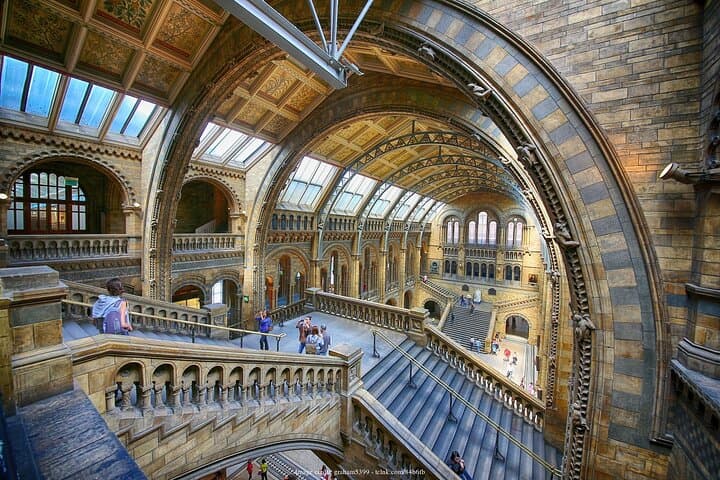
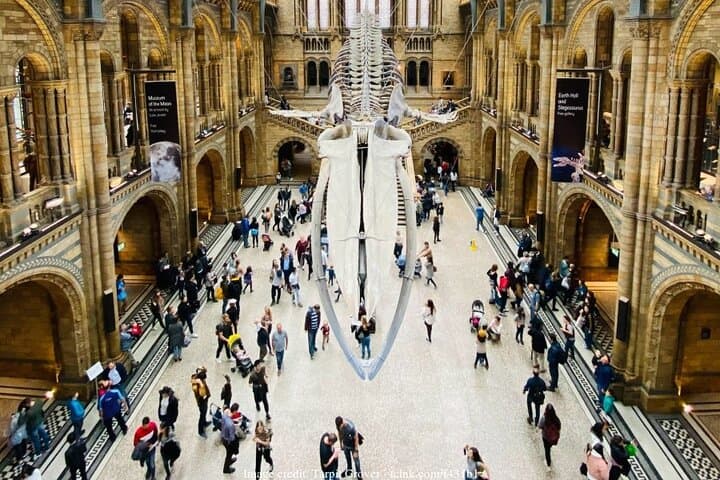
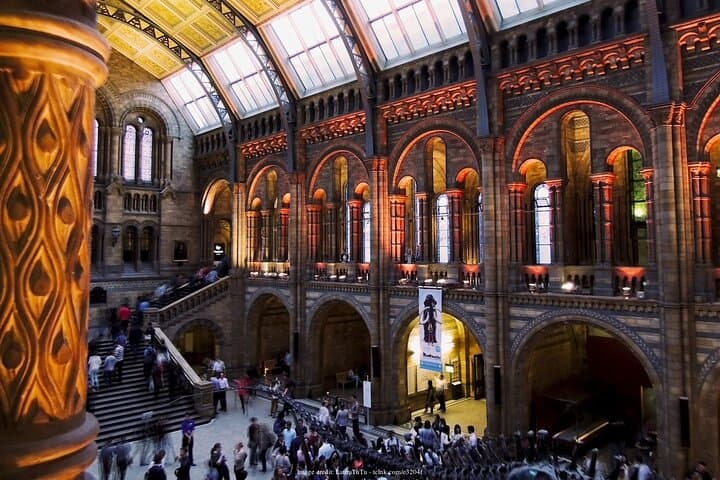
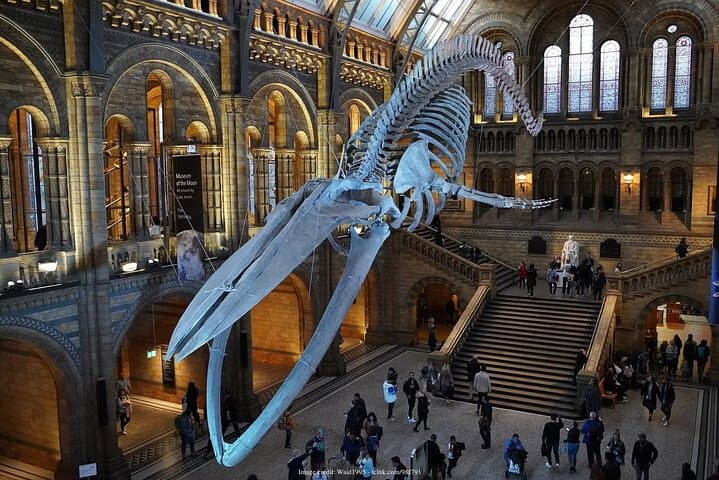
You step from Kensington's damp air into a cavernous hall of stone and light — vaulted arches frame a suspended blue whale that seems to sail above you while fossilized teeth and bones sit like weathered witnesses on display.
You step from Kensington's damp air into a cavernous hall of stone and light — vaulted arches frame a suspended blue whale that seems to sail above you while fossilized teeth and bones sit like weathered witnesses on display.
The Natural History Museum's Romanesque façade, completed by architect Alfred Waterhouse in the late 19th century, houses 4.6 billion years of planetary history: ancient minerals that record deep time, dinosaur skeletons that reconfigure your sense of scale, and cultural objects that chart encounters between people and natural science. The Darwin Centre's modern cocoon and the museum's fossil preparation labs reveal ongoing scientific work; the earthquake simulator and the plaster casts from Vesuvius add experiential layers beyond static cases.
Geology fans will appreciate the mineral vaults and the chronological layout that traces sedimentary processes and mass extinctions, while cultural context appears in specimen provenance and Victorian-era display practices — the building itself is a piece of museum history.
Practically, a private guide makes a three-hour visit efficient: expect a curated route through highlights, reserved entry at your time slot, and the chance to linger at specific specimens. Wear comfortable shoes and plan for standing and short stair sections; photography is allowed but flash may be restricted. Midweek mornings are quieter; if mobility is a concern the museum is wheelchair-accessible and the guide can tailor the itinerary. Bring a refillable water bottle, check temporary exhibition schedules, and leave extra time if you want to explore the Darwin Centre or the shop after the tour.