THE ADVENTURE COLLECTIVE® · Independent discovery and booking for outdoor travel

Step into the Natural History Museum’s vaulted halls for a one-hour, guided walk through dinosaur fossils, the blue whale display, and glittering gems. This concise tour pairs big exhibits with focused interpretation—ideal for first-time visitors who want context before exploring further.
Step into the Natural History Museum’s vaulted halls for a one-hour, guided walk through dinosaur fossils, the blue whale display, and glittering gems. This concise tour pairs big exhibits with focused interpretation—ideal for first-time visitors who want context before exploring further.
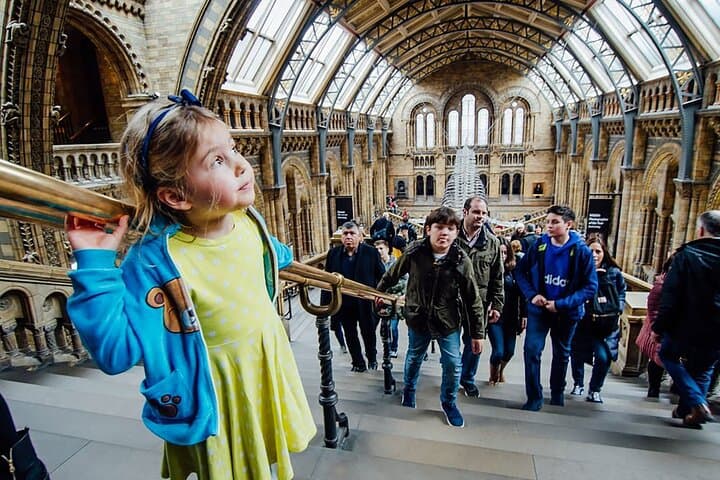
You push through the museum doors and the air narrows into a vaulted stone hall; light slices over high arches and the bones of deep time hang like punctuation. The guided hour threads you past oversized vertebrae and glittering mineral cabinets, a compact odyssey through evolution where the past presses close enough to study.
Verified experiences and guided adventures in the surrounding area.
Operated by MOVE VENEZIA · London, England
You push through the museum doors and the air narrows into a vaulted stone hall; light slices over high arches and the bones of deep time hang like punctuation. The guided hour threads you past oversized vertebrae and glittering mineral cabinets, a compact odyssey through evolution where the past presses close enough to study.
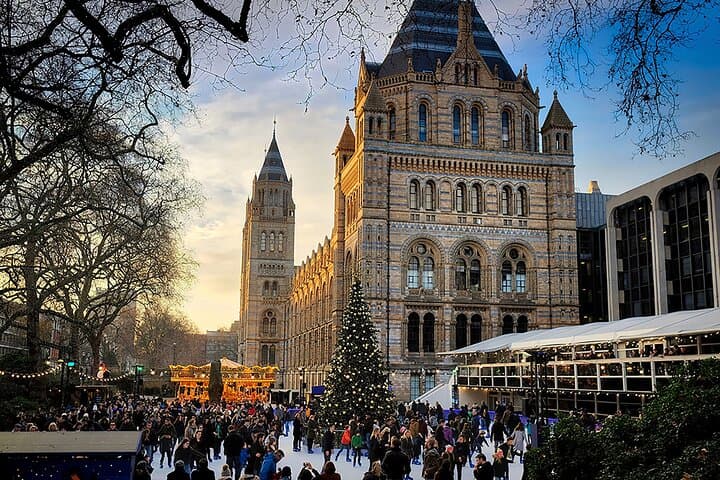
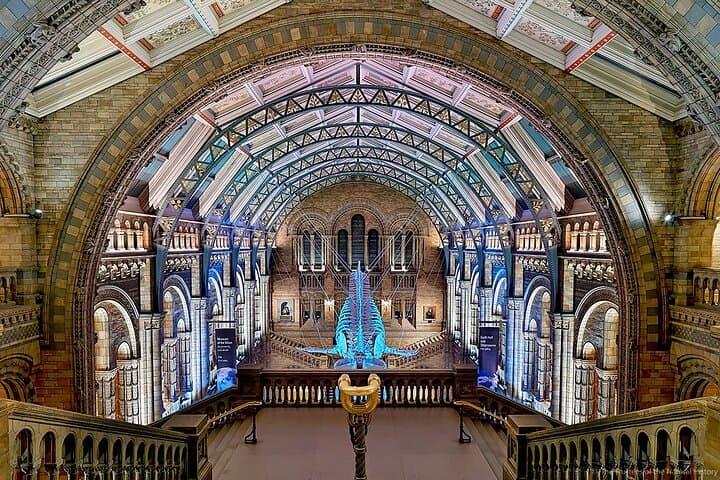
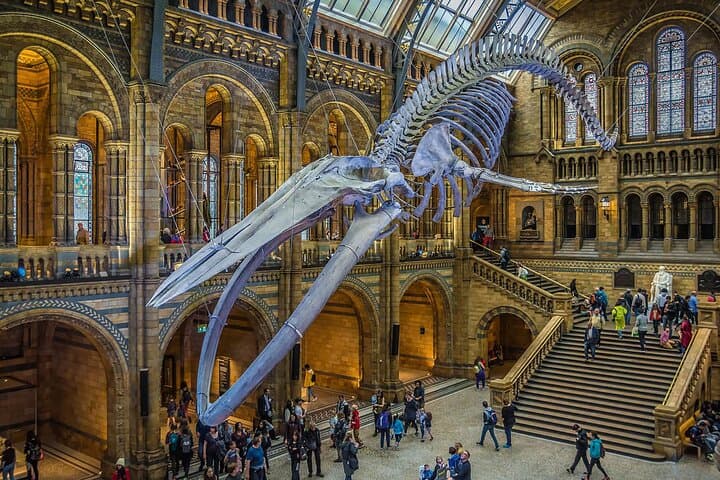
The Natural History Museum in South Kensington is a Victorian landmark with a scientific pedigree — Alfred Waterhouse’s Romanesque architecture houses collections amassed since the 19th century. Geology and paleontology collide here: dinosaur fossils (the museum made famous by its Diplodocus displays), the suspended blue whale skeleton that gestures across Hintze Hall, and cabinets of gems that record Earth’s mineral history. The Darwin Centre’s labs and the Evolution galleries put specimens in cultural and scientific context, showing how taxonomy, colonial-era collecting, and modern conservation meet under one roof.
Expect a brisk, interpretation-led hour: the guide points out signature specimens, explains fossilization and plate tectonics in plain terms, and flags exhibits worth revisiting. Practicalities matter — book a reserved time, allow extra for the permanent galleries, and use the Tube to South Kensington to avoid traffic. Wear comfortable shoes and be ready for stair and lift access; strollers and mobility aids are accommodated but check arrival instructions.
This is an experience that rewards curiosity: bring questions, sketch a favorite specimen, and plan a coffee break afterward in the museum cafe. The tour sharpens a visit, but leaves plenty of room to roam and keep discovering on your own.
easy.
1 hour.
Suitable for all fitness levels; involves moderate walking and some stairs but lifts are available for accessibility.
The guided tour runs approximately 60 minutes and focuses on key galleries—plan extra time if you want to explore exhibits afterward.
Yes; this reservation ticket grants museum admission at your scheduled time—check your booking confirmation for access details.
The museum provides step-free access, lifts, and accessible toilets; notify the tour operator of any mobility requirements when booking.
Children are welcome; infants must sit on an adult’s lap. The content and pace are family-friendly but best for curious youngsters who can follow a guided group.
Opened in 1881 and designed by Alfred Waterhouse, the museum grew from 19th-century scientific collecting and Victorian public education initiatives.
The museum conducts active research on biodiversity and climate impacts; visitors are encouraged to follow exhibit rules, avoid touching specimens, and support sustainable travel to the museum.
MOVE VENEZIA operates guided outdoor trips and adventures with an emphasis on safety, stewardship, and memorable experiences.
You push through the museum doors and the air narrows into a vaulted stone hall; light slices over high arches and the bones of deep time hang like punctuation. The guided hour threads you past oversized vertebrae and glittering mineral cabinets, a compact odyssey through evolution where the past presses close enough to study.
You push through the museum doors and the air narrows into a vaulted stone hall; light slices over high arches and the bones of deep time hang like punctuation. The guided hour threads you past oversized vertebrae and glittering mineral cabinets, a compact odyssey through evolution where the past presses close enough to study.
The Natural History Museum in South Kensington is a Victorian landmark with a scientific pedigree — Alfred Waterhouse’s Romanesque architecture houses collections amassed since the 19th century. Geology and paleontology collide here: dinosaur fossils (the museum made famous by its Diplodocus displays), the suspended blue whale skeleton that gestures across Hintze Hall, and cabinets of gems that record Earth’s mineral history. The Darwin Centre’s labs and the Evolution galleries put specimens in cultural and scientific context, showing how taxonomy, colonial-era collecting, and modern conservation meet under one roof.
Expect a brisk, interpretation-led hour: the guide points out signature specimens, explains fossilization and plate tectonics in plain terms, and flags exhibits worth revisiting. Practicalities matter — book a reserved time, allow extra for the permanent galleries, and use the Tube to South Kensington to avoid traffic. Wear comfortable shoes and be ready for stair and lift access; strollers and mobility aids are accommodated but check arrival instructions.
This is an experience that rewards curiosity: bring questions, sketch a favorite specimen, and plan a coffee break afterward in the museum cafe. The tour sharpens a visit, but leaves plenty of room to roam and keep discovering on your own.