THE ADVENTURE COLLECTIVE® · Independent discovery and booking for outdoor travel

Step into a 30-minute augmented reality tour that brings Lismore Castle’s Pugin Room and local history to life with 360° imagery and a local guide. Ideal for history fans and visitors who want deep detail without the wear on fragile interiors.
Step into a 30-minute augmented reality tour that brings Lismore Castle’s Pugin Room and local history to life with 360° imagery and a local guide. Ideal for history fans and visitors who want deep detail without the wear on fragile interiors.
You step through a low curtain into a hushed gallery where light traces the model of the Pugin Room and a narrator from the past leans in to speak. The room fills with 360-degree imagery: draped fabrics, carved woodwork and the soft outline of Lismore Town beyond the castle walls. For thirty minutes the past and present line up like two maps on the same table.
Verified experiences and guided adventures in the surrounding area.
Operated by Lismore Heritage Centre · Lismore, County Waterford
You step through a low curtain into a hushed gallery where light traces the model of the Pugin Room and a narrator from the past leans in to speak. The room fills with 360-degree imagery: draped fabrics, carved woodwork and the soft outline of Lismore Town beyond the castle walls. For thirty minutes the past and present line up like two maps on the same table.
Lismore Castle began as a 12th-century Norman stronghold sited above the Blackwater River; later centuries layered Gothic and Gothic-Revival details as wealthy owners reshaped interiors, including work associated with A.W.N. Pugin. Geologically the castle sits in the Blackwater valley—gentle slopes and river alluvium that supported settlement and trade—while the town around it carries small-scale Irish market and ecclesiastical history.
This VR experience uses augmented reality and 360 photography to let you peer inside spaces normally closed to the public, with a local guide available to answer questions. It reduces foot traffic through fragile interiors while amplifying stories from historic characters and archival imagery.
Practical edge: the session is 30 minutes, wheelchair accessible, and requires one ticket per booking. Bring a charged mobile device or use onsite equipment, arrive 10–15 minutes early to get settled, and plan for a short, focused visit rather than a long museum sweep. Ask the guide about the Pugin details and where to walk in town afterward—Lismore’s riverside and Bishop’s Palace gardens reward a calm, reflective follow-up to the AR tour.
easy.
30 minutes.
Suitable for all fitness levels; mostly stationary with short walking to the venue
The guided augmented reality session runs approximately 30 minutes, with a local guide present to answer questions.
Advance booking is recommended—tickets are mobile or paper and the booking allows one ticket per booking as noted in the listing.
Yes. The experience and surfaces are wheelchair accessible and service animals are allowed; contact the operator for additional assistance.
Children can attend; infants must sit on an adult’s lap. The content is family-friendly but paced for adults and older children.
Lismore Castle traces its origins to a 12th-century Norman foundation and was later reshaped by wealthy owners and 19th-century Gothic-Revival work linked to figures like Pugin and the Cavendish family.
The digital tour helps limit wear on delicate interiors by offering close-up access virtually; visitors should follow venue rules, avoid flash photography, and support local conservation initiatives.
Lismore Heritage Centre operates guided outdoor trips and adventures with an emphasis on safety, stewardship, and memorable experiences.
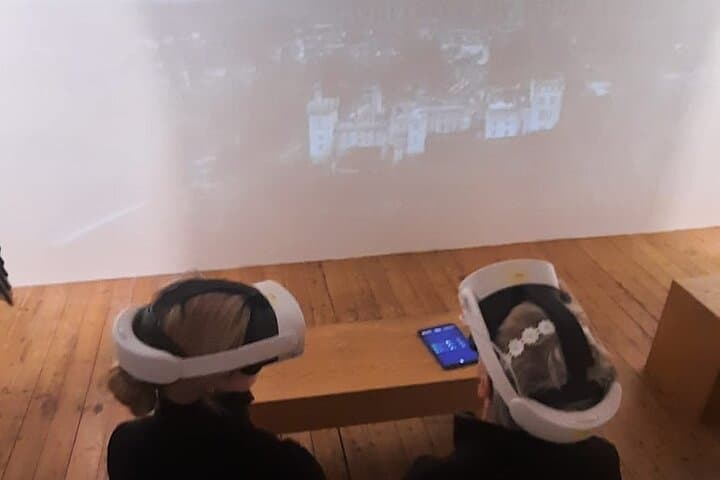
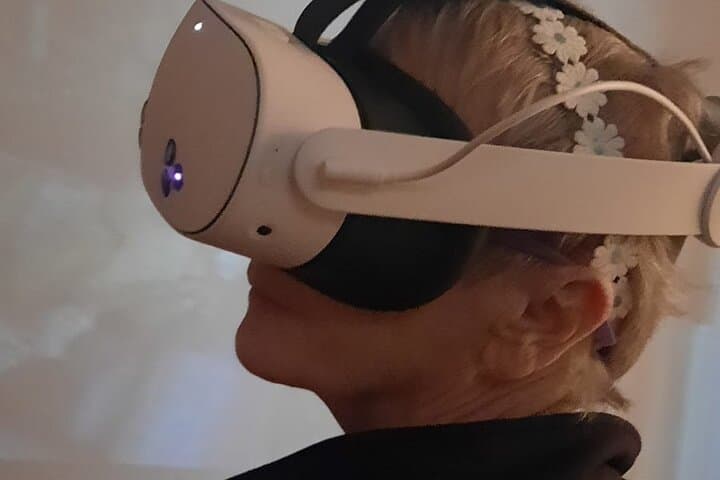
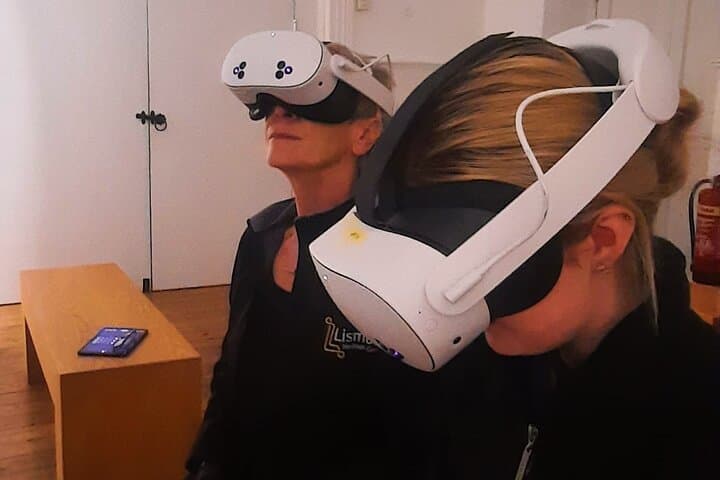
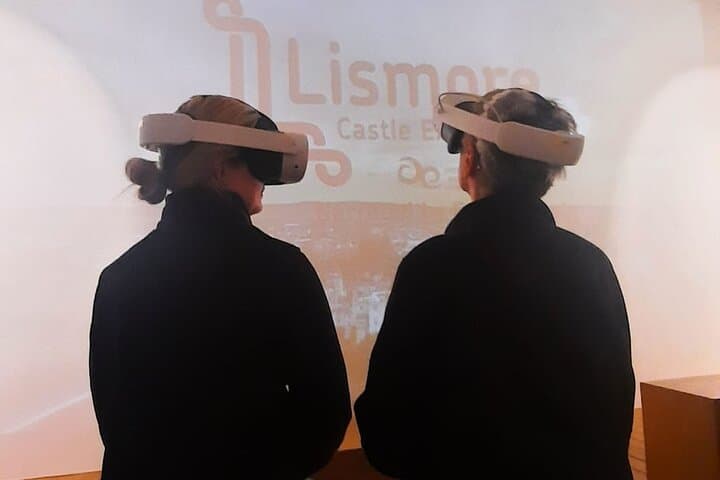
You step through a low curtain into a hushed gallery where light traces the model of the Pugin Room and a narrator from the past leans in to speak. The room fills with 360-degree imagery: draped fabrics, carved woodwork and the soft outline of Lismore Town beyond the castle walls. For thirty minutes the past and present line up like two maps on the same table.
You step through a low curtain into a hushed gallery where light traces the model of the Pugin Room and a narrator from the past leans in to speak. The room fills with 360-degree imagery: draped fabrics, carved woodwork and the soft outline of Lismore Town beyond the castle walls. For thirty minutes the past and present line up like two maps on the same table.
Lismore Castle began as a 12th-century Norman stronghold sited above the Blackwater River; later centuries layered Gothic and Gothic-Revival details as wealthy owners reshaped interiors, including work associated with A.W.N. Pugin. Geologically the castle sits in the Blackwater valley—gentle slopes and river alluvium that supported settlement and trade—while the town around it carries small-scale Irish market and ecclesiastical history.
This VR experience uses augmented reality and 360 photography to let you peer inside spaces normally closed to the public, with a local guide available to answer questions. It reduces foot traffic through fragile interiors while amplifying stories from historic characters and archival imagery.
Practical edge: the session is 30 minutes, wheelchair accessible, and requires one ticket per booking. Bring a charged mobile device or use onsite equipment, arrive 10–15 minutes early to get settled, and plan for a short, focused visit rather than a long museum sweep. Ask the guide about the Pugin details and where to walk in town afterward—Lismore’s riverside and Bishop’s Palace gardens reward a calm, reflective follow-up to the AR tour.