THE ADVENTURE COLLECTIVE® · Independent discovery and booking for outdoor travel

Walk the galleries where treaties were sealed and battles are reconstructed—this two‑hour guided tour at Les Invalides pulls the material history of both world wars into sharp, human focus. Skip the lines, but plan for security checks and moments of quiet reflection.
Walk the galleries where treaties were sealed and battles are reconstructed—this two‑hour guided tour at Les Invalides pulls the material history of both world wars into sharp, human focus. Skip the lines, but plan for security checks and moments of quiet reflection.
You step through the main gate at Place des Invalides and the weight of history becomes physical—soldier-blue coats, brass buttons, and the echo of old footage fill the cool, vaulted rooms. The tour guides you from 19th-century conflicts through the trenches of World War I and the occupied streets of World War II, pausing often for artifacts that make decisions and consequences feel immediate: a field radio, a taxi from the Battle of the Marne, the rail carriage where the 1918 armistice was signed.
Verified experiences and guided adventures in the surrounding area.
Operated by Babylon Tours Paris · Paris, Île-de-France
You step through the main gate at Place des Invalides and the weight of history becomes physical—soldier-blue coats, brass buttons, and the echo of old footage fill the cool, vaulted rooms. The tour guides you from 19th-century conflicts through the trenches of World War I and the occupied streets of World War II, pausing often for artifacts that make decisions and consequences feel immediate: a field radio, a taxi from the Battle of the Marne, the rail carriage where the 1918 armistice was signed.
Les Invalides sits on compacted Parisian limestone and riverine sediments near the Seine; the dome and courtyards are 17th–19th century military architecture repurposed into a museum complex. Culturally it’s a place of memory—French military identity, the trauma of occupation, and the political arcs of figures like Pétain and De Gaulle are presented through objects, film, and narration.
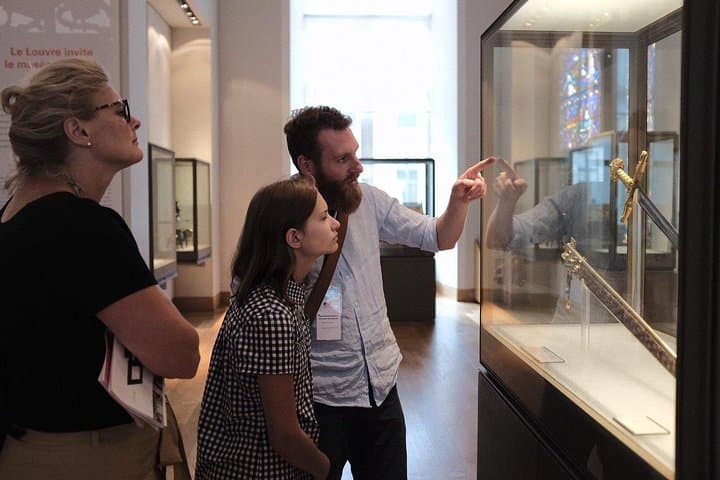
Expect two hours of mostly indoor walking with stops for exhibits and short film excerpts. The guide frames large events (Franco-Prussian War, Maginot Line, Dunkirk, Normandy) with personal stories and material culture to connect strategy to daily life. The tour is wheelchair-accessible in private formats, includes entrance fees, and aims to minimize queue time, though security screening is required.
Practical guidance: arrive 10 minutes early at the north entrance facing Pont Alexandre III, carry only a small bag through security, and wear comfortable shoes for standing and moving between galleries. Bring a charged phone for emergency contact details sent by your operator; expect periods of quiet in certain rooms where speaking is restricted.
easy.
2 hours.
Able to stand and walk on hard floors for two hours with intermittent seating; moderate stamina for continuous attention and movement.
Yes—wheelchair access is available but only on the private tour option; confirm at booking so operators can plan routes and assistance.
The tour includes skip-the-line admission, but note that security screenings can create short waits even with priority entry.
No—large bags and suitcases are not permitted inside; only small handbags or thin backpacks are allowed through security.
Occasional closures occur; the operator will provide an alternative route or exhibit if a closure delays the tour over an hour, though refunds are generally not offered for such changes.
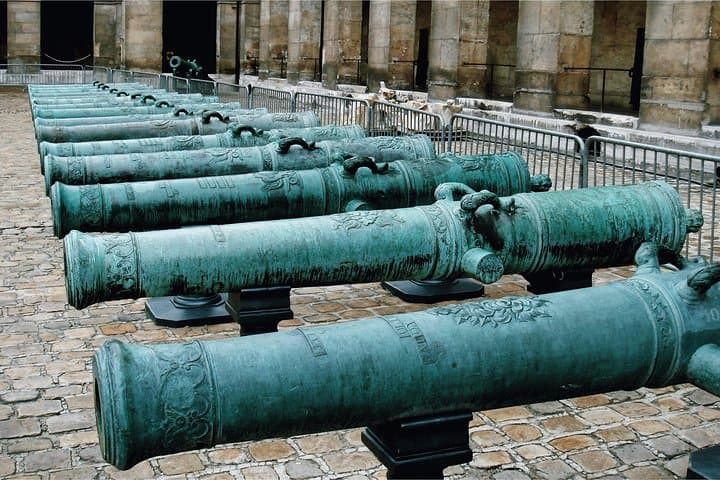
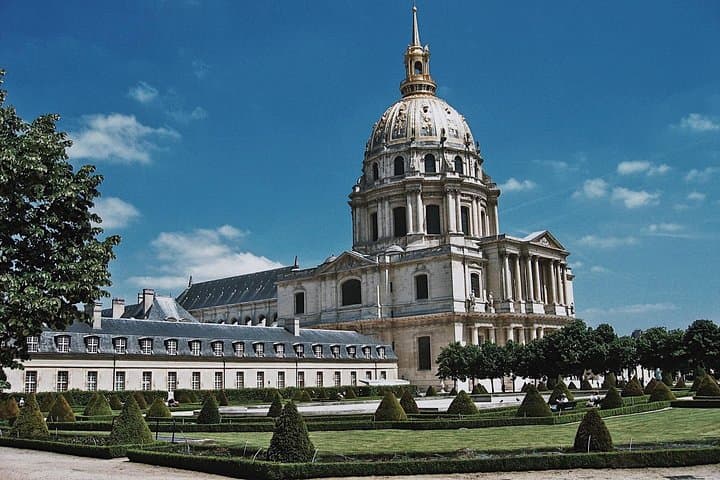
Built in the late 17th century as a veterans’ hospital and later expanded into France’s central military museum, Les Invalides houses artifacts spanning Napoleonic era to World War II, including the armistice railcar from 1918.
Museum operations balance preservation with access—handling policies and limited exhibit rotations protect fragile uniforms and documents, and visitors are asked to avoid touching displays.
Babylon Tours Paris operates guided outdoor trips and adventures with an emphasis on safety, stewardship, and memorable experiences.
You step through the main gate at Place des Invalides and the weight of history becomes physical—soldier-blue coats, brass buttons, and the echo of old footage fill the cool, vaulted rooms. The tour guides you from 19th-century conflicts through the trenches of World War I and the occupied streets of World War II, pausing often for artifacts that make decisions and consequences feel immediate: a field radio, a taxi from the Battle of the Marne, the rail carriage where the 1918 armistice was signed.
You step through the main gate at Place des Invalides and the weight of history becomes physical—soldier-blue coats, brass buttons, and the echo of old footage fill the cool, vaulted rooms. The tour guides you from 19th-century conflicts through the trenches of World War I and the occupied streets of World War II, pausing often for artifacts that make decisions and consequences feel immediate: a field radio, a taxi from the Battle of the Marne, the rail carriage where the 1918 armistice was signed.
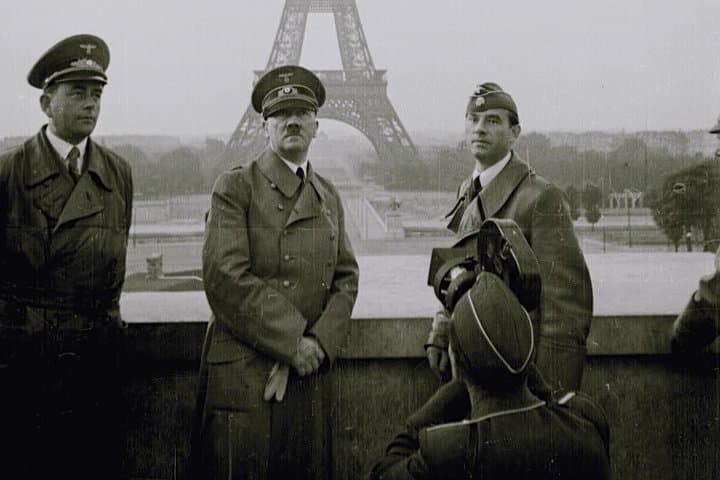
Les Invalides sits on compacted Parisian limestone and riverine sediments near the Seine; the dome and courtyards are 17th–19th century military architecture repurposed into a museum complex. Culturally it’s a place of memory—French military identity, the trauma of occupation, and the political arcs of figures like Pétain and De Gaulle are presented through objects, film, and narration.
Expect two hours of mostly indoor walking with stops for exhibits and short film excerpts. The guide frames large events (Franco-Prussian War, Maginot Line, Dunkirk, Normandy) with personal stories and material culture to connect strategy to daily life. The tour is wheelchair-accessible in private formats, includes entrance fees, and aims to minimize queue time, though security screening is required.
Practical guidance: arrive 10 minutes early at the north entrance facing Pont Alexandre III, carry only a small bag through security, and wear comfortable shoes for standing and moving between galleries. Bring a charged phone for emergency contact details sent by your operator; expect periods of quiet in certain rooms where speaking is restricted.