THE ADVENTURE COLLECTIVE® · Independent discovery and booking for outdoor travel

Stand inside Khufu’s Great Pyramid and walk the Giza Plateau with a licensed Egyptologist. This four-hour, all-inclusive tour bundles transport, entry (including Khufu internal access when available), and a traditional lunch for a compact, authoritative experience.
Stand inside Khufu’s Great Pyramid and walk the Giza Plateau with a licensed Egyptologist. This four-hour, all-inclusive tour bundles transport, entry (including Khufu internal access when available), and a traditional lunch for a compact, authoritative experience.
The sun hits the limestone faces of Khufu, Khafre and Menkaure as dust lifts from the plateau; you step from an air-conditioned vehicle into a landscape shaped by four and a half millennia of human ambition. The three pyramids loom like engineered mountains, the Sphinx watching eastward with a weathered, human gaze. Footsteps crunch on compacted sand as your guide points out the angled casing stones and the sun-worn causeways that once connected temples and tombs.
Verified experiences and guided adventures in the surrounding area.
Operated by Egipto Excursiones · Giza, Giza Governorate
The sun hits the limestone faces of Khufu, Khafre and Menkaure as dust lifts from the plateau; you step from an air-conditioned vehicle into a landscape shaped by four and a half millennia of human ambition. The three pyramids loom like engineered mountains, the Sphinx watching eastward with a weathered, human gaze. Footsteps crunch on compacted sand as your guide points out the angled casing stones and the sun-worn causeways that once connected temples and tombs.
This place is both archaeology and geology: soft nummulitic limestone rests atop harder bedrock, the material archaeologists and local craftsmen have worked since Egypt’s Fourth Dynasty (c. 2600 BCE). Khufu’s Great Pyramid, the largest, was a royal power statement and a complex of mortuary and valley temples; nearby, the Sphinx’s carved body and restored limestone blocks tell a story of repair, reuse and colonial-era excavation.
Culture and modern life press close — vendors, camel handlers and the small Solar Boat Museum remind you the plateau remains a lived landscape.
Practical guidance: allow about four hours for pickup, plateau visit, Sphinx stop and entry into Khufu if your permit allows; walking on uneven stone and sand is constant. Wear sturdy closed shoes, sun protection and carry water (one bottle is provided but bring a refillable). Photography is fine on the plateau; inside the pyramid, light is low and pathways are narrow — plan for crouched passages and modest temperatures. Expect intermittent crowds, short guided talks at each monument, and a reminder from your guide to avoid touching fragile masonry. Timing early morning or late afternoon reduces heat and gives cleaner light for photography.
easy.
4 hours.
Suitable for most fitness levels—requires walking on uneven ground and negotiating narrow pyramid passages; not suitable for those with severe mobility or spinal issues.
Yes — the tour is all-inclusive with entrance fees, hotel pickup and drop-off, and the listed inclusions.
Access inside Khufu is limited and requires a permit; narrow, low passages and steep steps make it unsuitable for those with mobility, heart or spinal issues and pregnant travelers.
Photography is generally allowed on the plateau; inside the pyramid, lighting is low and guides may advise limited use to respect conservation rules.
The tour’s duration is about four hours including transport; expect roughly two hours on the plateau for the pyramids, Sphinx and nearby sites.
The Great Pyramid of Khufu dates to the Fourth Dynasty (c. 2600 BCE) and was built as an elite funerary complex; ancillary temples and causeways connected the tombs to Nile-side infrastructure.
Ongoing conservation balances visitor access with preservation; avoid touching masonry, comply with guide instructions and carry out any litter to limit erosion and wear.
Egipto Excursiones operates guided outdoor trips and adventures with an emphasis on safety, stewardship, and memorable experiences.
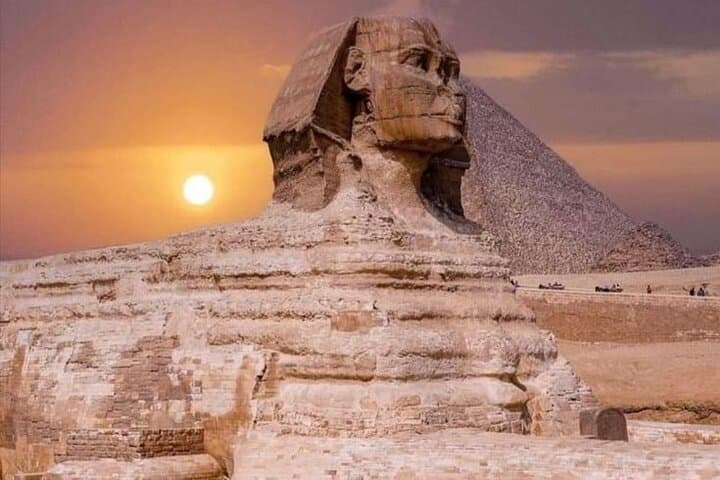
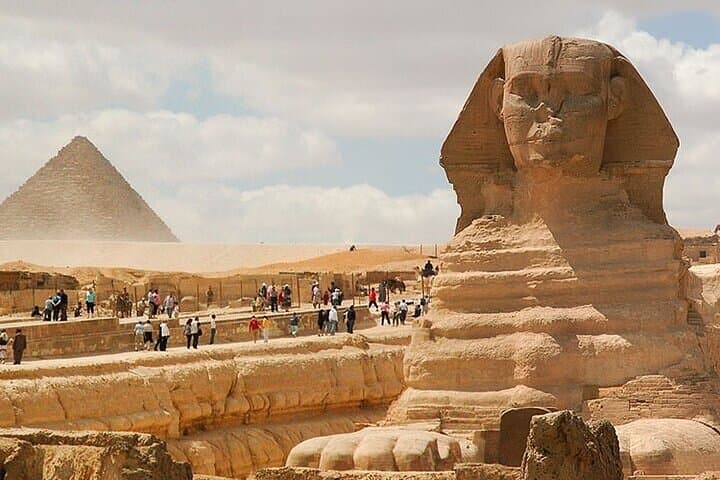

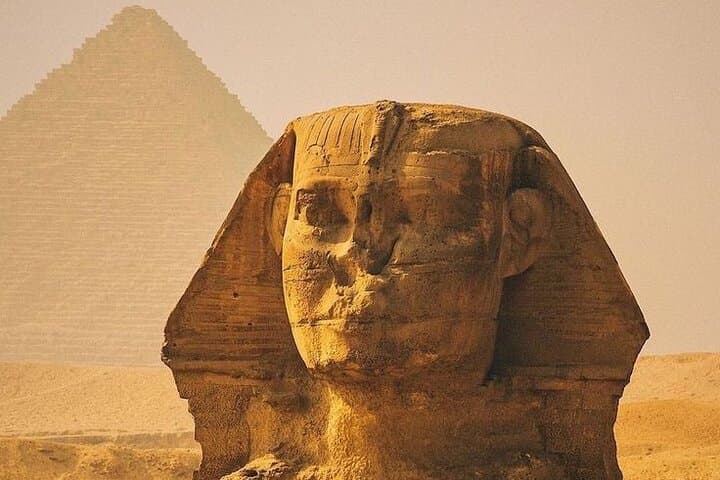
The sun hits the limestone faces of Khufu, Khafre and Menkaure as dust lifts from the plateau; you step from an air-conditioned vehicle into a landscape shaped by four and a half millennia of human ambition. The three pyramids loom like engineered mountains, the Sphinx watching eastward with a weathered, human gaze. Footsteps crunch on compacted sand as your guide points out the angled casing stones and the sun-worn causeways that once connected temples and tombs.
The sun hits the limestone faces of Khufu, Khafre and Menkaure as dust lifts from the plateau; you step from an air-conditioned vehicle into a landscape shaped by four and a half millennia of human ambition. The three pyramids loom like engineered mountains, the Sphinx watching eastward with a weathered, human gaze. Footsteps crunch on compacted sand as your guide points out the angled casing stones and the sun-worn causeways that once connected temples and tombs.
This place is both archaeology and geology: soft nummulitic limestone rests atop harder bedrock, the material archaeologists and local craftsmen have worked since Egypt’s Fourth Dynasty (c. 2600 BCE). Khufu’s Great Pyramid, the largest, was a royal power statement and a complex of mortuary and valley temples; nearby, the Sphinx’s carved body and restored limestone blocks tell a story of repair, reuse and colonial-era excavation.
Culture and modern life press close — vendors, camel handlers and the small Solar Boat Museum remind you the plateau remains a lived landscape.
Practical guidance: allow about four hours for pickup, plateau visit, Sphinx stop and entry into Khufu if your permit allows; walking on uneven stone and sand is constant. Wear sturdy closed shoes, sun protection and carry water (one bottle is provided but bring a refillable). Photography is fine on the plateau; inside the pyramid, light is low and pathways are narrow — plan for crouched passages and modest temperatures. Expect intermittent crowds, short guided talks at each monument, and a reminder from your guide to avoid touching fragile masonry. Timing early morning or late afternoon reduces heat and gives cleaner light for photography.