THE ADVENTURE COLLECTIVE® · Independent discovery and booking for outdoor travel

Move from sunlit plateau to cooled interior on a half‑day journey inside Khafre’s Pyramid. This compact tour pairs close-up archaeology with practical advice for navigating narrow passages and the broader Giza complex.
Move from sunlit plateau to cooled interior on a half‑day journey inside Khafre’s Pyramid. This compact tour pairs close-up archaeology with practical advice for navigating narrow passages and the broader Giza complex.
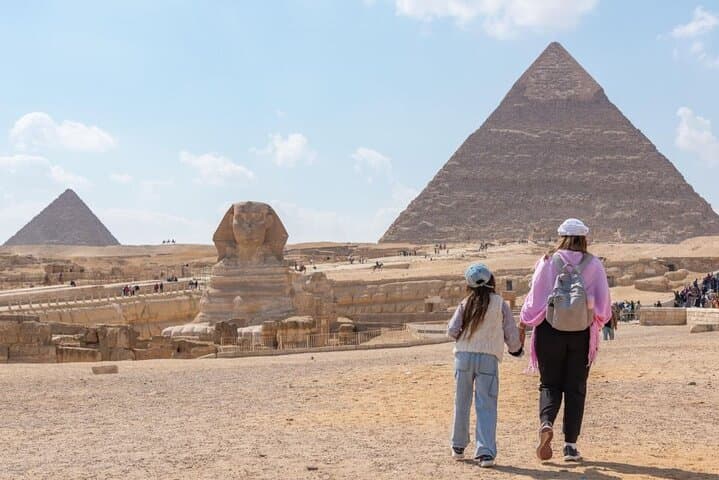
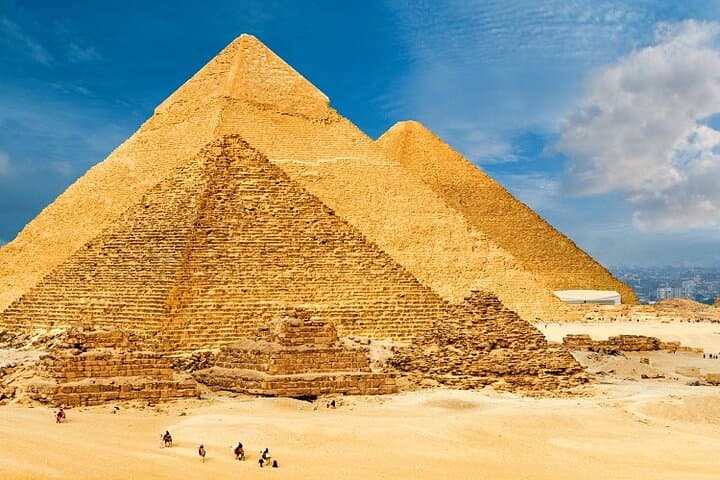
You step off an air-conditioned vehicle into a wind that has been moving sand and stories for millennia. The Giza Plateau stretches flat and sun-bleached; Khafre’s pyramid rises with a blunt profile, its remaining casing stones catching the morning light like a last polished gesture.
Verified experiences and guided adventures in the surrounding area.
Operated by Emo Tours Sweden · Giza, Cairo Governorate
You step off an air-conditioned vehicle into a wind that has been moving sand and stories for millennia. The Giza Plateau stretches flat and sun-bleached; Khafre’s pyramid rises with a blunt profile, its remaining casing stones catching the morning light like a last polished gesture.
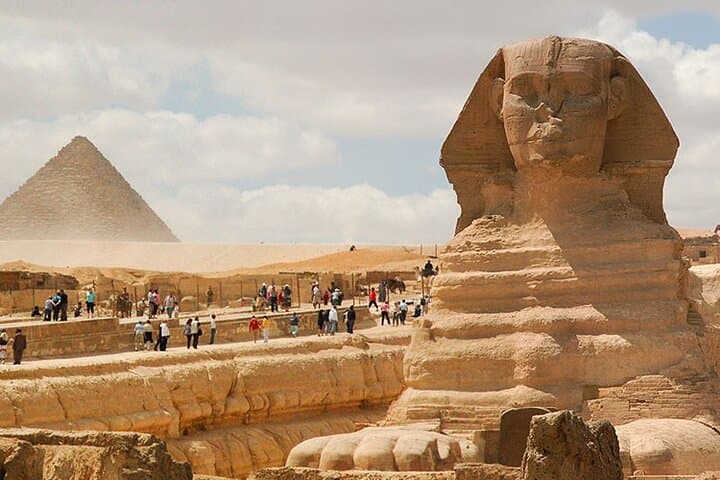
Khafre ruled during Egypt’s Fourth Dynasty (c. 2558–2532 BC). His monument is the middle pyramid of the trio at Giza, closely tied to the Great Sphinx and a series of temples and causeways that once linked river and tomb. Geologically the plateau is limestone bedrock—easy to carve but vulnerable to erosion—so what you enter is a mix of original chambers cut from rock and later block repairs.
Culturally, the site still functions as an open-air classroom: guides point to the mortuary and valley temples, tell of workers’ villages nearby, and translate hieroglyphic shorthand into human stories. Inside the passages you’ll feel the cool, dry air tighten; angles and low ceilings demand slow, deliberate movement. The experience is more about spatial memory than spectacle—narrow corridors, a burial chamber footprint, and the engineered geometry that held a king’s body and beliefs.
Practical guidance: wear flat, grippy shoes and lightweight long sleeves to protect from dust and sun. Bring water and a small LED headlamp; stoops and short ladders are common. The site is best visited early or late to avoid peak heat and crowds; allow 3–4 hours including transport and stops at the Sphinx and valley temple. Respect signage and guide instructions—fragile surfaces and restrictions protect a two-thousand-year-old public heritage.
moderate.
4 hours.
Reasonable mobility—able to crouch, climb short ladders and walk on uneven stone for up to an hour at a time
This tour provides guided access to Khafre’s pyramid interior as described, but check ticket details—some sites restrict direct tomb access on conservation days.
Yes; narrow passages, low ceilings and short ladders require bending and steady footing—those with spinal, heart, or pregnancy concerns should avoid the interior.
Photography rules vary—still photos are usually allowed but flash or tripod use may be restricted to protect the stonework; follow your guide’s instructions.
Most tours include private pickup from Cairo or Giza hotels; public transport exists but is slower—arranging hotel transfer is recommended for time efficiency.
Khafre’s pyramid was built in the Fourth Dynasty and is closely associated with the nearby Sphinx and funerary temples, reflecting royal ritual and Old Kingdom mortuary architecture.
Visitor numbers, windblown sand, and modern pollution stress the limestone; site rules and controlled interior access help protect delicate surfaces and ancient repairs.
Emo Tours Sweden operates guided outdoor trips and adventures with an emphasis on safety, stewardship, and memorable experiences.
You step off an air-conditioned vehicle into a wind that has been moving sand and stories for millennia. The Giza Plateau stretches flat and sun-bleached; Khafre’s pyramid rises with a blunt profile, its remaining casing stones catching the morning light like a last polished gesture.
You step off an air-conditioned vehicle into a wind that has been moving sand and stories for millennia. The Giza Plateau stretches flat and sun-bleached; Khafre’s pyramid rises with a blunt profile, its remaining casing stones catching the morning light like a last polished gesture.
Khafre ruled during Egypt’s Fourth Dynasty (c. 2558–2532 BC). His monument is the middle pyramid of the trio at Giza, closely tied to the Great Sphinx and a series of temples and causeways that once linked river and tomb. Geologically the plateau is limestone bedrock—easy to carve but vulnerable to erosion—so what you enter is a mix of original chambers cut from rock and later block repairs.
Culturally, the site still functions as an open-air classroom: guides point to the mortuary and valley temples, tell of workers’ villages nearby, and translate hieroglyphic shorthand into human stories. Inside the passages you’ll feel the cool, dry air tighten; angles and low ceilings demand slow, deliberate movement. The experience is more about spatial memory than spectacle—narrow corridors, a burial chamber footprint, and the engineered geometry that held a king’s body and beliefs.
Practical guidance: wear flat, grippy shoes and lightweight long sleeves to protect from dust and sun. Bring water and a small LED headlamp; stoops and short ladders are common. The site is best visited early or late to avoid peak heat and crowds; allow 3–4 hours including transport and stops at the Sphinx and valley temple. Respect signage and guide instructions—fragile surfaces and restrictions protect a two-thousand-year-old public heritage.