THE ADVENTURE COLLECTIVE® · Independent discovery and booking for outdoor travel

Spend a full day tracing South Africa’s struggle for justice: from Constitution Hill to the Apartheid Museum and the streets of Soweto. This guided tour combines deep historical context with the living culture of Johannesburg.
Spend a full day tracing South Africa’s struggle for justice: from Constitution Hill to the Apartheid Museum and the streets of Soweto. This guided tour combines deep historical context with the living culture of Johannesburg.
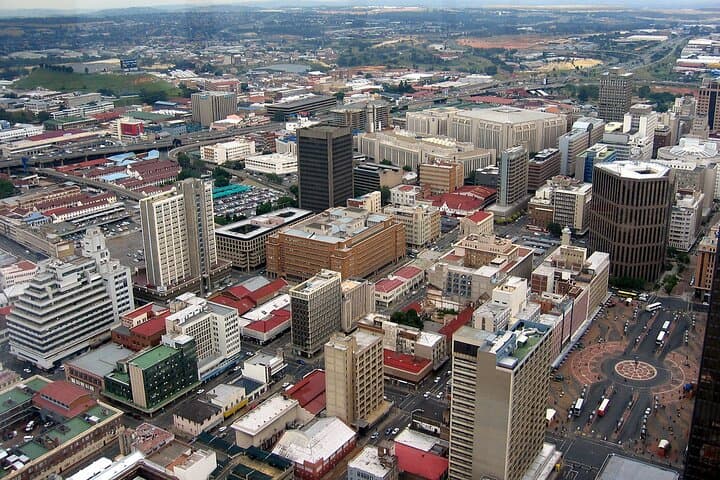
A morning in Johannesburg begins at an air-conditioned minivan sliding through early light, the city yawning and the Nelson Mandela Bridge cutting a clean line across the skyline. By mid-morning you’re standing at Constitution Hill, where former prison cells and the Constitutional Court hold the weight of stories that shaped modern South Africa. The guide’s voice places you in specific dates and faces — the legal architects, the detainees and the activists — while the architecture itself feels like a stern witness.
Verified experiences and guided adventures in the surrounding area.
Operated by Khambanathi Tours · Johannesburg, Gauteng
A morning in Johannesburg begins at an air-conditioned minivan sliding through early light, the city yawning and the Nelson Mandela Bridge cutting a clean line across the skyline. By mid-morning you’re standing at Constitution Hill, where former prison cells and the Constitutional Court hold the weight of stories that shaped modern South Africa. The guide’s voice places you in specific dates and faces — the legal architects, the detainees and the activists — while the architecture itself feels like a stern witness.
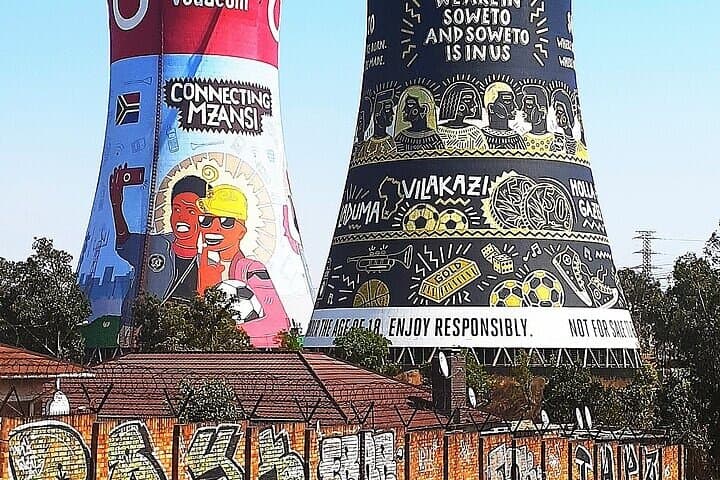
From there the bus takes you south to the Apartheid Museum, a raw, intentional place of contrasts: concrete and steel exhibits that force a physical and emotional route through segregation and resistance. Later you cross into Soweto, where Vilakazi Street still carries the echo of leaders like Mandela and Tutu, and the Hector Pieterson Memorial anchors the memory of the 1976 student uprising.
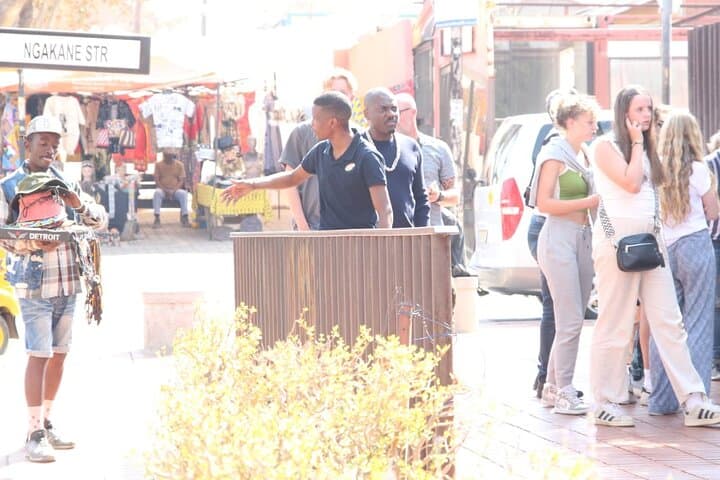
This tour combines recent political history with the living, noisy culture of Johannesburg and Soweto — markets, street food, murals and community spaces. Expect accessible urban walking, museum galleries with strong multimedia content, and opportunities to talk with local guides who link events to present-day Johannesburg.
Practical guidance: plan for an 8-hour day with multiple short walks and museum stairs; bring water, sun protection and respectful curiosity. Keep essentials in a small daypack, leave large valuables at your hotel, and allow time to browse local markets or a township café after the formal itinerary — those moments often reveal the city’s resilient, everyday pulse.
easy.
8 hours.
Suitable for most fitness levels; involves multiple short walks, standing in exhibits, and some stairs.
Yes — this itinerary includes admission to Constitution Hill, the Apartheid Museum and the Hector Pieterson Museum as listed; check your booking confirmation for details.
The tour provides transport in an air-conditioned vehicle and typically arranges pickup; you’ll provide your pickup point during booking.
The tour is described as physically easy, but it is not recommended for travelers with spinal injuries, pregnant guests, or those with serious heart conditions; contact the operator to discuss accessibility needs.
Yes — there are opportunities to sample local food and visit markets in Soweto; bring small change and be mindful of time if you want to stop for a meal.
Soweto was a focal point of resistance during apartheid; the 1976 Soweto Uprising and leaders such as Nelson Mandela and Desmond Tutu are central to the area’s history.
Support local guides and small businesses to ensure tourism benefits the community; follow site rules to protect memorials and avoid littering in heritage areas.
Khambanathi Tours operates guided outdoor trips and adventures with an emphasis on safety, stewardship, and memorable experiences.

A morning in Johannesburg begins at an air-conditioned minivan sliding through early light, the city yawning and the Nelson Mandela Bridge cutting a clean line across the skyline. By mid-morning you’re standing at Constitution Hill, where former prison cells and the Constitutional Court hold the weight of stories that shaped modern South Africa. The guide’s voice places you in specific dates and faces — the legal architects, the detainees and the activists — while the architecture itself feels like a stern witness.
A morning in Johannesburg begins at an air-conditioned minivan sliding through early light, the city yawning and the Nelson Mandela Bridge cutting a clean line across the skyline. By mid-morning you’re standing at Constitution Hill, where former prison cells and the Constitutional Court hold the weight of stories that shaped modern South Africa. The guide’s voice places you in specific dates and faces — the legal architects, the detainees and the activists — while the architecture itself feels like a stern witness.
From there the bus takes you south to the Apartheid Museum, a raw, intentional place of contrasts: concrete and steel exhibits that force a physical and emotional route through segregation and resistance. Later you cross into Soweto, where Vilakazi Street still carries the echo of leaders like Mandela and Tutu, and the Hector Pieterson Memorial anchors the memory of the 1976 student uprising.
This tour combines recent political history with the living, noisy culture of Johannesburg and Soweto — markets, street food, murals and community spaces. Expect accessible urban walking, museum galleries with strong multimedia content, and opportunities to talk with local guides who link events to present-day Johannesburg.
Practical guidance: plan for an 8-hour day with multiple short walks and museum stairs; bring water, sun protection and respectful curiosity. Keep essentials in a small daypack, leave large valuables at your hotel, and allow time to browse local markets or a township café after the formal itinerary — those moments often reveal the city’s resilient, everyday pulse.