THE ADVENTURE COLLECTIVE® · Independent discovery and booking for outdoor travel

Attend an official sumo tournament with an expert guide and reserved seating. Learn rituals, ranking, and ring-side etiquette while witnessing fast, powerful bouts in one of Japan’s historic arenas.
Attend an official sumo tournament with an expert guide and reserved seating. Learn rituals, ranking, and ring-side etiquette while witnessing fast, powerful bouts in one of Japan’s historic arenas.
You step through the stadium doors into a charged hush: the straw-braided dohyo sits center stage, salt gleaming white at its edges, and the crowd’s low murmur tightens as competitors appear. An expert guide walks beside you, pointing out the referee’s embroidered robes, the wrestlers’ heavy mawashi belts and the subtle pre-match rituals that feel equal parts sport and sacred theater.
Verified experiences and guided adventures in the surrounding area.
Operated by Amigo Tours Japan · Tokyo, Tokyo
You step through the stadium doors into a charged hush: the straw-braided dohyo sits center stage, salt gleaming white at its edges, and the crowd’s low murmur tightens as competitors appear. An expert guide walks beside you, pointing out the referee’s embroidered robes, the wrestlers’ heavy mawashi belts and the subtle pre-match rituals that feel equal parts sport and sacred theater.
Sumo traces back centuries to Shinto rites; modern professional tournaments (honbasho) rotate through Tokyo, Osaka, Nagoya and Fukuoka. Many arenas stand near rivers and dense urban blocks—Tokyo’s stadium sits on the Kanto Plain beside the Sumida—so the experience blends raw ritual with metropolitan energy. Inside, expect formal announcements, salt-throwing purification, and rapid, powerful clashes that can end in seconds.
Your guided ticket typically includes reserved second-floor seating (B or C class) and commentary that decodes rankings, bout etiquette and hidden cues—why a yobidashi drums, how a gyoji signals victory. Photography without flash is allowed; food and drink are generally prohibited. Public transit delivers you close to the venue, and morning visits to nearby sumo stables (with permission) reveal training routines up close.
Practical notes: arrive early to catch ring-side introductions, bring small bills for souvenirs or local chanko-nabe restaurants, and dress for respect—avoid loud behavior and follow your guide’s cues. The event is accessible to most travelers and offers a compact, intense window into Japan’s living tradition.
easy.
5 hours.
Suitable for most fitness levels; activity is largely seated with some walking and standing.
Most arenas prohibit outside food and drinks during tournaments; concession options may be limited—eat beforehand or plan to dine nearby.
B and C class typically refer to second-floor reserved seating with a clear view of the dohyo but not ring-side; sightlines are good for most bouts.
Photography without flash is usually permitted, but avoid using tripods or blocking other spectators; follow venue and guide instructions.
Yes—children can attend, but infants often must sit on laps and must remain quiet; consider the atmosphere and length when bringing young kids.
Sumo originates from Shinto wrestling rituals and evolved into a formal professional circuit with official tournaments held in Tokyo, Osaka, Nagoya and Fukuoka.
Use public transit to reach arenas to reduce local traffic and support nearby restaurants and shops; follow venue rules to minimize litter and respect historic spaces.
Amigo Tours Japan operates guided outdoor trips and adventures with an emphasis on safety, stewardship, and memorable experiences.
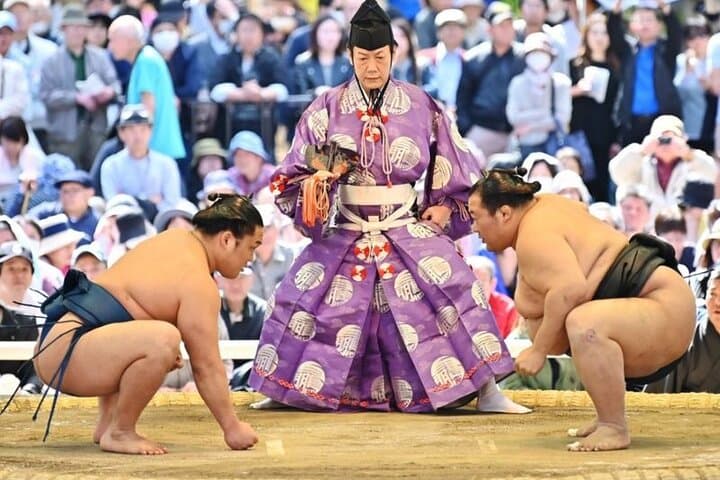
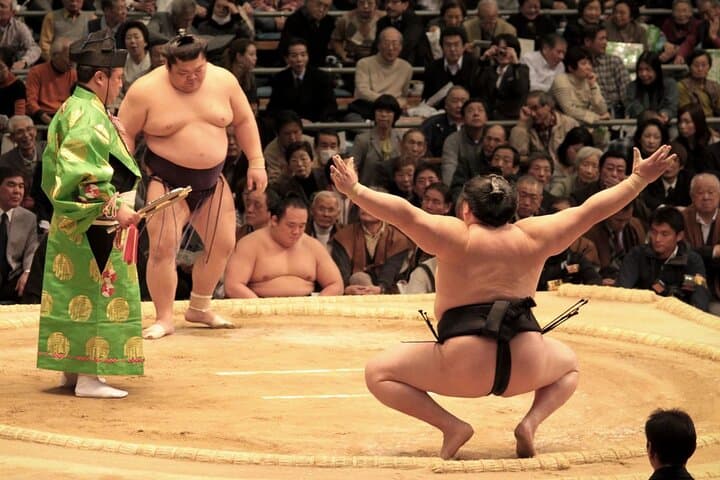
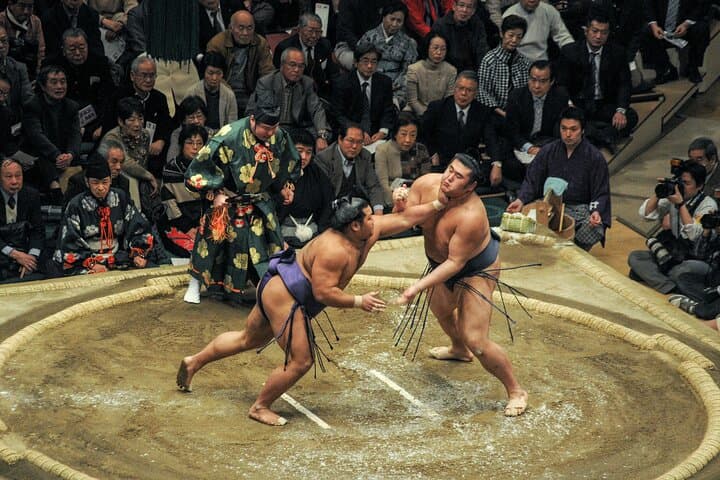
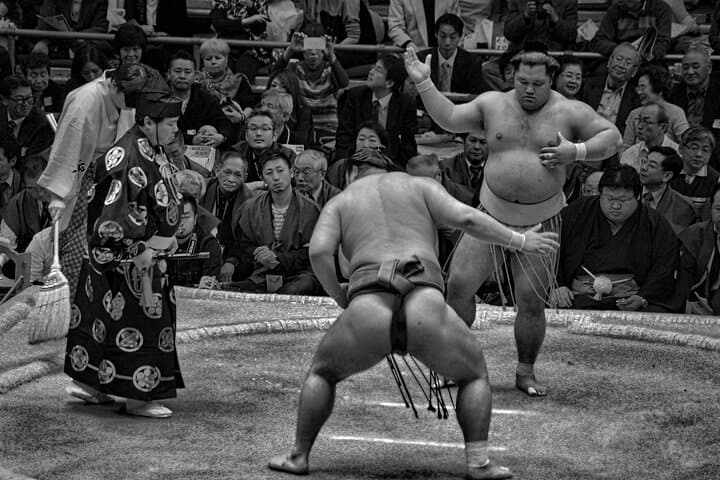
You step through the stadium doors into a charged hush: the straw-braided dohyo sits center stage, salt gleaming white at its edges, and the crowd’s low murmur tightens as competitors appear. An expert guide walks beside you, pointing out the referee’s embroidered robes, the wrestlers’ heavy mawashi belts and the subtle pre-match rituals that feel equal parts sport and sacred theater.
You step through the stadium doors into a charged hush: the straw-braided dohyo sits center stage, salt gleaming white at its edges, and the crowd’s low murmur tightens as competitors appear. An expert guide walks beside you, pointing out the referee’s embroidered robes, the wrestlers’ heavy mawashi belts and the subtle pre-match rituals that feel equal parts sport and sacred theater.
Sumo traces back centuries to Shinto rites; modern professional tournaments (honbasho) rotate through Tokyo, Osaka, Nagoya and Fukuoka. Many arenas stand near rivers and dense urban blocks—Tokyo’s stadium sits on the Kanto Plain beside the Sumida—so the experience blends raw ritual with metropolitan energy. Inside, expect formal announcements, salt-throwing purification, and rapid, powerful clashes that can end in seconds.
Your guided ticket typically includes reserved second-floor seating (B or C class) and commentary that decodes rankings, bout etiquette and hidden cues—why a yobidashi drums, how a gyoji signals victory. Photography without flash is allowed; food and drink are generally prohibited. Public transit delivers you close to the venue, and morning visits to nearby sumo stables (with permission) reveal training routines up close.
Practical notes: arrive early to catch ring-side introductions, bring small bills for souvenirs or local chanko-nabe restaurants, and dress for respect—avoid loud behavior and follow your guide’s cues. The event is accessible to most travelers and offers a compact, intense window into Japan’s living tradition.