THE ADVENTURE COLLECTIVE® · Independent discovery and booking for outdoor travel

Descend beneath Sultanahmet to walk among 6th-century columns and Medusa heads on a private Basilica Cistern tour. This short, atmospheric visit pairs historical context with easy logistics—ideal for travelers who want deep history without a long hike.
Descend beneath Sultanahmet to walk among 6th-century columns and Medusa heads on a private Basilica Cistern tour. This short, atmospheric visit pairs historical context with easy logistics—ideal for travelers who want deep history without a long hike.
Step down from the sunlit streets of Sultanahmet into a cool, echoing hall where columns disappear into shadow and the air tastes faintly of stone and history.
Verified experiences and guided adventures in the surrounding area.
Operated by taxiGo Limo Airport Service · Istanbul, Istanbul
Step down from the sunlit streets of Sultanahmet into a cool, echoing hall where columns disappear into shadow and the air tastes faintly of stone and history.
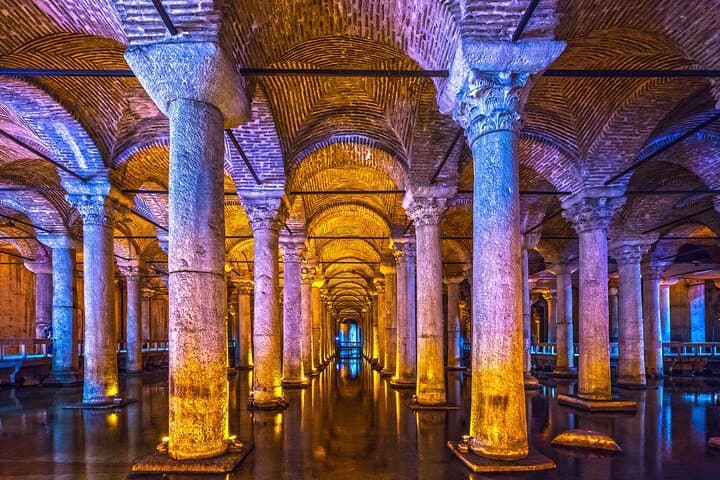
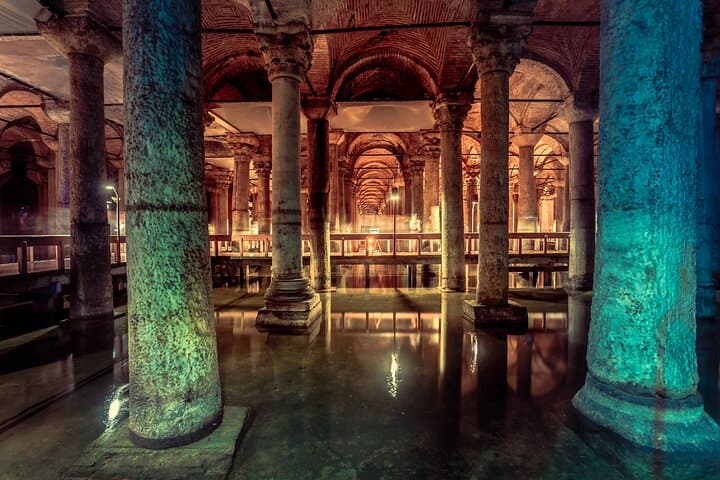
The Basilica Cistern (Yerebatan Sarnıcı) opens like an underground room carved from empire—rows of 336 marble columns, low amber lighting, and the famous Medusa heads holding court at the waterline. Built in the 6th century under Emperor Justinian I to serve the Great Palace, the cistern is both engineering feat and atmospheric ruin: its vaulted brick ceiling spans a cavernous reservoir that once stored Constantinople’s fresh water.
Geology here is human-made but rooted in local materials—Byzantine brickwork and reused classical columns taken from older Roman structures. Culturally, the cistern sits opposite Hagia Sophia and within walking distance of the Blue Mosque and Arasta Bazaar, creating a compact loop of Byzantine and Ottoman heritage.
Practically, a private full-day tour in Istanbul typically allocates roughly an hour for the cistern within a 3–4 hour itinerary that includes hotel pickup, guided exploration, and a couple hours of free time to wander. Expect low light, damp floors, and narrow boardwalks—bring steady footwear and a small light if you prefer. Mid-morning or late afternoon visits cut crowding; summer days are hot aboveground but pleasantly cool below.
Guides add value with context—pointing out column capitals, the cistern’s hydraulic logic, and nearby quieter lanes for a coffee. For travelers who want history with minimal strain, this private option pairs efficient transport with the space to soak in one of Istanbul’s most singular spaces.
easy.
3–4 hours.
Light walking ability—able to stand and move on uneven, slightly slippery surfaces for up to an hour.
This private tour includes guided entry time but check whether the ticket price covers official site admission—confirm at booking.
The cistern has level changes and narrow boardwalks; full wheelchair access is limited—contact the operator for specifics and possible alternatives.
Guided time inside is typically around 60 minutes, with the overall half- to full-day excursion lasting about 3–4 hours including pickup and free time.
Photography is generally allowed; avoid flash and follow guide instructions to preserve the site and respect other visitors.
The cistern was constructed in the 6th century by Emperor Justinian I to supply water to Constantinople’s imperial palace and uses recycled columns from earlier Roman buildings.
Visitors should stay on walkways and follow signage; the site is managed to control humidity and foot traffic to limit damage to ancient masonry.
taxiGo Limo Airport Service operates guided outdoor trips and adventures with an emphasis on safety, stewardship, and memorable experiences.

Step down from the sunlit streets of Sultanahmet into a cool, echoing hall where columns disappear into shadow and the air tastes faintly of stone and history.
Step down from the sunlit streets of Sultanahmet into a cool, echoing hall where columns disappear into shadow and the air tastes faintly of stone and history.
The Basilica Cistern (Yerebatan Sarnıcı) opens like an underground room carved from empire—rows of 336 marble columns, low amber lighting, and the famous Medusa heads holding court at the waterline. Built in the 6th century under Emperor Justinian I to serve the Great Palace, the cistern is both engineering feat and atmospheric ruin: its vaulted brick ceiling spans a cavernous reservoir that once stored Constantinople’s fresh water.
Geology here is human-made but rooted in local materials—Byzantine brickwork and reused classical columns taken from older Roman structures. Culturally, the cistern sits opposite Hagia Sophia and within walking distance of the Blue Mosque and Arasta Bazaar, creating a compact loop of Byzantine and Ottoman heritage.
Practically, a private full-day tour in Istanbul typically allocates roughly an hour for the cistern within a 3–4 hour itinerary that includes hotel pickup, guided exploration, and a couple hours of free time to wander. Expect low light, damp floors, and narrow boardwalks—bring steady footwear and a small light if you prefer. Mid-morning or late afternoon visits cut crowding; summer days are hot aboveground but pleasantly cool below.
Guides add value with context—pointing out column capitals, the cistern’s hydraulic logic, and nearby quieter lanes for a coffee. For travelers who want history with minimal strain, this private option pairs efficient transport with the space to soak in one of Istanbul’s most singular spaces.