THE ADVENTURE COLLECTIVE® · Independent discovery and booking for outdoor travel

Descend into Hoover Dam’s powerplant, trace the rail lines that built it at Boulder City’s Historic Era Railroad Museum, and finish with lunch—this 5–7 hour tour pairs engineering spectacle with transportation history. Practical tips on timing, accessibility, and what to bring.
Descend into Hoover Dam’s powerplant, trace the rail lines that built it at Boulder City’s Historic Era Railroad Museum, and finish with lunch—this 5–7 hour tour pairs engineering spectacle with transportation history. Practical tips on timing, accessibility, and what to bring.
You step off the air-conditioned shuttle onto a concrete rim that looks over the Colorado River, the wind carrying a dry, metallic heat that the canyon walls reflect back at you. Below, the river dares you with a narrow green ribbon and the dam’s curving face looms—immense, geometric, and unmistakably human.
Verified experiences and guided adventures in the surrounding area.
Operated by Desert Wonder Tours · Boulder City, Nevada
You step off the air-conditioned shuttle onto a concrete rim that looks over the Colorado River, the wind carrying a dry, metallic heat that the canyon walls reflect back at you. Below, the river dares you with a narrow green ribbon and the dam’s curving face looms—immense, geometric, and unmistakably human.
Built during the Great Depression between 1931 and 1936, Hoover Dam transformed the Black Canyon from a rugged gorge into a hub of engineering ambition. The powerplant tour descends by elevator to the turbine level, where 17 generators once hum with geological purpose—channeling river pressure into electricity. Nearby, Boulder City’s Historic Era Railroad Museum recounts how temporary rail lines and heavy locomotives moved rock, men, and dreams during construction; the museum’s replica locomotive and generator exhibit help stitch industrial history to place.
The basalt and limestone walls around the dam reveal the Colorado Plateau’s uplift and the erosive patience of the river. Local culture still clings to mining and rail lore—expect Cornish pasties at lunch and stories about the “Six Companies” that built the dam.
Practical guidance: allow 5–7 hours for round-trip transport, the tour, museum time, and an optional lunch. Wear sturdy walking shoes and sun protection; temperatures can swing sharply between canyon shade and exposed viewpoints. Be prepared for an elevator descent, narrow service tunnels, and electromagnetic fields near generators—those with pacemakers should consult a physician. Bring water, a camera, and a sense of curiosity—the site balances technical spectacle with clear interpretive exhibits that reward both history buffs and first-time visitors.
easy.
5–7 hours.
Suitable for most fitness levels; requires standing and walking short distances and a single elevator descent.
The full experience, including transport, the powerplant tour, museum stop, and optional lunch, runs about 5–7 hours.
The experience lists wheelchair accessibility; however, some service tunnels and the powerplant lower levels may have limited access—check with the operator for specifics.
Infants and small children can be accommodated; strollers are allowed, but be prepared for elevator rides and restricted spaces in some areas.
Full refund if canceled at least 24 hours before departure; the operator may cancel for weather or insufficient travelers and offer refunds per policy.
Hoover Dam was built 1931–1936 by a consortium known as the Six Companies; Boulder City was established to house workers and manage logistics.
The dam and Lake Mead are central to regional water management; visitors are encouraged to minimize water waste and follow Leave No Trace principles.
Desert Wonder Tours operates guided outdoor trips and adventures with an emphasis on safety, stewardship, and memorable experiences.
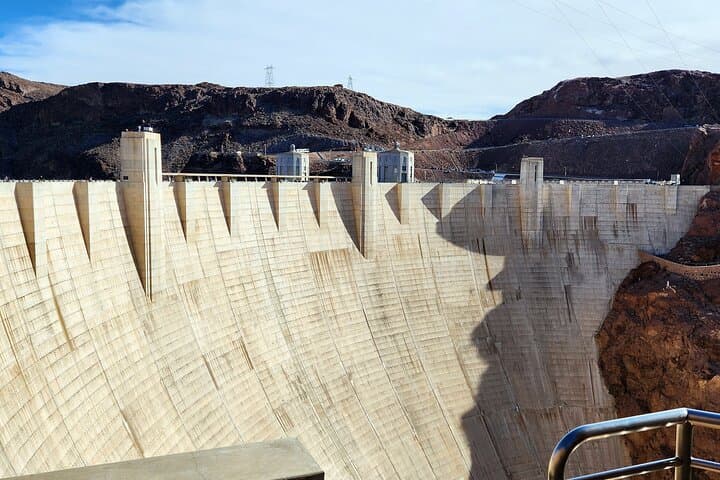


You step off the air-conditioned shuttle onto a concrete rim that looks over the Colorado River, the wind carrying a dry, metallic heat that the canyon walls reflect back at you. Below, the river dares you with a narrow green ribbon and the dam’s curving face looms—immense, geometric, and unmistakably human.
You step off the air-conditioned shuttle onto a concrete rim that looks over the Colorado River, the wind carrying a dry, metallic heat that the canyon walls reflect back at you. Below, the river dares you with a narrow green ribbon and the dam’s curving face looms—immense, geometric, and unmistakably human.
Built during the Great Depression between 1931 and 1936, Hoover Dam transformed the Black Canyon from a rugged gorge into a hub of engineering ambition. The powerplant tour descends by elevator to the turbine level, where 17 generators once hum with geological purpose—channeling river pressure into electricity. Nearby, Boulder City’s Historic Era Railroad Museum recounts how temporary rail lines and heavy locomotives moved rock, men, and dreams during construction; the museum’s replica locomotive and generator exhibit help stitch industrial history to place.
The basalt and limestone walls around the dam reveal the Colorado Plateau’s uplift and the erosive patience of the river. Local culture still clings to mining and rail lore—expect Cornish pasties at lunch and stories about the “Six Companies” that built the dam.
Practical guidance: allow 5–7 hours for round-trip transport, the tour, museum time, and an optional lunch. Wear sturdy walking shoes and sun protection; temperatures can swing sharply between canyon shade and exposed viewpoints. Be prepared for an elevator descent, narrow service tunnels, and electromagnetic fields near generators—those with pacemakers should consult a physician. Bring water, a camera, and a sense of curiosity—the site balances technical spectacle with clear interpretive exhibits that reward both history buffs and first-time visitors.