THE ADVENTURE COLLECTIVE® · Independent discovery and booking for outdoor travel

Explore Hampden Park like a player: walk through the tunnel, visit the changing rooms, and tour the Scottish Football Museum that houses the original Scottish Cup. This two-hour guided experience combines on-field access with curated history.
Explore Hampden Park like a player: walk through the tunnel, visit the changing rooms, and tour the Scottish Football Museum that houses the original Scottish Cup. This two-hour guided experience combines on-field access with curated history.
A wind off the Clyde carries the echo of chants as you step into Hampden Park's concrete bowl — the turf a bright rectangle under the stadium lights, the tunnel a dark throat that leads to roaring noise and expectation.
Verified experiences and guided adventures in the surrounding area.
Operated by Scottish Football Museum · Glasgow, Scotland
A wind off the Clyde carries the echo of chants as you step into Hampden Park's concrete bowl — the turf a bright rectangle under the stadium lights, the tunnel a dark throat that leads to roaring noise and expectation.
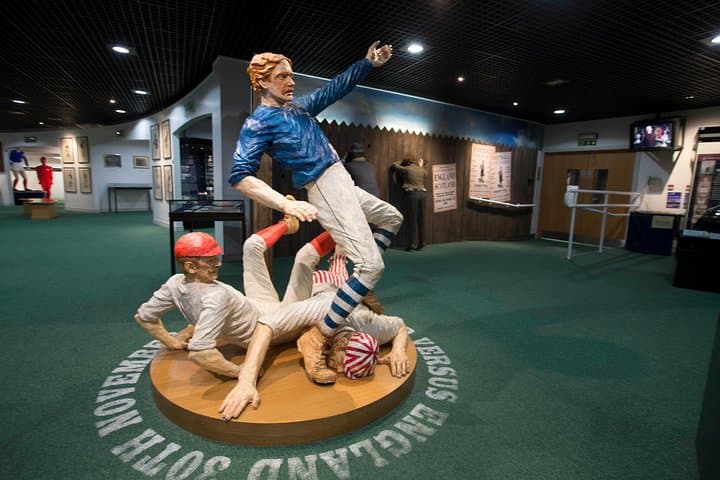
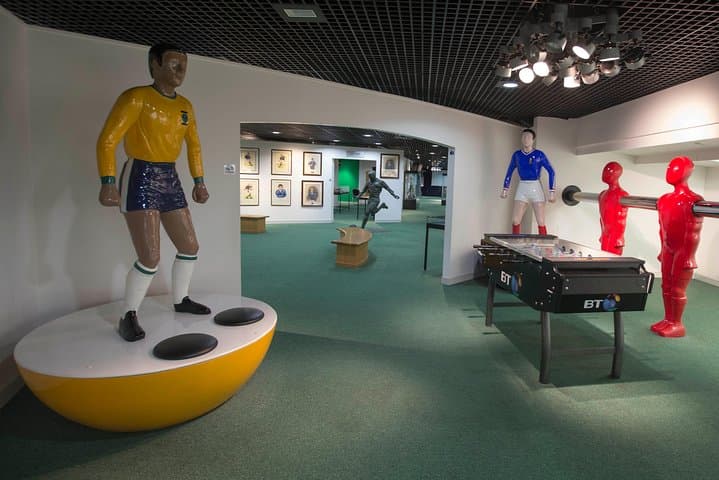
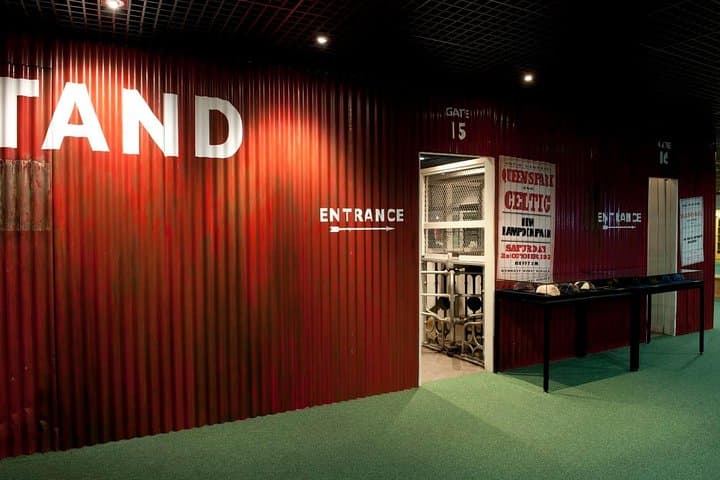
The two-hour guided walk moves between player spaces and public history: changing rooms lined with lockers, the underground roadway where buses arrive, and the tunnel that funnels the crowd’s famous “Hampden Roar.” Across the concourse the Scottish Football Museum stitches the sport’s past to the present — original turnstiles, archival footage of Archie Gemmill’s World Cup goal, and the original Scottish Cup, one of the world’s oldest national trophies.
Hampden’s story is civic as much as sporting: rebuilt in the early 20th century and modernized since, it sits in Glasgow’s south side amid industrial terraces and parkland. Geology and green space meet here — the pitch sits on reclaimed lowland with glimpses of mature street trees beyond the stands. Culturally, the stadium is a local gathering place where community and national identity play out on a public stage.
Practicalities are straightforward: tours last about two hours, are wheelchair accessible, and are family-friendly though children must be supervised. Wear comfortable shoes for concrete steps and bring a light rain layer for Glasgow’s unpredictable weather. Book in advance, check match-day schedules and closures, and arrive 15–20 minutes early to meet in the second-level café. For photographers, museum policy may limit flash; for everyone, public transport is the easiest way in and out.
easy.
2 hours.
Suitable for most fitness levels; involves standing, walking on steps, and occasional narrow spaces.
The guided tour and museum visit run approximately two hours from the meeting time.
Yes — the tour is wheelchair accessible; let the operator know any special requirements when booking.
Photography is generally allowed in public areas but flash may be restricted for archival exhibits; follow posted signs and staff guidance.
Children are welcome but must be accompanied by an adult; some areas include stairs and tight corridors.
Hampden Park was rebuilt in the early 1900s and has long served as Scotland’s national stadium; the museum preserves artifacts from the 19th century onward, including the original Scottish Cup.
The stadium promotes public transport and recycling for visitors; museum displays emphasize preservation of archival materials and responsible access to historic objects.
Scottish Football Museum operates guided outdoor trips and adventures with an emphasis on safety, stewardship, and memorable experiences.
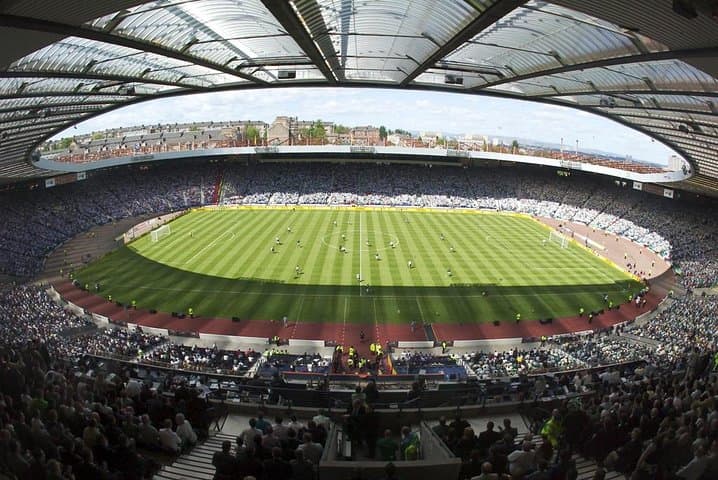
A wind off the Clyde carries the echo of chants as you step into Hampden Park's concrete bowl — the turf a bright rectangle under the stadium lights, the tunnel a dark throat that leads to roaring noise and expectation.
A wind off the Clyde carries the echo of chants as you step into Hampden Park's concrete bowl — the turf a bright rectangle under the stadium lights, the tunnel a dark throat that leads to roaring noise and expectation.
The two-hour guided walk moves between player spaces and public history: changing rooms lined with lockers, the underground roadway where buses arrive, and the tunnel that funnels the crowd’s famous “Hampden Roar.” Across the concourse the Scottish Football Museum stitches the sport’s past to the present — original turnstiles, archival footage of Archie Gemmill’s World Cup goal, and the original Scottish Cup, one of the world’s oldest national trophies.
Hampden’s story is civic as much as sporting: rebuilt in the early 20th century and modernized since, it sits in Glasgow’s south side amid industrial terraces and parkland. Geology and green space meet here — the pitch sits on reclaimed lowland with glimpses of mature street trees beyond the stands. Culturally, the stadium is a local gathering place where community and national identity play out on a public stage.
Practicalities are straightforward: tours last about two hours, are wheelchair accessible, and are family-friendly though children must be supervised. Wear comfortable shoes for concrete steps and bring a light rain layer for Glasgow’s unpredictable weather. Book in advance, check match-day schedules and closures, and arrive 15–20 minutes early to meet in the second-level café. For photographers, museum policy may limit flash; for everyone, public transport is the easiest way in and out.