THE ADVENTURE COLLECTIVE® · Independent discovery and booking for outdoor travel

Walk Ground Zero with a local guide who threads history, architecture and survivor stories into a clear narrative. Choose museum or observatory access to deepen context and take in the city from above.
Walk Ground Zero with a local guide who threads history, architecture and survivor stories into a clear narrative. Choose museum or observatory access to deepen context and take in the city from above.
You step out of the City Hall subway into a stretch of Lower Manhattan where the city's pace slows for a moment — polished bronze names ring two vast black pools, and wind funnels between glass and steel. A local guide moves the story from street-level commerce to the raw geography of loss: where the Twin Towers once rose, now water sweeps into twin voids and the urban grid credits a new humility.
Verified experiences and guided adventures in the surrounding area.
Operated by Experience NYC™ · New York, NY
You step out of the City Hall subway into a stretch of Lower Manhattan where the city's pace slows for a moment — polished bronze names ring two vast black pools, and wind funnels between glass and steel. A local guide moves the story from street-level commerce to the raw geography of loss: where the Twin Towers once rose, now water sweeps into twin voids and the urban grid credits a new humility.
The walk threads St. Paul’s Chapel, the FDNY 10 House, the Survivor Tree and the Oculus before pausing at the Memorial pools. These sites combine modern engineering, memorial design and community memory — the Survivor Tree and the preserved Slurry Wall speak to both human resilience and the watery geology of a reclaimed riverbank. Optional entry to the 9/11 Museum adds artifacts, oral histories and structural fragments; One World Observatory puts the recovery into skyline perspective.
Practical notes: the route is mostly paved and wheelchair accessible, with multiple points to rest and security screening for museum and observatory access. Expect 2–5 hours depending on options and crowds; mornings are quieter and midday can be busy with tour groups.
Plan for clear footwear, a weather layer, and time to pause — reading names, hearing guides’ first-hand accounts, and standing at the edge of the pools are the core experience. Respectful behavior is required: photos are allowed, but reverence and silence in certain areas make the visit meaningful for everyone.
easy.
2–5 hours.
Suitable for all fitness levels; walking on flat, paved surfaces with short stairs if visiting observatory.
Yes — the route and memorial plaza are wheelchair accessible; the Museum and Observatory have accessible entrances but check specific entry options when booking.
Yes — the guided walk includes the Memorial pools and surrounding sites; Museum and Observatory access are optional add-ons.
Add about 90 minutes for a self-guided Museum visit and 60–90 minutes for the One World Observatory, depending on lines and crowds.
Photography is allowed at the outdoor Memorial; certain Museum exhibits restrict photography—observe posted signs and staff guidance.
The Memorial occupies the footprints of the Twin Towers and incorporates names inscribed around two reflecting pools; St. Paul’s Chapel served as an informal support center after the 2001 attacks.
The Memorial Foundation maintains the pools and names with regular conservation work; visitors are asked to stay on designated paths and refrain from touching inscriptions or artifacts.
Experience NYC™ operates guided outdoor trips and adventures with an emphasis on safety, stewardship, and memorable experiences.
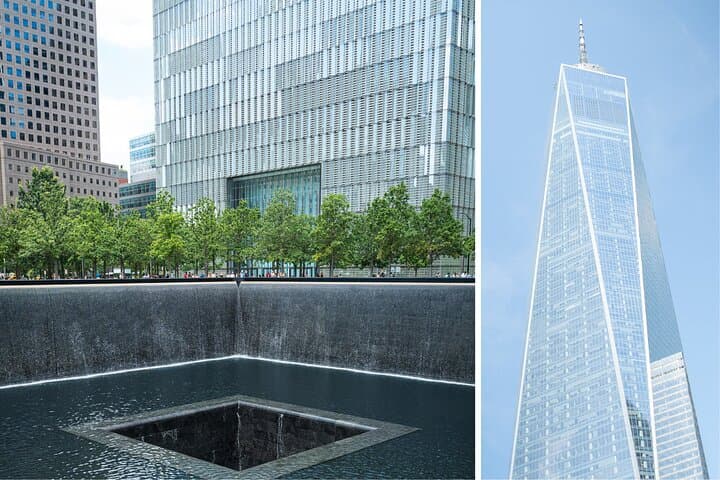
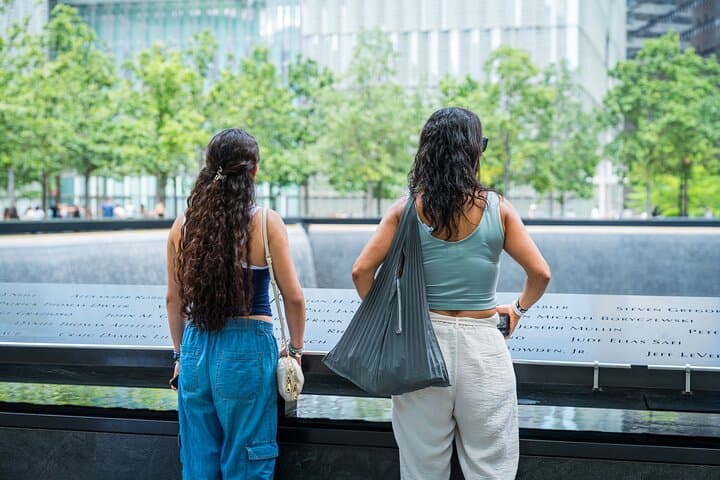
You step out of the City Hall subway into a stretch of Lower Manhattan where the city's pace slows for a moment — polished bronze names ring two vast black pools, and wind funnels between glass and steel. A local guide moves the story from street-level commerce to the raw geography of loss: where the Twin Towers once rose, now water sweeps into twin voids and the urban grid credits a new humility.
You step out of the City Hall subway into a stretch of Lower Manhattan where the city's pace slows for a moment — polished bronze names ring two vast black pools, and wind funnels between glass and steel. A local guide moves the story from street-level commerce to the raw geography of loss: where the Twin Towers once rose, now water sweeps into twin voids and the urban grid credits a new humility.
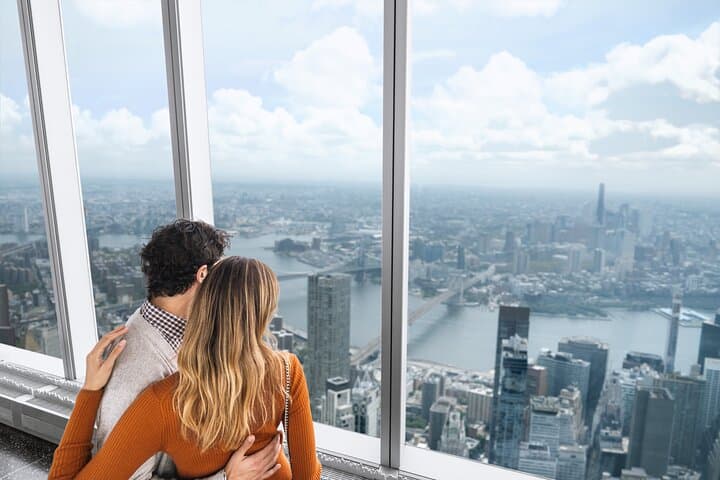
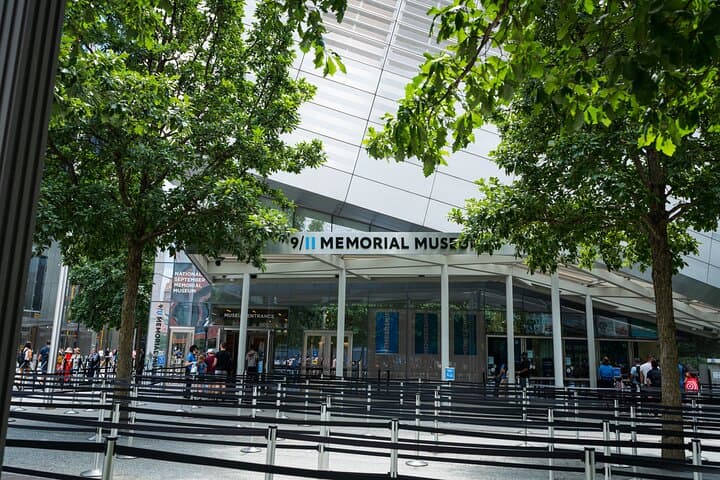
The walk threads St. Paul’s Chapel, the FDNY 10 House, the Survivor Tree and the Oculus before pausing at the Memorial pools. These sites combine modern engineering, memorial design and community memory — the Survivor Tree and the preserved Slurry Wall speak to both human resilience and the watery geology of a reclaimed riverbank. Optional entry to the 9/11 Museum adds artifacts, oral histories and structural fragments; One World Observatory puts the recovery into skyline perspective.
Practical notes: the route is mostly paved and wheelchair accessible, with multiple points to rest and security screening for museum and observatory access. Expect 2–5 hours depending on options and crowds; mornings are quieter and midday can be busy with tour groups.
Plan for clear footwear, a weather layer, and time to pause — reading names, hearing guides’ first-hand accounts, and standing at the edge of the pools are the core experience. Respectful behavior is required: photos are allowed, but reverence and silence in certain areas make the visit meaningful for everyone.