THE ADVENTURE COLLECTIVE® · Independent discovery and booking for outdoor travel

Explore Giotto’s renowned frescoes in a focused two-hour small-group tour of Padua, including priority entry to the Scrovegni Chapel. Learn the chapel’s history, see key fresco scenes up close, and get practical tips for visiting the site respectfully.
Explore Giotto’s renowned frescoes in a focused two-hour small-group tour of Padua, including priority entry to the Scrovegni Chapel. Learn the chapel’s history, see key fresco scenes up close, and get practical tips for visiting the site respectfully.
The tour begins in a cool city square where stone steps and cobbles still keep the rhythm of centuries. Guides gather a small group, tickets checked, and the short walk toward the Scrovegni Chapel feels like stepping into an artful hush—Prato della Valle and the Bacchiglione River watching from a polite distance.
Verified experiences and guided adventures in the surrounding area.
Operated by Bologna Tour & Best Italy Tour · Padua, Veneto
The tour begins in a cool city square where stone steps and cobbles still keep the rhythm of centuries. Guides gather a small group, tickets checked, and the short walk toward the Scrovegni Chapel feels like stepping into an artful hush—Prato della Valle and the Bacchiglione River watching from a polite distance.
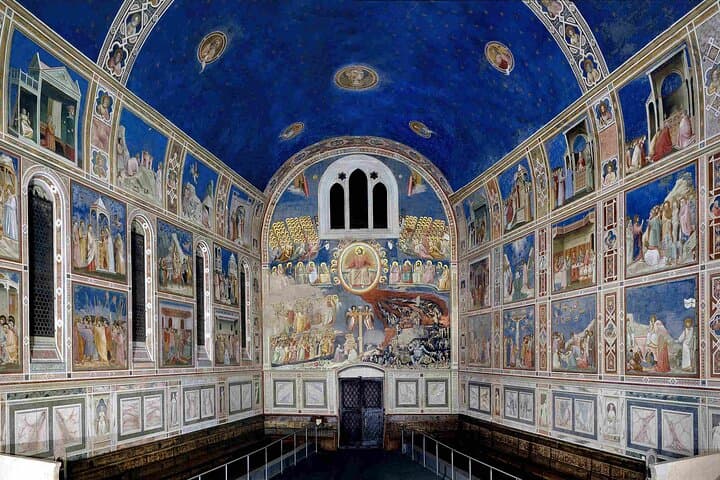
Built by Enrico Scrovegni in the early 14th century as an act of penance, the chapel houses Giotto’s fresco cycle (1303–1305), scenes that shifted painting toward naturalism and expressive space. Padua sits on the Venetian plain—soft alluvial soils that shaped its canals and plazas—while the nearby botanical gardens, one of the oldest in the world, reflect the city’s long role in learning and trade.
The small-group format lets a guide point out compositional details, iconography, and the conservation measures that protect fragile pigments. The visit usually includes a short orientation film and a timed, climate-controlled entry; photography is restricted to preserve the frescoes.
Practical side: this two-hour outing is mostly flat walking over cobbles—expect 1–2 km of city streets, minimal elevation, and short standing periods inside the chapel. Bring a light layer for the climate-controlled anteroom, keep voices low, and arrive 10–15 minutes early. Reserve in advance: limited entry and strict time slots keep crowds manageable and the art intact.
For travelers who want history with practical rhythm, this tour pairs deep art-historical context with efficient logistics—perfect for curious visitors who prefer close observation over hurried sightseeing.
easy.
2 hours.
Low-impact walking ability; suitable for most fitness levels as terrain is flat with short standing periods
The full tour runs about two hours, usually including a city walking segment and a timed entry into the chapel.
No—photography is generally prohibited to protect the frescoes; guides will remind visitors of rules before entry.
Yes—physically it’s suitable, but infants must sit on laps in the chapel and noise should be minimized to preserve the atmosphere.
Accessibility is limited due to historic architecture and small interior spaces; contact the operator ahead of time to discuss accommodations and alternative options.
Enrico Scrovegni commissioned the chapel in the early 1300s; Giotto’s fresco cycle (1303–1305) marked a pivotal move toward realism and emotion in Italian painting.
Timed entries and strict no-photography rules limit environmental stress on the frescoes; ongoing conservation and controlled microclimates preserve pigments and plaster.
Bologna Tour & Best Italy Tour operates guided outdoor trips and adventures with an emphasis on safety, stewardship, and memorable experiences.


The tour begins in a cool city square where stone steps and cobbles still keep the rhythm of centuries. Guides gather a small group, tickets checked, and the short walk toward the Scrovegni Chapel feels like stepping into an artful hush—Prato della Valle and the Bacchiglione River watching from a polite distance.
The tour begins in a cool city square where stone steps and cobbles still keep the rhythm of centuries. Guides gather a small group, tickets checked, and the short walk toward the Scrovegni Chapel feels like stepping into an artful hush—Prato della Valle and the Bacchiglione River watching from a polite distance.
Built by Enrico Scrovegni in the early 14th century as an act of penance, the chapel houses Giotto’s fresco cycle (1303–1305), scenes that shifted painting toward naturalism and expressive space. Padua sits on the Venetian plain—soft alluvial soils that shaped its canals and plazas—while the nearby botanical gardens, one of the oldest in the world, reflect the city’s long role in learning and trade.
The small-group format lets a guide point out compositional details, iconography, and the conservation measures that protect fragile pigments. The visit usually includes a short orientation film and a timed, climate-controlled entry; photography is restricted to preserve the frescoes.
Practical side: this two-hour outing is mostly flat walking over cobbles—expect 1–2 km of city streets, minimal elevation, and short standing periods inside the chapel. Bring a light layer for the climate-controlled anteroom, keep voices low, and arrive 10–15 minutes early. Reserve in advance: limited entry and strict time slots keep crowds manageable and the art intact.
For travelers who want history with practical rhythm, this tour pairs deep art-historical context with efficient logistics—perfect for curious visitors who prefer close observation over hurried sightseeing.