THE ADVENTURE COLLECTIVE® · Independent discovery and booking for outdoor travel

Spend a half-day at Kibbutz Ein Shemer meeting members, touring a working dairy, and eating in the communal dining hall. This practical visit blends history, agriculture and grassroots environmental projects in northern Israel.
Spend a half-day at Kibbutz Ein Shemer meeting members, touring a working dairy, and eating in the communal dining hall. This practical visit blends history, agriculture and grassroots environmental projects in northern Israel.
A dusting of sun warms the courtyard as the visitor steps off the coach into a place that still runs on schedule: kibbutz Ein Shemer’s paths, low stone buildings and working barns. The hum of milking machines and the clatter from the old tractor exhibit give a practical rhythm to the morning, while olive trees and field edges frame a landscape that both feeds and frames communal life.
Verified experiences and guided adventures in the surrounding area.
Operated by Ron Lev Israel Private Customized Tours · Ein Shemer, Haifa District
A dusting of sun warms the courtyard as the visitor steps off the coach into a place that still runs on schedule: kibbutz Ein Shemer’s paths, low stone buildings and working barns. The hum of milking machines and the clatter from the old tractor exhibit give a practical rhythm to the morning, while olive trees and field edges frame a landscape that both feeds and frames communal life.
Founded in July 1932, Ein Shemer is part of the pre-state kibbutz movement—an experiment in cooperative agriculture and shared living that helped shape modern Israel. The soils here are alluvial plains shaped by ancient rivers; the relatively flat terrain opens into long views toward the coastal plain and low hills. Cultural life revolves around the dining hall, the museum courtyard and the educational greenhouse where Arab and Jewish youths run joint environmental programs.
Visitors typically tour the working dairy, watch traditional bread baking demonstrations, and explore the Old Courtyard Museum with its early tractors and reconstructed Ottoman-era rail artifacts. The ecological greenhouse pulls the practical and the ideal together: water-wise irrigation, classroom spaces and community projects that highlight sustainability.
Practical guidance: expect a relaxed, easy-paced half-day (roughly four hours including transfers). Wear closed-toe shoes for farm areas, bring sun protection and modest attire for communal buildings. Meals are buffet-style in the kibbutz dining hall—ask about dietary needs in advance. Photography is welcome but be mindful around private residences and working livestock.
easy.
4 hours (half-day).
Suitable for all fitness levels; light walking and standing during farm and museum visits
Yes—the visit includes a buffet lunch in the kibbutz dining hall; inform the operator of dietary restrictions ahead of time.
The total booking is approximately four hours; the on-site visit runs around two to three hours depending on pace.
Yes; the activity is family-friendly but children must be supervised around animals and farm equipment.
Hotel pickup and drop-off are included; confirm your pickup point when booking.
Ein Shemer was founded in July 1932 as part of the pre-state kibbutz movement; its communal institutions—dining hall, cooperative farms and museums—reflect early Zionist agricultural pioneering.
The ecological greenhouse and water-efficient farming demonstrate local efforts to balance productive agriculture with water conservation and community education.
Ron Lev Israel Private Customized Tours operates guided outdoor trips and adventures with an emphasis on safety, stewardship, and memorable experiences.
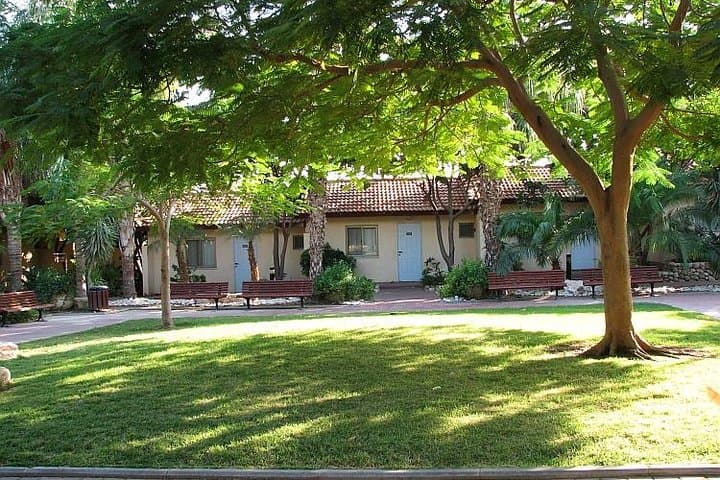



A dusting of sun warms the courtyard as the visitor steps off the coach into a place that still runs on schedule: kibbutz Ein Shemer’s paths, low stone buildings and working barns. The hum of milking machines and the clatter from the old tractor exhibit give a practical rhythm to the morning, while olive trees and field edges frame a landscape that both feeds and frames communal life.
A dusting of sun warms the courtyard as the visitor steps off the coach into a place that still runs on schedule: kibbutz Ein Shemer’s paths, low stone buildings and working barns. The hum of milking machines and the clatter from the old tractor exhibit give a practical rhythm to the morning, while olive trees and field edges frame a landscape that both feeds and frames communal life.
Founded in July 1932, Ein Shemer is part of the pre-state kibbutz movement—an experiment in cooperative agriculture and shared living that helped shape modern Israel. The soils here are alluvial plains shaped by ancient rivers; the relatively flat terrain opens into long views toward the coastal plain and low hills. Cultural life revolves around the dining hall, the museum courtyard and the educational greenhouse where Arab and Jewish youths run joint environmental programs.
Visitors typically tour the working dairy, watch traditional bread baking demonstrations, and explore the Old Courtyard Museum with its early tractors and reconstructed Ottoman-era rail artifacts. The ecological greenhouse pulls the practical and the ideal together: water-wise irrigation, classroom spaces and community projects that highlight sustainability.
Practical guidance: expect a relaxed, easy-paced half-day (roughly four hours including transfers). Wear closed-toe shoes for farm areas, bring sun protection and modest attire for communal buildings. Meals are buffet-style in the kibbutz dining hall—ask about dietary needs in advance. Photography is welcome but be mindful around private residences and working livestock.