THE ADVENTURE COLLECTIVE® · Independent discovery and booking for outdoor travel

Explore DTLA on foot with a guide who connects architecture, film history, and urban design. This 2.5‑hour walking tour hits the Bradbury Building, Historic Broadway, food halls, and lesser-known corners that reveal Los Angeles’ layered past.
Explore DTLA on foot with a guide who connects architecture, film history, and urban design. This 2.5‑hour walking tour hits the Bradbury Building, Historic Broadway, food halls, and lesser-known corners that reveal Los Angeles’ layered past.
You step off the Metro into a canyon of stone, tile, and steel—streets that keep their own time. The tour moves at a deliberate pace: a Bradbury Building atrium that catches light like a stage, a theater marquee that still hums with echoes, and a food hall where spices pull the city together.
Verified experiences and guided adventures in the surrounding area.
Operated by Touch Down in LA · Los Angeles, California
You step off the Metro into a canyon of stone, tile, and steel—streets that keep their own time. The tour moves at a deliberate pace: a Bradbury Building atrium that catches light like a stage, a theater marquee that still hums with echoes, and a food hall where spices pull the city together.
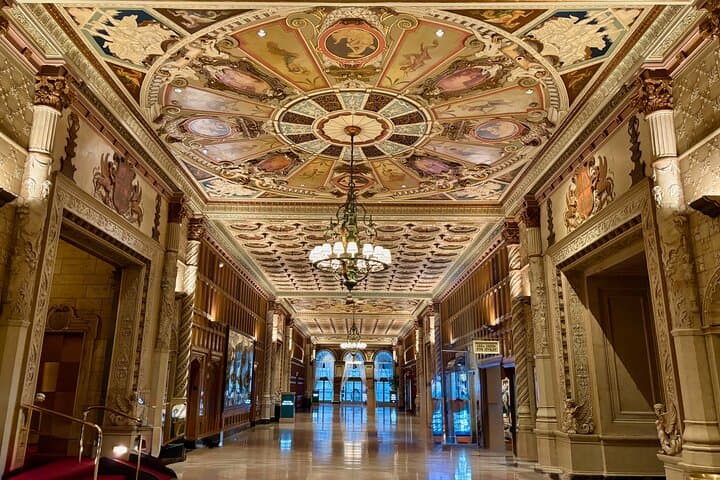
DTLA’s story is visible in brick and terra cotta. Once the financial heart of the Pacific Coast, Spring Street and Broadway hold early 20th‑century Beaux‑Arts and Art Deco facades; Bunker Hill’s dramatic regrading reshaped the neighborhood and its social fabric. Geologically, the district sits on the Los Angeles Basin’s alluvial plain—flat streets overlaid on the city’s tectonic tale—while the skyline documents waves of economic booms, busts, and adaptive reuse.
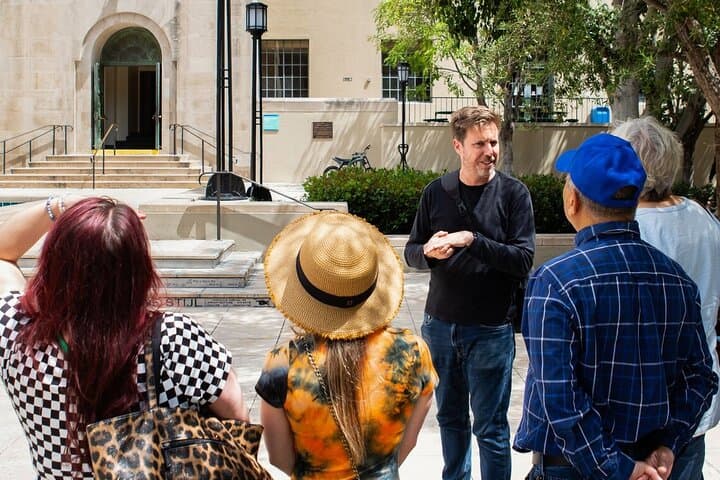
Culture arrives in layers: immigrant markets, the Jewelry and Fashion districts, and civic spaces that stage protests, premieres, and everyday life. A Belgian guide’s outsider‑turned-local perspective reframes familiar corners, tying local urban design to global cities.
Practical guidance: expect roughly 2.5 hours of walking on mostly paved sidewalks with some steps; wear supportive shoes and plan for street noise and pedestrians. Start in the morning to avoid midday heat and catch interior spaces like the Bradbury before they fill. Bring a charged phone for photos but respect private property and quiet interiors. Public transit and ride shares serve the loop; the route is suitable for most people with moderate mobility but includes stairs and curbs. The value here is stories—architectural detail, film lore, and urban policy—woven into a walkable slice of LA that reads like a living museum.
moderate.
2–3 hours.
Moderate fitness; comfortable walking for 2–3 hours with short standing stops
The tour runs about 2.5 hours and covers roughly 1.5–2 miles at a steady walking pace with multiple stops.
Much of the route is on sidewalks and accessible, but some historic interiors and stairs may not be fully wheelchair accessible—ask when booking for accommodations.
Full refund is available if you cancel at least 24 hours before the scheduled departure per the provider’s policy.
Photography is generally allowed in public areas but follow on‑site rules; some interiors may restrict flash or commercial photography.
DTLA grew rapidly in the late 19th and early 20th centuries as rail and finance concentrated wealth downtown; Broadway became America’s largest concentration of movie palaces during cinema’s golden age.
Adaptive reuse of theaters and banks has preserved architectural character while reducing demolition waste; support local businesses and avoid littering to minimize urban impact.
Touch Down in LA operates guided outdoor trips and adventures with an emphasis on safety, stewardship, and memorable experiences.
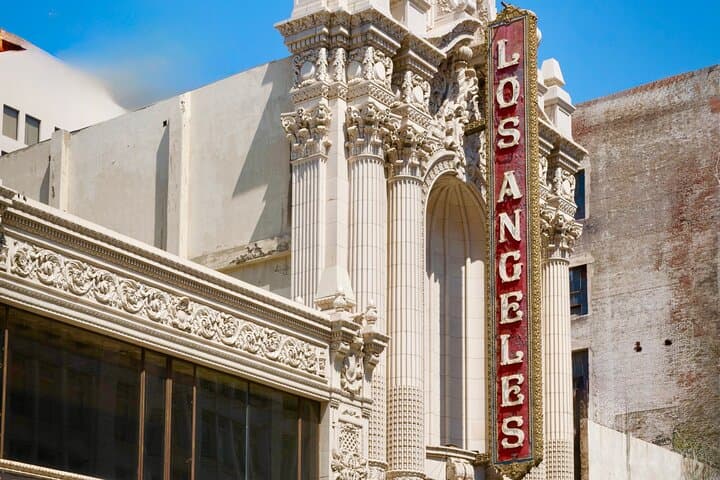
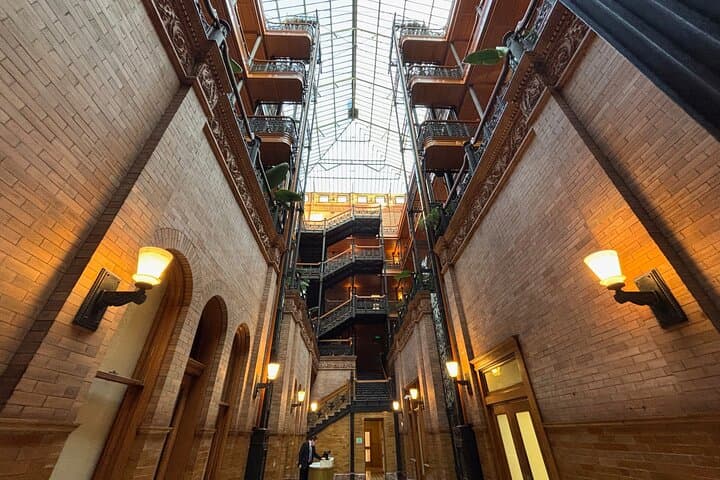
You step off the Metro into a canyon of stone, tile, and steel—streets that keep their own time. The tour moves at a deliberate pace: a Bradbury Building atrium that catches light like a stage, a theater marquee that still hums with echoes, and a food hall where spices pull the city together.
You step off the Metro into a canyon of stone, tile, and steel—streets that keep their own time. The tour moves at a deliberate pace: a Bradbury Building atrium that catches light like a stage, a theater marquee that still hums with echoes, and a food hall where spices pull the city together.
DTLA’s story is visible in brick and terra cotta. Once the financial heart of the Pacific Coast, Spring Street and Broadway hold early 20th‑century Beaux‑Arts and Art Deco facades; Bunker Hill’s dramatic regrading reshaped the neighborhood and its social fabric. Geologically, the district sits on the Los Angeles Basin’s alluvial plain—flat streets overlaid on the city’s tectonic tale—while the skyline documents waves of economic booms, busts, and adaptive reuse.
Culture arrives in layers: immigrant markets, the Jewelry and Fashion districts, and civic spaces that stage protests, premieres, and everyday life. A Belgian guide’s outsider‑turned-local perspective reframes familiar corners, tying local urban design to global cities.
Practical guidance: expect roughly 2.5 hours of walking on mostly paved sidewalks with some steps; wear supportive shoes and plan for street noise and pedestrians. Start in the morning to avoid midday heat and catch interior spaces like the Bradbury before they fill. Bring a charged phone for photos but respect private property and quiet interiors. Public transit and ride shares serve the loop; the route is suitable for most people with moderate mobility but includes stairs and curbs. The value here is stories—architectural detail, film lore, and urban policy—woven into a walkable slice of LA that reads like a living museum.