THE ADVENTURE COLLECTIVE® · Independent discovery and booking for outdoor travel

Walk down into the Colosseum arena, climb Palatine Hill and trace the Via Sacra through the Roman Forum with a certified guide. This 2–3 hour guided tour blends close access, historical context and practical tips for navigating Rome’s busiest ruins.
Walk down into the Colosseum arena, climb Palatine Hill and trace the Via Sacra through the Roman Forum with a certified guide. This 2–3 hour guided tour blends close access, historical context and practical tips for navigating Rome’s busiest ruins.
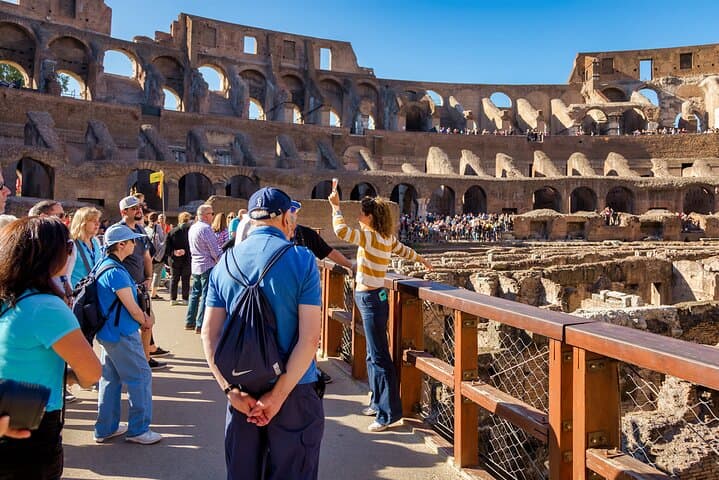
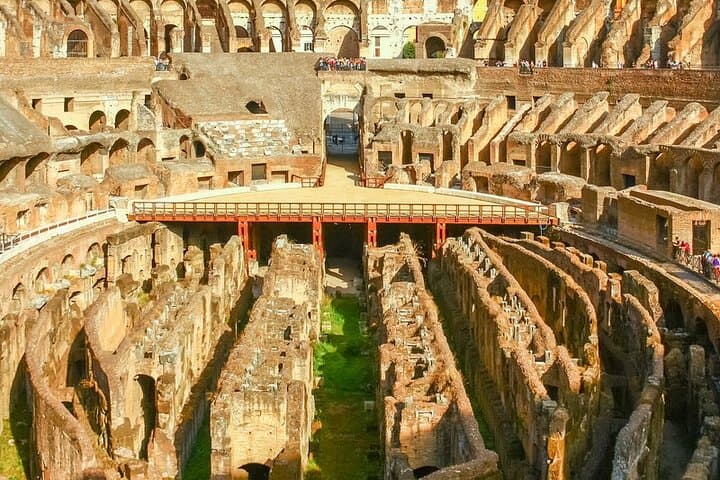
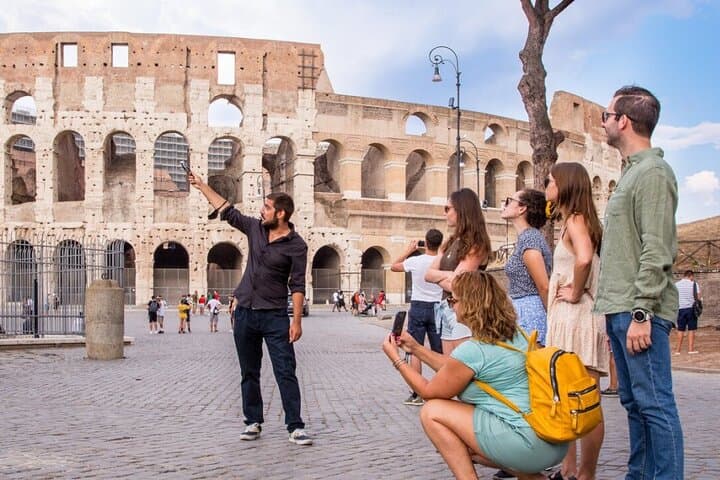
The morning light hits the battered travertine of the Colosseum and the city hums around it; a small group gathers to slip through reserved access and step where gladiators once paced. The guide leads down into the arena area — when open — a compact, dramatic space that concentrates the amphitheater’s scale and the clang of imagined combat. From there the route rises past the Arch of Constantine and climbs Palatine Hill, before descending into the Roman Forum and the Imperial Fora, walking corridors of power and ritual along the Via Sacra.
Verified experiences and guided adventures in the surrounding area.
Operated by TRIP ROMA SERVICE AGENCY · Rome, Lazio
The morning light hits the battered travertine of the Colosseum and the city hums around it; a small group gathers to slip through reserved access and step where gladiators once paced. The guide leads down into the arena area — when open — a compact, dramatic space that concentrates the amphitheater’s scale and the clang of imagined combat. From there the route rises past the Arch of Constantine and climbs Palatine Hill, before descending into the Roman Forum and the Imperial Fora, walking corridors of power and ritual along the Via Sacra.
This loop traces Rome’s political and architectural spine: Republican curiae, imperial basilicas, and layers of marble and concrete built and rebuilt from the 1st century BCE onward. Geologically, the city sits on volcanic tuff and alluvial plains, which made the Colosseum’s foundations possible and the Palatine’s terraces livable. Culturally, these spaces were civic stages — processions, proclamations and spectacle — and today they remain densely readable, with inscriptions and columns that point to empire-era priorities.
Practical guidance: tours last about 2–3 hours and are primarily walking on uneven stone and packed dirt; comfortable, stable footwear matters more than peak fitness. Bring a small bottle of water, a photo ID (required for entry), and arrive early to avoid peak crowds and midday heat. If arena access is closed for safety, expect to visit the first and second tiers and receive a partial refund; guides will adjust narrative to the available spaces. This tour suits travelers who want context and close access to one of Rome’s most charged archaeological stages.
easy.
2–3 hours.
Suitable for most fitness levels; requires walking and negotiating stairs and uneven surfaces.
No — arena access depends on daily safety and conservation decisions; if closed you will visit upper tiers and receive a partial refund per the operator’s policy.
Expect roughly 2–3 hours of walking with stairs and uneven surfaces across the Colosseum, Palatine Hill and the Roman Forum.
The tour includes timed admission but not official guaranteed skip-the-line status; guides work to streamline entry through reserved access.
A valid passport or national ID that matches the full name submitted at booking is required for entry to archaeological sites.
The Colosseum was completed in the 1st century CE under emperors Vespasian and Titus; the adjacent Palatine and Forum served as the city’s residential and civic heart through the Republic and Empire.
High visitor numbers stress ancient stone and original finishes; staying on marked paths and following guide instructions helps protect fragile structures.
TRIP ROMA SERVICE AGENCY operates guided outdoor trips and adventures with an emphasis on safety, stewardship, and memorable experiences.

The morning light hits the battered travertine of the Colosseum and the city hums around it; a small group gathers to slip through reserved access and step where gladiators once paced. The guide leads down into the arena area — when open — a compact, dramatic space that concentrates the amphitheater’s scale and the clang of imagined combat. From there the route rises past the Arch of Constantine and climbs Palatine Hill, before descending into the Roman Forum and the Imperial Fora, walking corridors of power and ritual along the Via Sacra.
The morning light hits the battered travertine of the Colosseum and the city hums around it; a small group gathers to slip through reserved access and step where gladiators once paced. The guide leads down into the arena area — when open — a compact, dramatic space that concentrates the amphitheater’s scale and the clang of imagined combat. From there the route rises past the Arch of Constantine and climbs Palatine Hill, before descending into the Roman Forum and the Imperial Fora, walking corridors of power and ritual along the Via Sacra.
This loop traces Rome’s political and architectural spine: Republican curiae, imperial basilicas, and layers of marble and concrete built and rebuilt from the 1st century BCE onward. Geologically, the city sits on volcanic tuff and alluvial plains, which made the Colosseum’s foundations possible and the Palatine’s terraces livable. Culturally, these spaces were civic stages — processions, proclamations and spectacle — and today they remain densely readable, with inscriptions and columns that point to empire-era priorities.
Practical guidance: tours last about 2–3 hours and are primarily walking on uneven stone and packed dirt; comfortable, stable footwear matters more than peak fitness. Bring a small bottle of water, a photo ID (required for entry), and arrive early to avoid peak crowds and midday heat. If arena access is closed for safety, expect to visit the first and second tiers and receive a partial refund; guides will adjust narrative to the available spaces. This tour suits travelers who want context and close access to one of Rome’s most charged archaeological stages.