THE ADVENTURE COLLECTIVE® · Independent discovery and booking for outdoor travel

Go beyond Chicago’s riverboat view and step into the city’s finest Art Deco interiors. This two-hour walking tour explores ornate lobbies, bank halls and theaters from the 1920s and ’30s — places most visitors never enter.
Go beyond Chicago’s riverboat view and step into the city’s finest Art Deco interiors. This two-hour walking tour explores ornate lobbies, bank halls and theaters from the 1920s and ’30s — places most visitors never enter.
You step off the curb onto the Loop’s broad sidewalks, the river at your right flashing like a ribbon of chrome. The guide gestures toward a low, brass-trimmed entryway and the group slips inside — suddenly the city narrows to marble, geometric lighting, and metalwork that catches the light like tiny future-cities in miniature.
Verified experiences and guided adventures in the surrounding area.
Operated by Inside Chicago Walking Tours · Chicago, Illinois
You step off the curb onto the Loop’s broad sidewalks, the river at your right flashing like a ribbon of chrome. The guide gestures toward a low, brass-trimmed entryway and the group slips inside — suddenly the city narrows to marble, geometric lighting, and metalwork that catches the light like tiny future-cities in miniature.
Art Deco arrived in Chicago between the world wars as a language of optimism: stepped forms, stylized florals and machine-age materials intended to signal progress. In the Loop that language was written into lobbies, banks and club rooms where architects used cast metal, terrazzo and glazed brick to make everyday interiors feel purposeful and modern. The geology here is urban — bedrock beneath basements; the Chicago River carved the shoreline that set the grid; skyscrapers rise from engineered foundations — but the visual story is architectural, not natural.
Culturally, these interiors reflect the city’s 1920s boom, the financiers and civic leaders who wanted buildings to look as confident as their ambitions. You’ll pass spaces that figure in boat tours from the riverfront yet go further: private lobbies, ornate theaters and bank halls few visitors see.
Practical guidance: the walk is about two hours, mostly flat pavement with brief interior stairs. Dress in layers for Chicago’s sudden wind off the river, wear comfortable shoes for standing, and carry a small bag for cameras and a water bottle. Photography rules vary by building; follow your guide and respect private spaces. Plan to arrive early — downtown navigation can be delayed by traffic or transit — and bring a charged phone for digital tickets.
easy.
2 hours.
Suitable for most fitness levels; participants should be able to stand and walk for 90–120 minutes with occasional stairs.
Policies vary by property; some lobbies permit photos while others prohibit them — your guide will advise before entering each space.
Yes — the tour is rated easy, but it involves up to two hours of walking and some indoor stairs; let the operator know if mobility assistance is needed.
The tour operates in most weather since much of the route includes interior stops; severe weather may trigger cancellation with refund if the operator decides it’s unsafe.
The meeting point is the outdoor plaza outside 425 S. Financial Place (next to the horse sculpture); the tour finishes near Michigan Avenue.
Art Deco in Chicago flourished in the 1920s–30s as the city rebuilt its commercial identity with materials like bronze, terrazzo and stylized ornamentation reflecting machine-age optimism.
Many interiors are privately owned and maintained; follow access rules, support preservation groups, and avoid touching decorative finishes to help preserve historic fabric.
Inside Chicago Walking Tours operates guided outdoor trips and adventures with an emphasis on safety, stewardship, and memorable experiences.
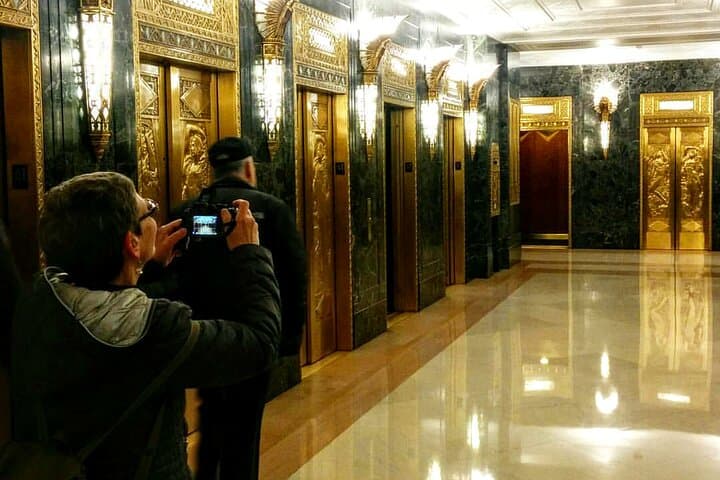
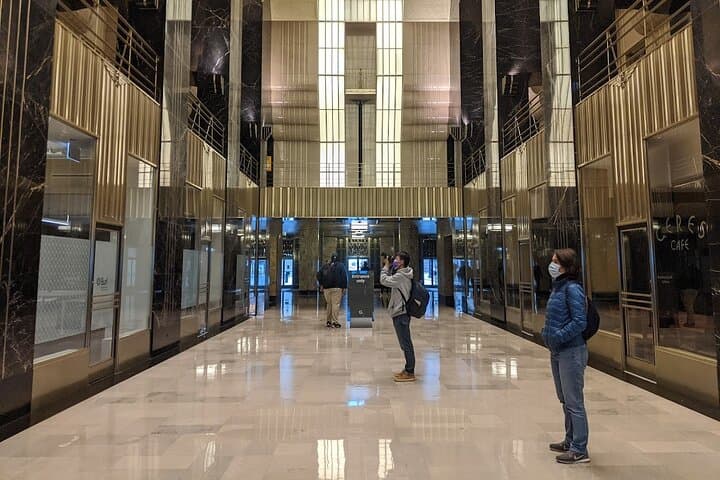
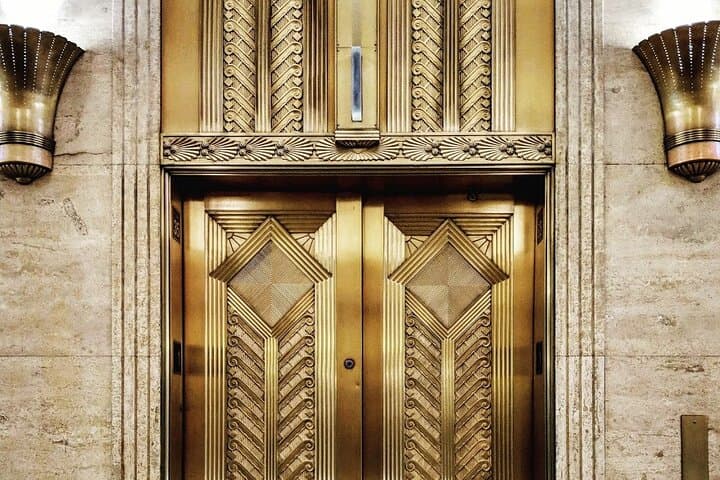
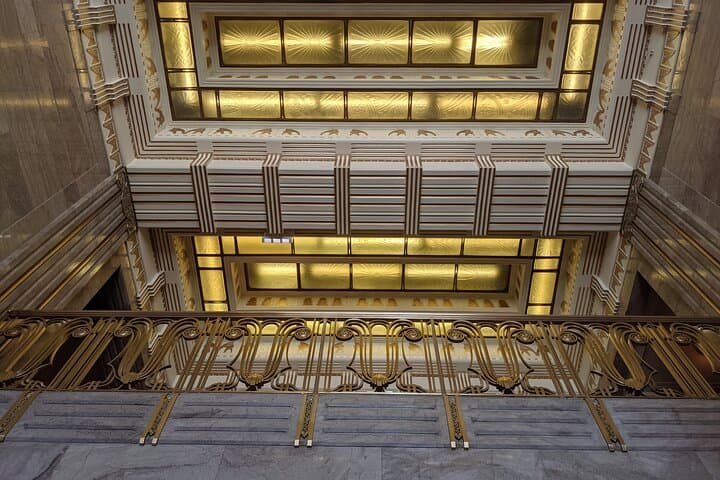
You step off the curb onto the Loop’s broad sidewalks, the river at your right flashing like a ribbon of chrome. The guide gestures toward a low, brass-trimmed entryway and the group slips inside — suddenly the city narrows to marble, geometric lighting, and metalwork that catches the light like tiny future-cities in miniature.
You step off the curb onto the Loop’s broad sidewalks, the river at your right flashing like a ribbon of chrome. The guide gestures toward a low, brass-trimmed entryway and the group slips inside — suddenly the city narrows to marble, geometric lighting, and metalwork that catches the light like tiny future-cities in miniature.
Art Deco arrived in Chicago between the world wars as a language of optimism: stepped forms, stylized florals and machine-age materials intended to signal progress. In the Loop that language was written into lobbies, banks and club rooms where architects used cast metal, terrazzo and glazed brick to make everyday interiors feel purposeful and modern. The geology here is urban — bedrock beneath basements; the Chicago River carved the shoreline that set the grid; skyscrapers rise from engineered foundations — but the visual story is architectural, not natural.
Culturally, these interiors reflect the city’s 1920s boom, the financiers and civic leaders who wanted buildings to look as confident as their ambitions. You’ll pass spaces that figure in boat tours from the riverfront yet go further: private lobbies, ornate theaters and bank halls few visitors see.
Practical guidance: the walk is about two hours, mostly flat pavement with brief interior stairs. Dress in layers for Chicago’s sudden wind off the river, wear comfortable shoes for standing, and carry a small bag for cameras and a water bottle. Photography rules vary by building; follow your guide and respect private spaces. Plan to arrive early — downtown navigation can be delayed by traffic or transit — and bring a charged phone for digital tickets.