THE ADVENTURE COLLECTIVE® · Independent discovery and booking for outdoor travel

Walk the avenues that shaped late‑20th century Romania on a private, full‑day tour focused on Ceaușescu’s rule, the architecture it produced, and the sites of the 1989 Revolution. This guided experience combines monumental exteriors with contextual stops to understand the human and political cost of authoritarian planning.
Walk the avenues that shaped late‑20th century Romania on a private, full‑day tour focused on Ceaușescu’s rule, the architecture it produced, and the sites of the 1989 Revolution. This guided experience combines monumental exteriors with contextual stops to understand the human and political cost of authoritarian planning.
The tour begins on a wide Bucharest avenue, the traffic hum fading as a private car slips into the shadow of the Palace of the Parliament. Stones here keep quiet records: chipped masonry, monumental facades and the Dâmbovița River threading the city remind you that modern Bucharest sits on old floodplain geology, reshaped by planning and power.
Verified experiences and guided adventures in the surrounding area.
Operated by Romania Private Guide · Bucharest, Bucharest
The tour begins on a wide Bucharest avenue, the traffic hum fading as a private car slips into the shadow of the Palace of the Parliament. Stones here keep quiet records: chipped masonry, monumental facades and the Dâmbovița River threading the city remind you that modern Bucharest sits on old floodplain geology, reshaped by planning and power.
This full-day private tour traces Romania’s communist era from post‑war consolidation to the 1989 Revolution. Guides explain Ceaușescu’s ambitious urban projects—the gargantuan People’s House, Victory Avenue’s austere apartment blocks—and how centralized planning rewired neighborhoods and social life. The itinerary touches sites linked to mass politics, propaganda architecture, and the personal spaces of the ruling family, adding cultural context about daily life under rationing and surveillance.
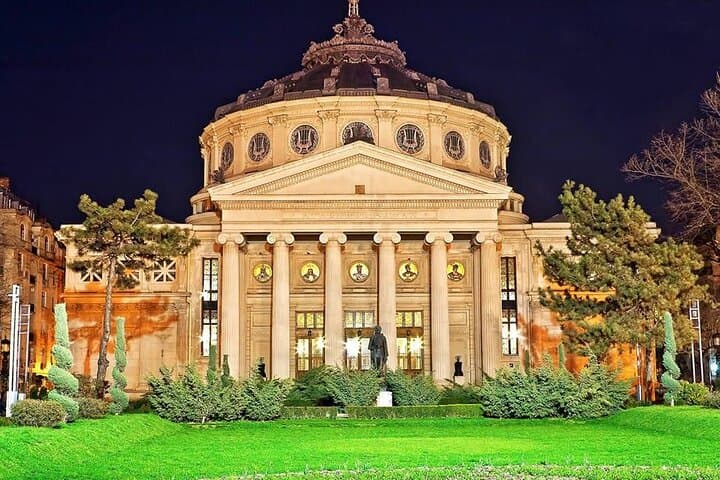
Expect a mix of short walks and car transfers; the day balances interior storytelling with exterior appreciation of scale and style. Local insights point to nearby museums and memorials that deepen the narrative—places where artifacts and oral histories complement the streetscape.
Practical guidance: wear comfortable shoes for pavement and curbs, bring layered clothing for interior and exterior visits, and carry a card or small cash for small museum fees. Bookings often include a private licensed English‑speaking guide and vehicle, improving access and flexibility; verify admission requirements for the Palace in advance. Midday is best for photography when light softens the concrete edges; late afternoon brings quieter squares for reflective stops. This is a grounded, historical walk through sites where architecture and memory intersect—designed for travelers who want context as well as scenes.
easy.
6 hours.
Suitable for most travelers; involves several hours of walking with car transfers between points.
Admission is usually not included—confirm with your operator and plan for separate tickets or reservations required by the Palace.
The tour includes a licensed English‑speaking guide by default; ask about other languages when booking.
Yes—this private tour is described as physically easy, with vehicle transfers and short walks; infant seats are available on request.
Full refunds are typically available if you cancel at least 24 hours before departure; check the operator’s specific policy at booking.
Romania’s communist period culminated under Nicolae Ceaușescu (1965–1989), whose urban megaprojects and repression triggered the December 1989 Revolution.
Respect sites and memorials by not climbing monuments or leaving litter; favor licensed local guides to support the local economy and reduce tour fragmentation.
Romania Private Guide operates guided outdoor trips and adventures with an emphasis on safety, stewardship, and memorable experiences.
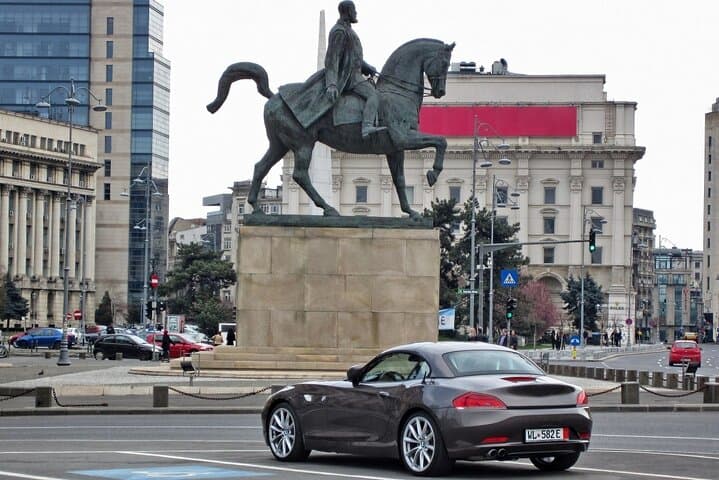
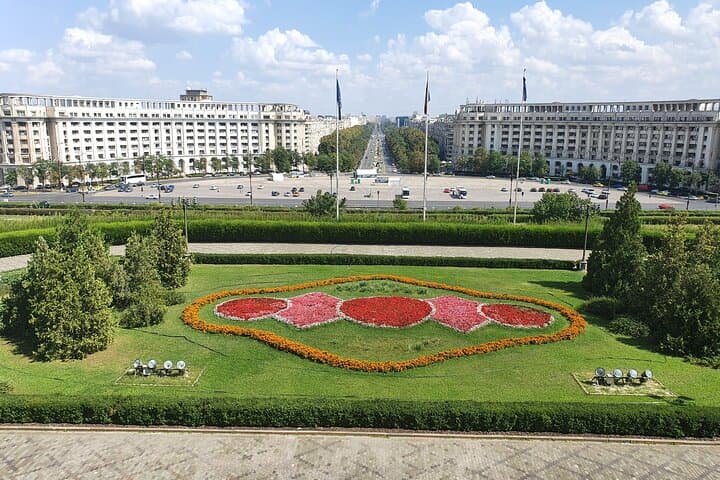
The tour begins on a wide Bucharest avenue, the traffic hum fading as a private car slips into the shadow of the Palace of the Parliament. Stones here keep quiet records: chipped masonry, monumental facades and the Dâmbovița River threading the city remind you that modern Bucharest sits on old floodplain geology, reshaped by planning and power.
The tour begins on a wide Bucharest avenue, the traffic hum fading as a private car slips into the shadow of the Palace of the Parliament. Stones here keep quiet records: chipped masonry, monumental facades and the Dâmbovița River threading the city remind you that modern Bucharest sits on old floodplain geology, reshaped by planning and power.
This full-day private tour traces Romania’s communist era from post‑war consolidation to the 1989 Revolution. Guides explain Ceaușescu’s ambitious urban projects—the gargantuan People’s House, Victory Avenue’s austere apartment blocks—and how centralized planning rewired neighborhoods and social life. The itinerary touches sites linked to mass politics, propaganda architecture, and the personal spaces of the ruling family, adding cultural context about daily life under rationing and surveillance.
Expect a mix of short walks and car transfers; the day balances interior storytelling with exterior appreciation of scale and style. Local insights point to nearby museums and memorials that deepen the narrative—places where artifacts and oral histories complement the streetscape.
Practical guidance: wear comfortable shoes for pavement and curbs, bring layered clothing for interior and exterior visits, and carry a card or small cash for small museum fees. Bookings often include a private licensed English‑speaking guide and vehicle, improving access and flexibility; verify admission requirements for the Palace in advance. Midday is best for photography when light softens the concrete edges; late afternoon brings quieter squares for reflective stops. This is a grounded, historical walk through sites where architecture and memory intersect—designed for travelers who want context as well as scenes.