THE ADVENTURE COLLECTIVE® · Independent discovery and booking for outdoor travel

Walk Canterbury’s layered history with a Green Badge guide on a private two-hour route that takes you from Roman gates to the cathedral close. Expect accessible surfaces, tailored commentary and riverside streets that reveal the city’s social and geological story.
Walk Canterbury’s layered history with a Green Badge guide on a private two-hour route that takes you from Roman gates to the cathedral close. Expect accessible surfaces, tailored commentary and riverside streets that reveal the city’s social and geological story.
Cobblestones click underfoot as the cathedral towers draw the eye — this two-hour private walk threads the medieval heart of Canterbury, following the River Stour where it quietly pushes the city forward.
Verified experiences and guided adventures in the surrounding area.
Operated by Kent Guides · Canterbury, Kent
Cobblestones click underfoot as the cathedral towers draw the eye — this two-hour private walk threads the medieval heart of Canterbury, following the River Stour where it quietly pushes the city forward.
A Green Badge guide leads you past Roman walls and into lanes where pilgrims once paused. You’ll stand where Augustine landed in 597 AD, trace the shockwaves from Thomas Becket’s murder in 1170, and pass Victorian civic grandeur at the city museum. The underlying chalk of the Kent Downs gives the valley its gentle slope; the Stour, personified here, curves and dare you to keep pace with its calm, reflective pull.
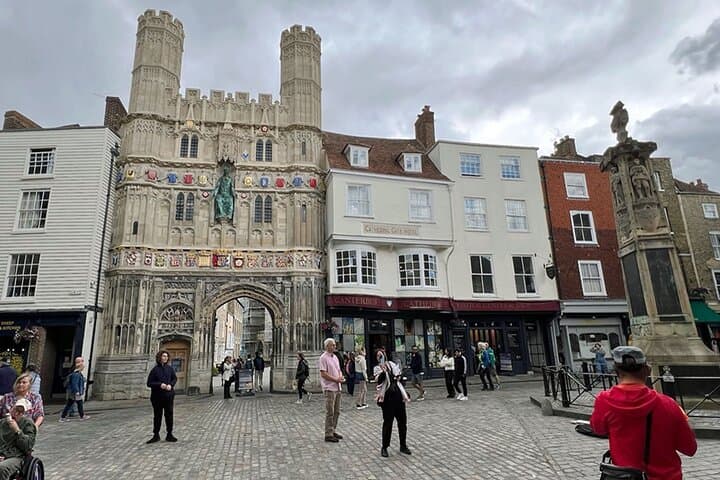
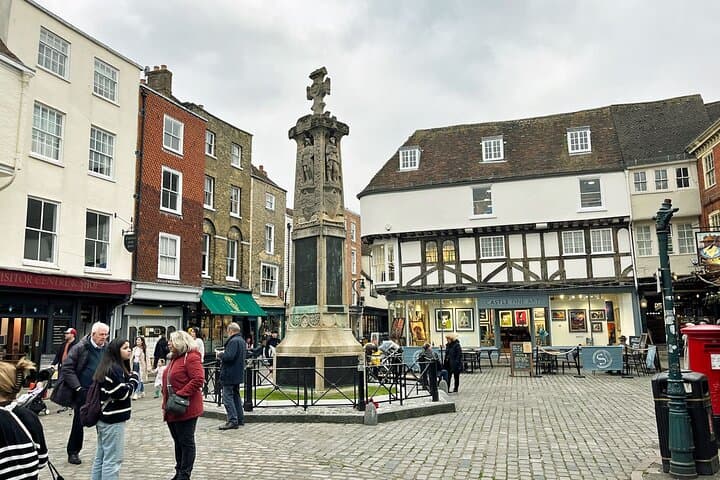
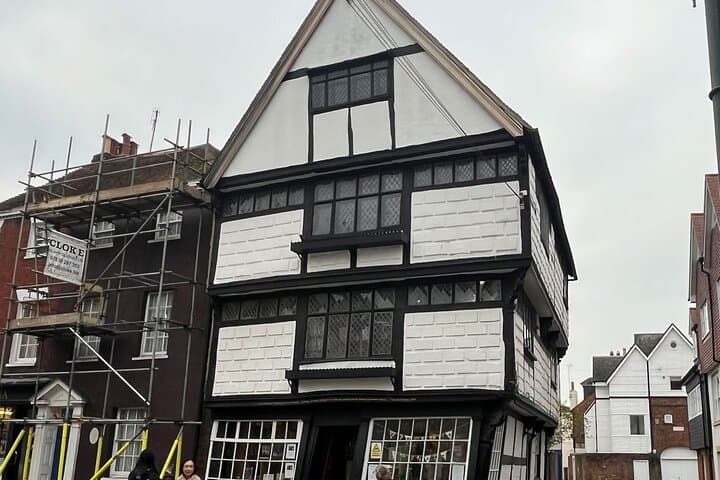
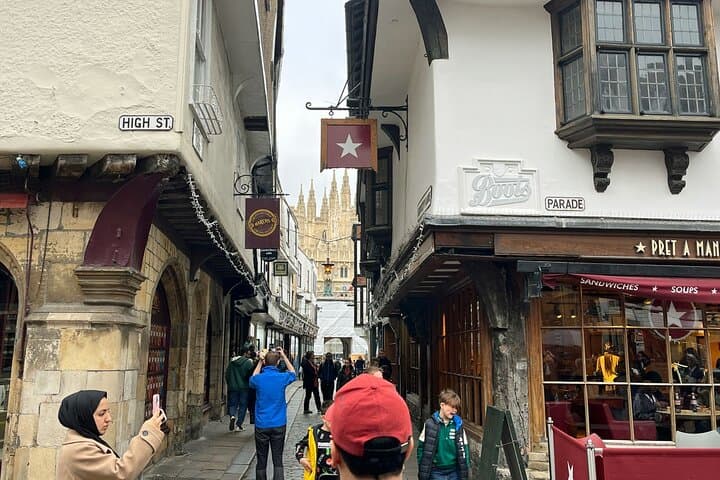
Architectural layers are on display: Roman gate fragments, Norman masonry, timber-framed Tudor houses and Victorian façades around the Old Buttermarket and Westgate Towers. The Beaney and the Cathedral (a UNESCO core) anchor the cultural map; Chaucer’s pilgrims still echo through guided storytelling if you ask.
Practicalities are straightforward. The tour is private, flexible on start/end points (Old Buttermarket is common) and lasts two hours, covering roughly 2–3 km at a moderate walking pace with several short stops. Surfaces are generally paved and wheelchair- and stroller-accessible, but expect occasional uneven stones.
Bring comfortable shoes, a light rain layer, and time if you want to enter the Cathedral (separate admission). Early morning or late afternoon slots avoid coach crowds and give softer light for façades and riverside stretches. Your guide can tailor the route to family, accessibility or specialist-history interests, making this a concentrated, readable slice of Canterbury history and present-day life.
moderate.
2 hours.
Moderate – ability to walk continuously for two hours with short stops; suitable for families and many mobility levels.
Yes — the route uses paved streets and accessible surfaces; the operator notes wheelchair and stroller accessibility but confirm any specific mobility needs when booking.
Yes — the tour is private and flexible; the Old Buttermarket is a common meeting point but you can request alternative start/end locations like the station or your hotel.
No — the two-hour walking tour includes exterior stops and commentary; cathedral admission is separate and can be added by allowing extra time.
Expect around 2–3 km (1.2–1.9 miles) over two hours with several short stops for commentary and photo opportunities.
Canterbury’s recorded layers span Roman occupation, Augustine’s mission in 597 AD and the 1170 murder of Thomas Becket — events that shaped English religious and political life.
High visitor volumes affect ancient masonry and riverbanks; stick to designated paths, avoid climbing on structures and follow local guidance to help protect sensitive heritage and river habitats.
Kent Guides operates guided outdoor trips and adventures with an emphasis on safety, stewardship, and memorable experiences.
Cobblestones click underfoot as the cathedral towers draw the eye — this two-hour private walk threads the medieval heart of Canterbury, following the River Stour where it quietly pushes the city forward.
Cobblestones click underfoot as the cathedral towers draw the eye — this two-hour private walk threads the medieval heart of Canterbury, following the River Stour where it quietly pushes the city forward.
A Green Badge guide leads you past Roman walls and into lanes where pilgrims once paused. You’ll stand where Augustine landed in 597 AD, trace the shockwaves from Thomas Becket’s murder in 1170, and pass Victorian civic grandeur at the city museum. The underlying chalk of the Kent Downs gives the valley its gentle slope; the Stour, personified here, curves and dare you to keep pace with its calm, reflective pull.
Architectural layers are on display: Roman gate fragments, Norman masonry, timber-framed Tudor houses and Victorian façades around the Old Buttermarket and Westgate Towers. The Beaney and the Cathedral (a UNESCO core) anchor the cultural map; Chaucer’s pilgrims still echo through guided storytelling if you ask.
Practicalities are straightforward. The tour is private, flexible on start/end points (Old Buttermarket is common) and lasts two hours, covering roughly 2–3 km at a moderate walking pace with several short stops. Surfaces are generally paved and wheelchair- and stroller-accessible, but expect occasional uneven stones.
Bring comfortable shoes, a light rain layer, and time if you want to enter the Cathedral (separate admission). Early morning or late afternoon slots avoid coach crowds and give softer light for façades and riverside stretches. Your guide can tailor the route to family, accessibility or specialist-history interests, making this a concentrated, readable slice of Canterbury history and present-day life.