THE ADVENTURE COLLECTIVE® · Independent discovery and booking for outdoor travel

Stand in Tahrir Square, climb the museum steps and step into more than a century of collecting—stone, gold and papyrus that narrate pharaonic life and afterlife. This practical guide explains what to expect, key artifacts, and how to plan a 3–4 hour visit.
Stand in Tahrir Square, climb the museum steps and step into more than a century of collecting—stone, gold and papyrus that narrate pharaonic life and afterlife. This practical guide explains what to expect, key artifacts, and how to plan a 3–4 hour visit.
You arrive across Tahrir Square to a pale neoclassical façade that has watched Cairo rewrite itself a dozen times. Traffic hums; pigeons thread between lampposts. Step up the stone stairs and the city’s dust is muffled by cool galleries where carved stone, gilded masks and dense glass cases command silence.
Verified experiences and guided adventures in the surrounding area.
Operated by Oman Day Tours · Cairo, Cairo
You arrive across Tahrir Square to a pale neoclassical façade that has watched Cairo rewrite itself a dozen times. Traffic hums; pigeons thread between lampposts. Step up the stone stairs and the city’s dust is muffled by cool galleries where carved stone, gilded masks and dense glass cases command silence.
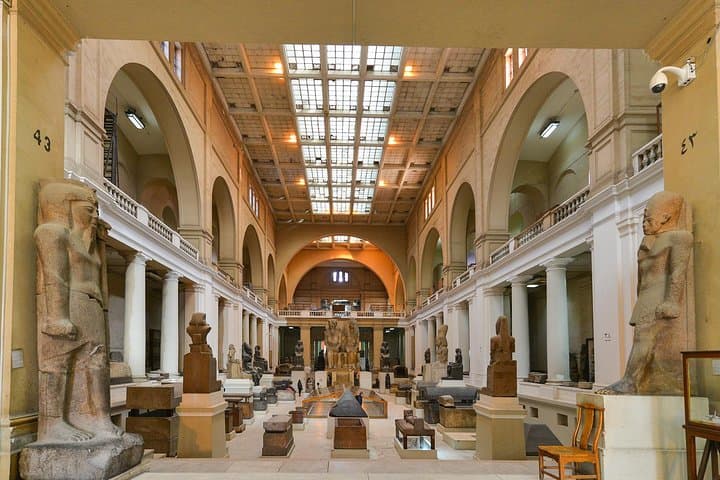
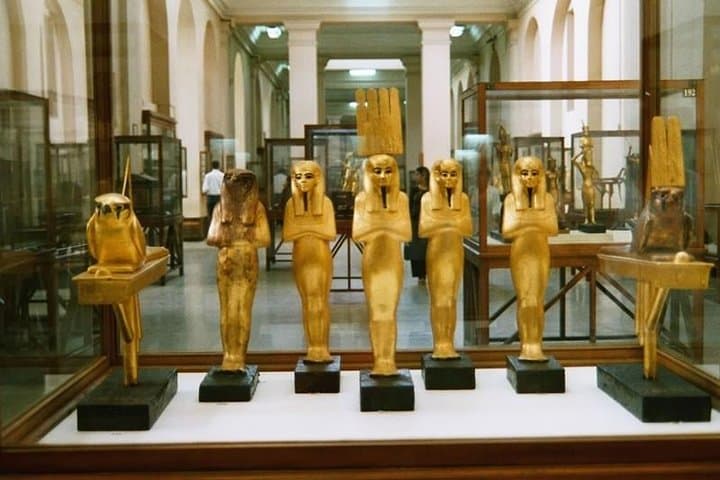
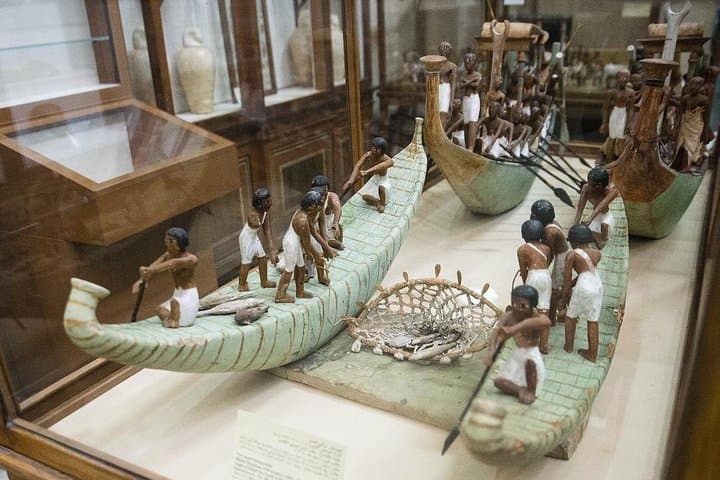
Built in 1900 by French architect Marcel Dourgnon, the Egyptian Museum holds more than 120,000 pharaonic objects organized across two floors—ground-level papyri, coins and everyday artifacts; upstairs, the glittering material associated with Tutankhamun and other royal burials. Many objects on display were recovered in the early 20th century during Howard Carter’s campaigns in the Valley of the Kings, and the museum sits squarely in modern Egyptian history after waves of politics centered on Tahrir.
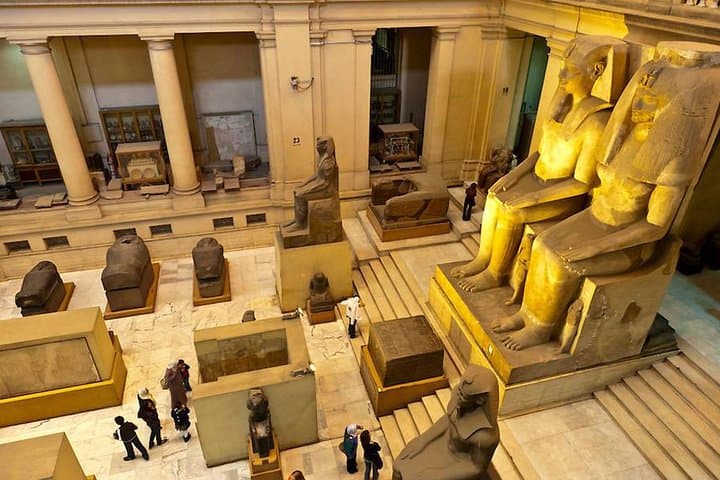
Geology here is less about bedrock than provenance: limestone coffins, granite statues quarried in Aswan, and pigments derived from Nile minerals. Culture and ritual thread through every gallery—funerary kit, amulets, and the tools of an afterlife that ancient Egyptians planned for with meticulous care.
In practice: allow 3–4 hours for a focused visit. Cameras are restricted—phones and cameras may be collected at the outer garden cloakroom—so bring a notebook or make time to absorb details rather than photograph them. Guided tours with Egyptologists deepen context and are often included with private bookings; audio guides can’t replace a live interpreter for inscriptions.
Wear comfortable shoes, plan for crowds mid-morning and late afternoon, hydrate before you go, and leave large bags at your hotel or the cloakroom. A visit here is both museum study and urban immersion: close-looking, deliberate, and quietly revealing.
easy.
3–4 hours.
Suitable for most fitness levels; expect several hours of standing and walking on hard floors.
Photography is restricted; many tours advise that cameras and some phones are collected at a store room in the museum’s outer garden—check with your guide before attempting to photograph.
Most visits last 3–4 hours to see the highlights at a measured pace; specialized research visits can be longer.
The museum is generally accessible at ground level but some older galleries and displays may present obstacles; contact the operator ahead of time to arrange assistance.
Yes—private Egyptologist guides and guided visits are commonly offered and provide essential context for inscriptions and burial assemblages; check language availability when booking.
The museum was designed in 1900 by Marcel Dourgnon and became Cairo’s primary repository for pharaonic antiquities, many excavated in the early 20th century by teams such as Howard Carter’s.
High visitor numbers and urban pollution stress fragile artifacts; follow no-touch rules and avoid flash photography to help preserve pigments and textiles.
Oman Day Tours operates guided outdoor trips and adventures with an emphasis on safety, stewardship, and memorable experiences.
You arrive across Tahrir Square to a pale neoclassical façade that has watched Cairo rewrite itself a dozen times. Traffic hums; pigeons thread between lampposts. Step up the stone stairs and the city’s dust is muffled by cool galleries where carved stone, gilded masks and dense glass cases command silence.
You arrive across Tahrir Square to a pale neoclassical façade that has watched Cairo rewrite itself a dozen times. Traffic hums; pigeons thread between lampposts. Step up the stone stairs and the city’s dust is muffled by cool galleries where carved stone, gilded masks and dense glass cases command silence.
Built in 1900 by French architect Marcel Dourgnon, the Egyptian Museum holds more than 120,000 pharaonic objects organized across two floors—ground-level papyri, coins and everyday artifacts; upstairs, the glittering material associated with Tutankhamun and other royal burials. Many objects on display were recovered in the early 20th century during Howard Carter’s campaigns in the Valley of the Kings, and the museum sits squarely in modern Egyptian history after waves of politics centered on Tahrir.
Geology here is less about bedrock than provenance: limestone coffins, granite statues quarried in Aswan, and pigments derived from Nile minerals. Culture and ritual thread through every gallery—funerary kit, amulets, and the tools of an afterlife that ancient Egyptians planned for with meticulous care.
In practice: allow 3–4 hours for a focused visit. Cameras are restricted—phones and cameras may be collected at the outer garden cloakroom—so bring a notebook or make time to absorb details rather than photograph them. Guided tours with Egyptologists deepen context and are often included with private bookings; audio guides can’t replace a live interpreter for inscriptions.
Wear comfortable shoes, plan for crowds mid-morning and late afternoon, hydrate before you go, and leave large bags at your hotel or the cloakroom. A visit here is both museum study and urban immersion: close-looking, deliberate, and quietly revealing.