THE ADVENTURE COLLECTIVE® · Independent discovery and booking for outdoor travel

Go beyond the iconic exterior and step inside the Burj Al Arab for a 90-minute butler-guided exploration of the atrium, Experience Suite and Royal Suite — with buggy transfer and lounge refreshments available. Learn the design story, enjoy curated interactives, and plan ahead for security and dress-code requirements.
Go beyond the iconic exterior and step inside the Burj Al Arab for a 90-minute butler-guided exploration of the atrium, Experience Suite and Royal Suite — with buggy transfer and lounge refreshments available. Learn the design story, enjoy curated interactives, and plan ahead for security and dress-code requirements.
Standing on the private bridge that links the shore to an island shaped like a sail, the Burj Al Arab cuts a clear line against the Persian Gulf. The tour moves from that exterior photo vantage to the cavernous gold-and-marble atrium, then higher into curated experience suites where touchscreen displays replay the hotel's design evolution.
Verified experiences and guided adventures in the surrounding area.
Operated by Royal Smart Tourism · Dubai, Dubai
Standing on the private bridge that links the shore to an island shaped like a sail, the Burj Al Arab cuts a clear line against the Persian Gulf. The tour moves from that exterior photo vantage to the cavernous gold-and-marble atrium, then higher into curated experience suites where touchscreen displays replay the hotel's design evolution.
Opened in 1999 and designed by architect Tom Wright, Burj Al Arab sits on an artificial island roughly 280 meters offshore. Its wave-inspired silhouette and vertiginous atrium tell a late-20th-century story of rapid city-building and ambitious hospitality in Dubai. The Experience Suite traces those early architectural drawings; the Royal Suite demonstrates the scale and finish that put the hotel on global lists of luxury properties.
Culturally, the hotel is a showpiece of modern Emirati hospitality — private but performative, with butler-guided narration that blends service lore and construction anecdotes. Geologically, the site is reclaimed coastal sand, reinforced and protected from sea swell; expect sea breezes on exposed photo stops, and conditioned interiors once inside.
Practically, the program runs about 90 minutes inside, and most options include a buggy transfer from the Jumeirah Beach Hotel and a beverage at UMA Lounge. Bring ID for security checks, wear smart-casual attire and comfortable shoes for walking on different floor surfaces. Photography is generally allowed but follow guides' instructions in the Royal Suite. Because the route uses stairs and fine finishes, travelers with spinal or serious cardiac conditions should take the operator advisories seriously. Book a morning slot in cooler months for better light and shorter waits, and allow two hours door-to-door for the full experience.
easy.
2 hours.
Suitable for most fitness levels; involves standing, moderate walking and some stairs.
The guided interior portion runs about 90 minutes, with total booking time generally listed as two hours including transfers.
Some options include a beverage or snack at UMA Lounge; check the specific booking option to confirm inclusions.
Yes, infants are allowed but must sit on an adult’s lap; confirm any age-based restrictions or requirements when booking.
Yes — the tour includes guided entry for non-guests, but all visitors go through hotel security and must follow property rules.
Completed in 1999 on reclaimed land and designed by Tom Wright, the Burj Al Arab was conceived as a landmark hotel to personify Dubai's late-20th-century growth and ambition.
The hotel operates within Dubai’s coastal development zone; visitors are encouraged to minimize waste, respect restricted areas and follow staff guidance to reduce impacts on the shoreline and local wildlife.
Royal Smart Tourism operates guided outdoor trips and adventures with an emphasis on safety, stewardship, and memorable experiences.
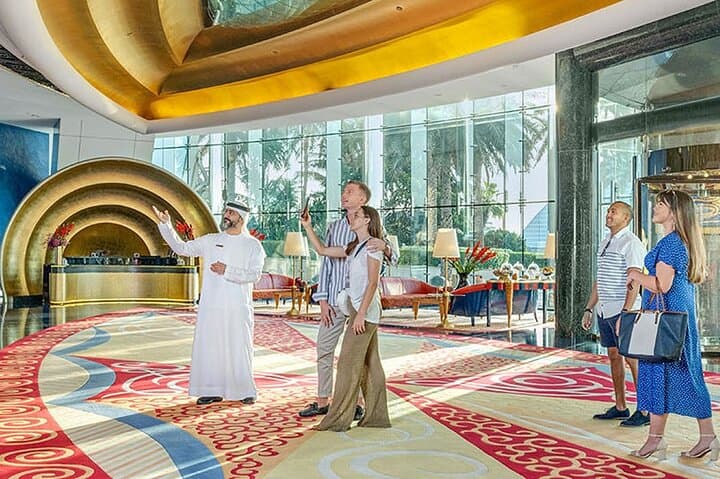
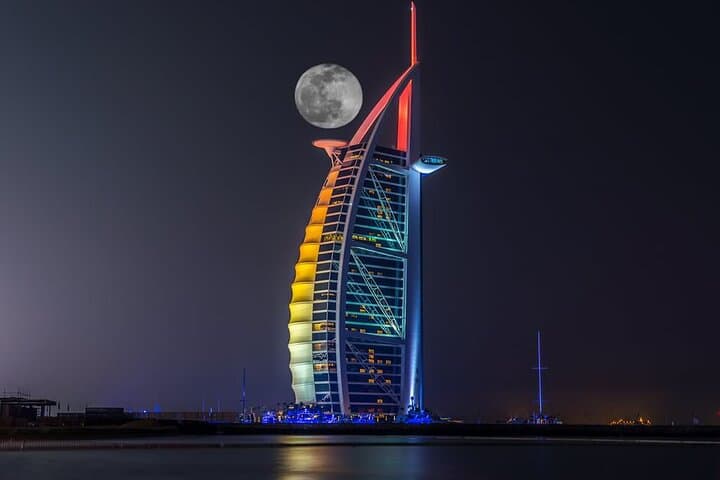
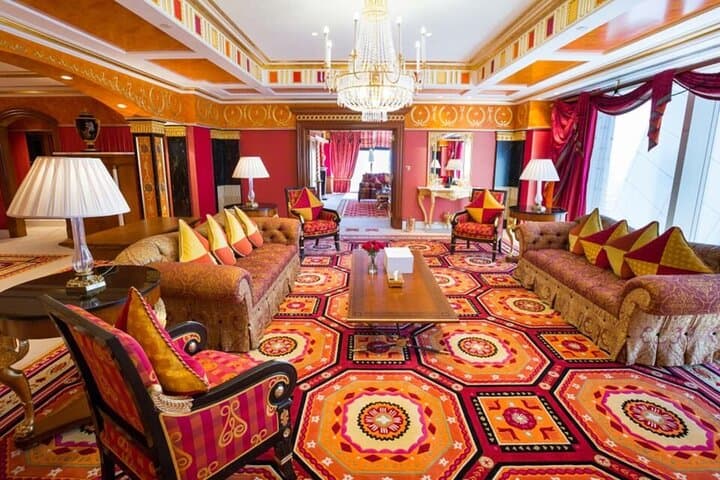
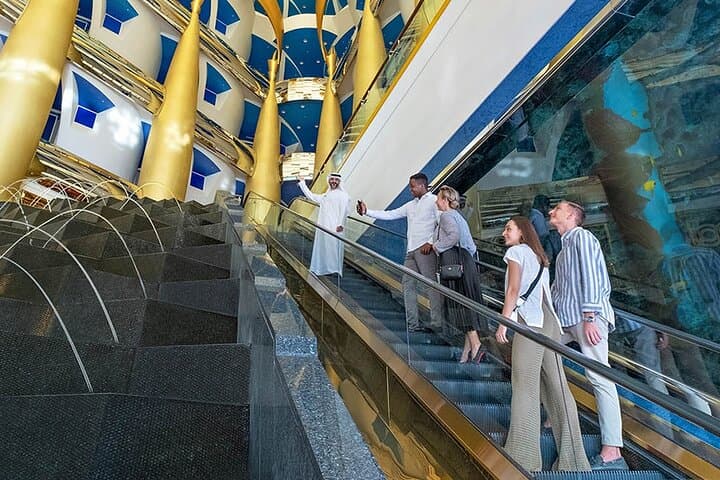
Standing on the private bridge that links the shore to an island shaped like a sail, the Burj Al Arab cuts a clear line against the Persian Gulf. The tour moves from that exterior photo vantage to the cavernous gold-and-marble atrium, then higher into curated experience suites where touchscreen displays replay the hotel's design evolution.
Standing on the private bridge that links the shore to an island shaped like a sail, the Burj Al Arab cuts a clear line against the Persian Gulf. The tour moves from that exterior photo vantage to the cavernous gold-and-marble atrium, then higher into curated experience suites where touchscreen displays replay the hotel's design evolution.
Opened in 1999 and designed by architect Tom Wright, Burj Al Arab sits on an artificial island roughly 280 meters offshore. Its wave-inspired silhouette and vertiginous atrium tell a late-20th-century story of rapid city-building and ambitious hospitality in Dubai. The Experience Suite traces those early architectural drawings; the Royal Suite demonstrates the scale and finish that put the hotel on global lists of luxury properties.
Culturally, the hotel is a showpiece of modern Emirati hospitality — private but performative, with butler-guided narration that blends service lore and construction anecdotes. Geologically, the site is reclaimed coastal sand, reinforced and protected from sea swell; expect sea breezes on exposed photo stops, and conditioned interiors once inside.
Practically, the program runs about 90 minutes inside, and most options include a buggy transfer from the Jumeirah Beach Hotel and a beverage at UMA Lounge. Bring ID for security checks, wear smart-casual attire and comfortable shoes for walking on different floor surfaces. Photography is generally allowed but follow guides' instructions in the Royal Suite. Because the route uses stairs and fine finishes, travelers with spinal or serious cardiac conditions should take the operator advisories seriously. Book a morning slot in cooler months for better light and shorter waits, and allow two hours door-to-door for the full experience.