THE ADVENTURE COLLECTIVE® · Independent discovery and booking for outdoor travel

Walk behind the velvet rope and see Burj Al Arab’s atrium, Experience Suite, and Royal Suite with a butler-led narration. This guided VIP visit explains the hotel’s architecture and cultural context in about 90–120 minutes.
Walk behind the velvet rope and see Burj Al Arab’s atrium, Experience Suite, and Royal Suite with a butler-led narration. This guided VIP visit explains the hotel’s architecture and cultural context in about 90–120 minutes.
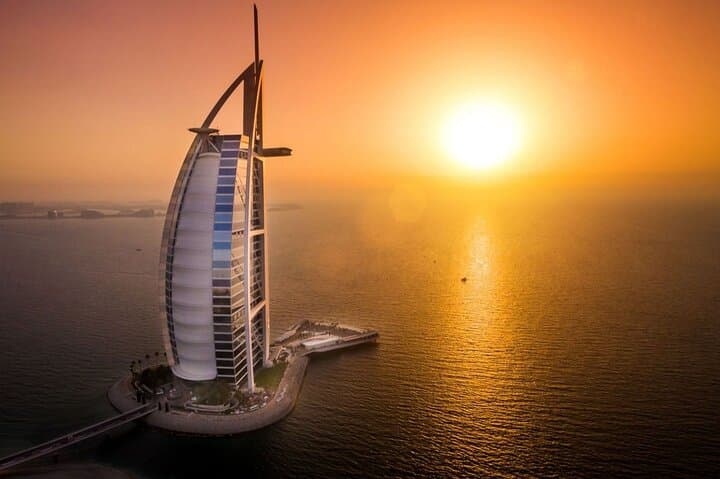
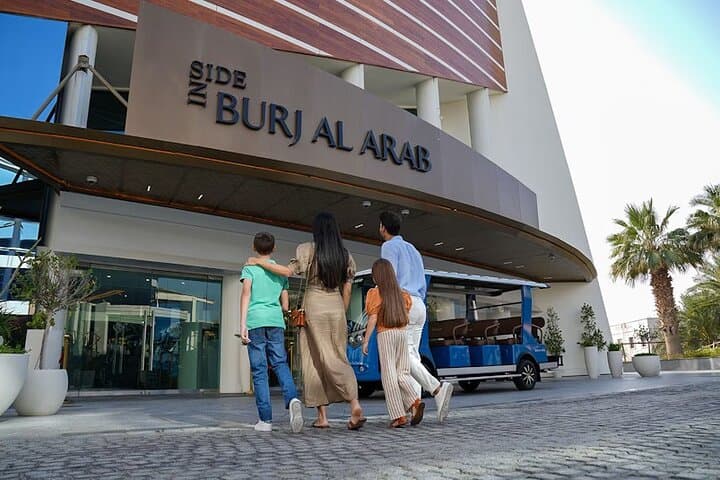
A wind off the Arabian Gulf pushes salt and light across the private causeway as you approach the sail-shaped silhouette of Burj Al Arab. The bridge gives way to the hotel’s private entrance; a butler and Emirati host meet your small group and open doors that most visitors only glimpse from the shoreline.
Verified experiences and guided adventures in the surrounding area.
Operated by Golden Destination · Dubai, Dubai
A wind off the Arabian Gulf pushes salt and light across the private causeway as you approach the sail-shaped silhouette of Burj Al Arab. The bridge gives way to the hotel’s private entrance; a butler and Emirati host meet your small group and open doors that most visitors only glimpse from the shoreline.
Built on an artificial island and opened in 1999, Burj Al Arab is as much a statement of Dubai’s rapid rise as it is a hotel. Architect Tom Wright’s concept turned maritime forms into a vertical landmark—inside, one of the world’s tallest atriums and gold-accented surfaces frame fountains, columns, and a choreography of light.
The guided tour moves from the atrium to the Experience Suite, where original sketches and digital models explain construction and design choices, then into parts of the Royal Suite that reveal how materials, mechanics, and service create a particular brand of luxury.
Culturally, the visit pairs lavish interiors with hints of Emirati hospitality: formal introductions, attention to ritual, and curated storytelling about local traditions.
Practical guidance: expect 90–120 minutes on tour, light walking on flat, carpeted surfaces, and photos allowed at designated stops; bring a government ID and your booking confirmation for entry. Peak visitor flows occur mid-morning and late afternoon—choose an early slot for fewer people and better photos on the private bridge.
This is a primarily indoor, accessible experience—ideal for travelers looking to understand the hotel’s architecture, service systems, and place in Dubai’s modern identity without committing to a stay.
easy.
1.5–2 hours.
Suitable for most travelers with basic mobility; minimal walking and no steep climbs.
The experience runs approximately 90–120 minutes depending on group size and itinerary for the day.
Photos are allowed at designated vantage points such as the bridge and atrium, but staff will indicate restricted areas where photography is not permitted.
Yes—infants must sit on an adult’s lap and the tour is family-friendly with mostly flat, carpeted surfaces.
Transfers may be available as an add-on; otherwise, taxis or rideshares to Jumeirah 3/4 and the hotel causeway are common approaches.
Opened in 1999 on a man-made island, Burj Al Arab was conceived as a symbol of Dubai’s modern ambitions and was designed by architect Tom Wright to evoke a ship’s sail.
The hotel and surrounding developments operate within Dubai’s broader sustainability initiatives; visitors are encouraged to minimize waste and respect restricted areas to reduce impact.
Golden Destination operates guided outdoor trips and adventures with an emphasis on safety, stewardship, and memorable experiences.
A wind off the Arabian Gulf pushes salt and light across the private causeway as you approach the sail-shaped silhouette of Burj Al Arab. The bridge gives way to the hotel’s private entrance; a butler and Emirati host meet your small group and open doors that most visitors only glimpse from the shoreline.
A wind off the Arabian Gulf pushes salt and light across the private causeway as you approach the sail-shaped silhouette of Burj Al Arab. The bridge gives way to the hotel’s private entrance; a butler and Emirati host meet your small group and open doors that most visitors only glimpse from the shoreline.
Built on an artificial island and opened in 1999, Burj Al Arab is as much a statement of Dubai’s rapid rise as it is a hotel. Architect Tom Wright’s concept turned maritime forms into a vertical landmark—inside, one of the world’s tallest atriums and gold-accented surfaces frame fountains, columns, and a choreography of light.
The guided tour moves from the atrium to the Experience Suite, where original sketches and digital models explain construction and design choices, then into parts of the Royal Suite that reveal how materials, mechanics, and service create a particular brand of luxury.
Culturally, the visit pairs lavish interiors with hints of Emirati hospitality: formal introductions, attention to ritual, and curated storytelling about local traditions.
Practical guidance: expect 90–120 minutes on tour, light walking on flat, carpeted surfaces, and photos allowed at designated stops; bring a government ID and your booking confirmation for entry. Peak visitor flows occur mid-morning and late afternoon—choose an early slot for fewer people and better photos on the private bridge.
This is a primarily indoor, accessible experience—ideal for travelers looking to understand the hotel’s architecture, service systems, and place in Dubai’s modern identity without committing to a stay.