THE ADVENTURE COLLECTIVE® · Independent discovery and booking for outdoor travel

Step inside Dubai’s most photographed hotel for a guided look at its royal suites, dramatic atrium and seaside setting. This private-transfer experience pairs easy logistics with curated history and design highlights.
Step inside Dubai’s most photographed hotel for a guided look at its royal suites, dramatic atrium and seaside setting. This private-transfer experience pairs easy logistics with curated history and design highlights.
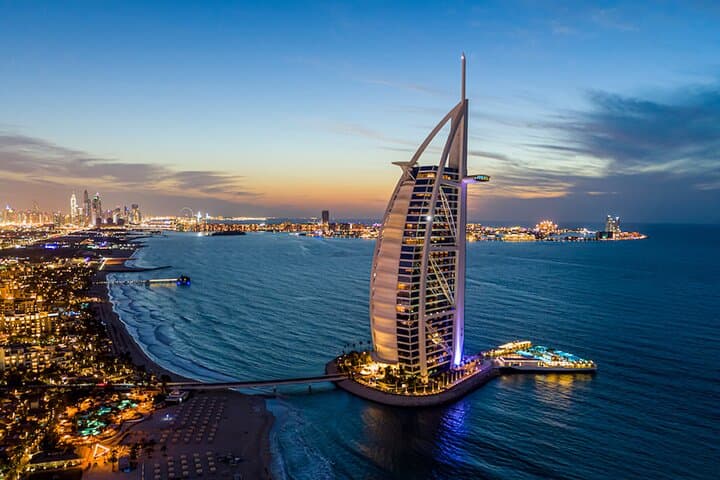
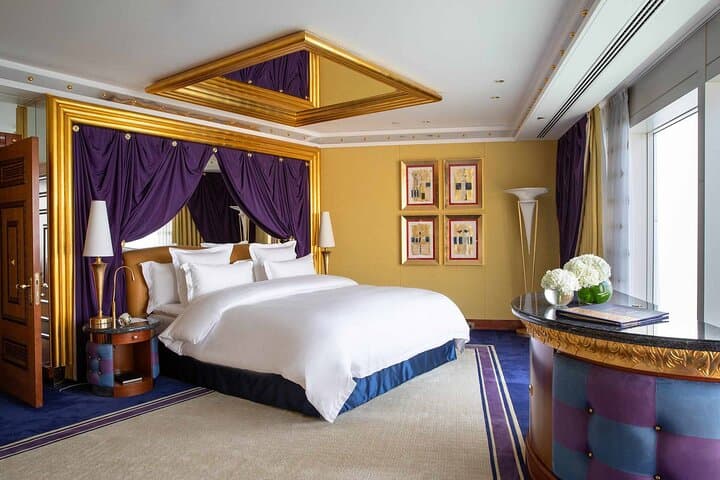
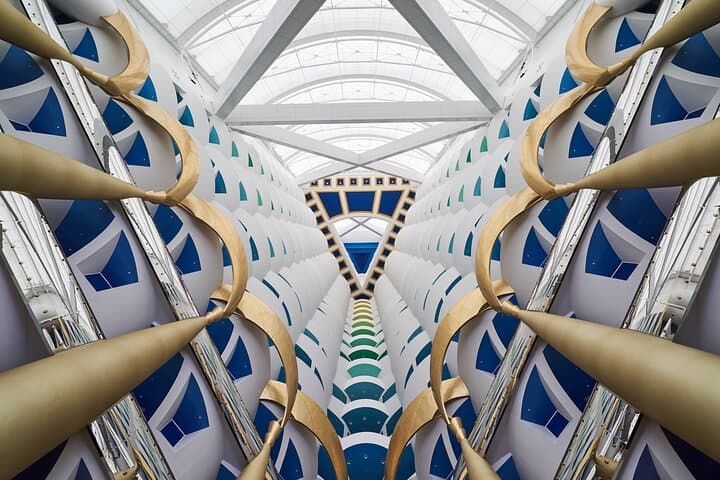
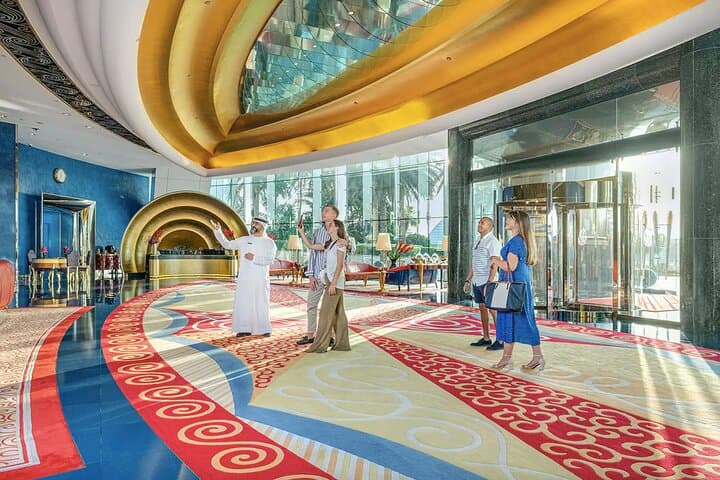
You arrive at the gated approach and the Burj Al Arab’s sail silhouette grows against the Persian Gulf—white concrete and glass catching the light as a private car eases you toward the hotel island. An electric buggy ferries you past the photo bridge; the sea air is sharp, the scale unmistakable, and within minutes you stand beneath the vast atrium where gold leaf and layered fabrics define a very deliberate kind of luxury.
Verified experiences and guided adventures in the surrounding area.
Operated by Daytur Dubai · Dubai, Dubai
You arrive at the gated approach and the Burj Al Arab’s sail silhouette grows against the Persian Gulf—white concrete and glass catching the light as a private car eases you toward the hotel island. An electric buggy ferries you past the photo bridge; the sea air is sharp, the scale unmistakable, and within minutes you stand beneath the vast atrium where gold leaf and layered fabrics define a very deliberate kind of luxury.
The Burj Al Arab was completed in 1999 on a man-made island, its form designed by Tom Wright to reference a dhow sail. Engineers drove concrete piles through coastal sands to support the structure; the result is an architectural landmark that doubled as a marketing icon for Dubai’s rapid tourism growth. Hospitality here blends Emirati ritual—Arabic tea and dates—with global flamboyance: helipad stunts, opulent suites and a boutique-lined route for visitors.
Expect a 90–120 minute guided circuit of public and select suite areas, curated narration about construction and design, and stops for photos and refreshments on the 12th-floor viewing area. The tour balances spectacle with practical details: security checks are strict, photography is allowed in many areas but restricted in private guest zones, and a semi-casual dress code is enforced.
Practical tips: allow roughly three hours for pickup, the tour and return transfer; carry ID for hotel entry; hydrate before you arrive—Dubai heat can be intense; and plan hotel pickup timing around the midday heat to get the best light for exterior photos. The experience is less a deep cultural immersion than a close-up look at modern Dubai’s idea of luxury, delivered efficiently and comfortably.
easy.
3–3.5 hours.
Light walking and short transfers; suitable for most fitness levels
The full experience—including pickup, guided visit and return—runs about 3–3.5 hours; private hotel transfers are included.
The "7-star" label is a media and marketing descriptor; the hotel markets itself as ultra-luxury, but official hotel rating systems do not use seven stars.
Children are allowed; infants must sit on an adult’s lap and children under 4 may be free when booked with paid adults—check booking terms for current rules.
The tour notes stroller accessibility for infants, and many public areas are accessible, but specific suite access may be limited—contact the operator if wheelchair access is required.
Built on a man-made island and opened in 1999, the Burj Al Arab was designed to project Dubai’s pivot to luxury tourism and was engineered on driven concrete piles through coastal sands.
The hotel and surrounding developments altered coastal habitats when the island was created; visitors should avoid littering, stick to designated paths and support hotel programs that reduce water and energy use.
Daytur Dubai operates guided outdoor trips and adventures with an emphasis on safety, stewardship, and memorable experiences.
You arrive at the gated approach and the Burj Al Arab’s sail silhouette grows against the Persian Gulf—white concrete and glass catching the light as a private car eases you toward the hotel island. An electric buggy ferries you past the photo bridge; the sea air is sharp, the scale unmistakable, and within minutes you stand beneath the vast atrium where gold leaf and layered fabrics define a very deliberate kind of luxury.
You arrive at the gated approach and the Burj Al Arab’s sail silhouette grows against the Persian Gulf—white concrete and glass catching the light as a private car eases you toward the hotel island. An electric buggy ferries you past the photo bridge; the sea air is sharp, the scale unmistakable, and within minutes you stand beneath the vast atrium where gold leaf and layered fabrics define a very deliberate kind of luxury.
The Burj Al Arab was completed in 1999 on a man-made island, its form designed by Tom Wright to reference a dhow sail. Engineers drove concrete piles through coastal sands to support the structure; the result is an architectural landmark that doubled as a marketing icon for Dubai’s rapid tourism growth. Hospitality here blends Emirati ritual—Arabic tea and dates—with global flamboyance: helipad stunts, opulent suites and a boutique-lined route for visitors.
Expect a 90–120 minute guided circuit of public and select suite areas, curated narration about construction and design, and stops for photos and refreshments on the 12th-floor viewing area. The tour balances spectacle with practical details: security checks are strict, photography is allowed in many areas but restricted in private guest zones, and a semi-casual dress code is enforced.
Practical tips: allow roughly three hours for pickup, the tour and return transfer; carry ID for hotel entry; hydrate before you arrive—Dubai heat can be intense; and plan hotel pickup timing around the midday heat to get the best light for exterior photos. The experience is less a deep cultural immersion than a close-up look at modern Dubai’s idea of luxury, delivered efficiently and comfortably.