THE ADVENTURE COLLECTIVE® · Independent discovery and booking for outdoor travel

Step inside one of the world’s most exclusive hotels on a 90-minute guided tour of Burj Al Arab. See the towering atrium, the Royal Suite, and learn the architectural and cultural stories behind Dubai’s sail-shaped icon.
Step inside one of the world’s most exclusive hotels on a 90-minute guided tour of Burj Al Arab. See the towering atrium, the Royal Suite, and learn the architectural and cultural stories behind Dubai’s sail-shaped icon.
You arrive on the crescent of man-made sand and the hotel rises like a polished sail off the Persian Gulf, glass and steel catching the light. Inside, the atrium yawns 180 meters high; the air smells faintly of coffee and perfume, and a butler’s measured cadence guides you past gilded staircases toward the Royal Suite.
Verified experiences and guided adventures in the surrounding area.
Operated by Sougat Travels Abu Dhabi · Dubai, Dubai
You arrive on the crescent of man-made sand and the hotel rises like a polished sail off the Persian Gulf, glass and steel catching the light. Inside, the atrium yawns 180 meters high; the air smells faintly of coffee and perfume, and a butler’s measured cadence guides you past gilded staircases toward the Royal Suite.
The Burj Al Arab opened in 1999 as a statement of modern Emirati ambition. Built on reclaimed reef and connected to shore by a short causeway, the structure sits on engineered piles driven into compacted sand and bedrock—an example of coastal engineering married to bold design. Architect Tom Wright’s sail-shaped form frames views of Jumeirah’s shoreline and Dubai’s rapid urban expansion.
Culturally, the hotel articulates Dubai’s blend of global luxury and local hospitality: expect formal greeting rituals, an emphasis on presentation, and service traditions influenced by Emirati customs. Nearby, low-rise Arabesque motifs and the souk-like walkways of Madinat Jumeirah contrast with the hotel’s futuristic silhouette.
Practical guidance: the tour lasts about 90 minutes and includes a butler-led walkthrough, atrium access, and the Experience Suite. Dress smart-casual—no beachwear—and bring a passport for entry. Photography rules vary by area, so ask your guide before shooting interiors. Private transfers simplify logistics; expect pickup and drop-off options across Dubai. Arrive early in cooler months for softer light on the façade, and reserve in advance—access is limited and curated. The visit pairs well with a walk along Jumeirah Beach or a later visit to nearby Souk Madinat for dinner.
easy.
1–1.5 hours.
Minimal fitness required—suitable for most visitors who can manage short walks and staircases with assistance available
The guided visit runs approximately 90 minutes and covers the atrium, public interiors, and the Experience Suite.
Photography is generally permitted in public areas but restricted in some suites and staff areas—ask your butler guide for specifics.
Yes—bring the passport or Emirates ID you used when booking; it’s required for visitor registration at the hotel.
Yes—private pickup and drop-off to your Dubai location are included; confirm pickup details when you book.
Opened in 1999, Burj Al Arab was conceived as a national landmark to position Dubai on the global hospitality map and was built on a reclaimed island linked by a private causeway.
Coastal development alters local marine habitats, and hotels in the area now run programs for water conservation and waste reduction—visitors can support by minimizing single-use plastics.
Sougat Travels Abu Dhabi operates guided outdoor trips and adventures with an emphasis on safety, stewardship, and memorable experiences.
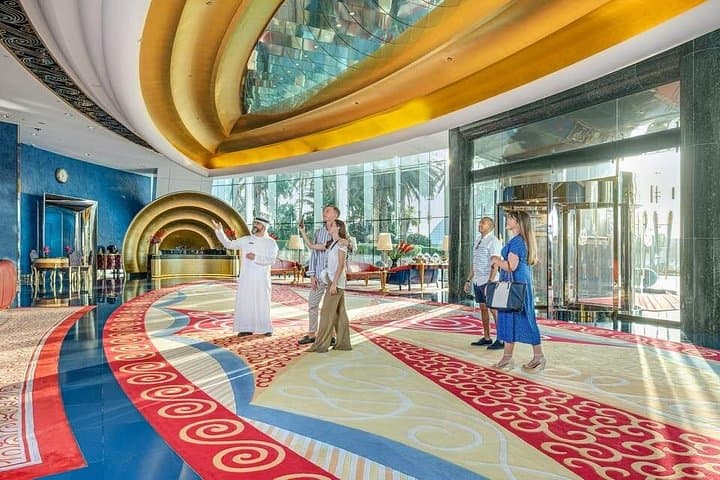
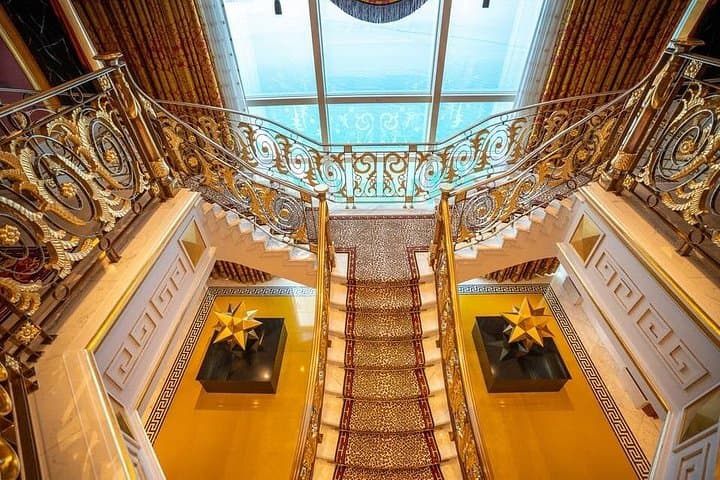

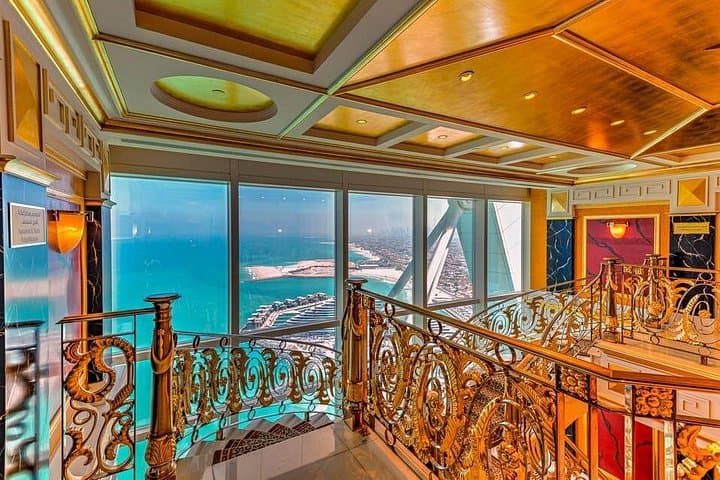
You arrive on the crescent of man-made sand and the hotel rises like a polished sail off the Persian Gulf, glass and steel catching the light. Inside, the atrium yawns 180 meters high; the air smells faintly of coffee and perfume, and a butler’s measured cadence guides you past gilded staircases toward the Royal Suite.
You arrive on the crescent of man-made sand and the hotel rises like a polished sail off the Persian Gulf, glass and steel catching the light. Inside, the atrium yawns 180 meters high; the air smells faintly of coffee and perfume, and a butler’s measured cadence guides you past gilded staircases toward the Royal Suite.
The Burj Al Arab opened in 1999 as a statement of modern Emirati ambition. Built on reclaimed reef and connected to shore by a short causeway, the structure sits on engineered piles driven into compacted sand and bedrock—an example of coastal engineering married to bold design. Architect Tom Wright’s sail-shaped form frames views of Jumeirah’s shoreline and Dubai’s rapid urban expansion.
Culturally, the hotel articulates Dubai’s blend of global luxury and local hospitality: expect formal greeting rituals, an emphasis on presentation, and service traditions influenced by Emirati customs. Nearby, low-rise Arabesque motifs and the souk-like walkways of Madinat Jumeirah contrast with the hotel’s futuristic silhouette.
Practical guidance: the tour lasts about 90 minutes and includes a butler-led walkthrough, atrium access, and the Experience Suite. Dress smart-casual—no beachwear—and bring a passport for entry. Photography rules vary by area, so ask your guide before shooting interiors. Private transfers simplify logistics; expect pickup and drop-off options across Dubai. Arrive early in cooler months for softer light on the façade, and reserve in advance—access is limited and curated. The visit pairs well with a walk along Jumeirah Beach or a later visit to nearby Souk Madinat for dinner.