THE ADVENTURE COLLECTIVE® · Independent discovery and booking for outdoor travel

Explore the Burj Al Arab’s dramatic interiors on a guided 90-minute tour, then extend your visit with a refined lunch or dinner. Learn architectural backstory, spot curated design details, and get practical tips for making the most of this iconic Dubai stop.
Explore the Burj Al Arab’s dramatic interiors on a guided 90-minute tour, then extend your visit with a refined lunch or dinner. Learn architectural backstory, spot curated design details, and get practical tips for making the most of this iconic Dubai stop.
You step from the searing Dubai light into a cool, cavernous atrium where a waterfall wall and gold leaf details command attention. The building’s sail silhouette waits outside, but inside the Burj Al Arab the scale is what arrests you — ceilings that seem to climb, marbled floors that reflect chandeliers, and staff who move with practiced precision.
Verified experiences and guided adventures in the surrounding area.
Operated by Arabian Destination Tourism Dubai · Dubai, Dubai
You step from the searing Dubai light into a cool, cavernous atrium where a waterfall wall and gold leaf details command attention. The building’s sail silhouette waits outside, but inside the Burj Al Arab the scale is what arrests you — ceilings that seem to climb, marbled floors that reflect chandeliers, and staff who move with practiced precision.
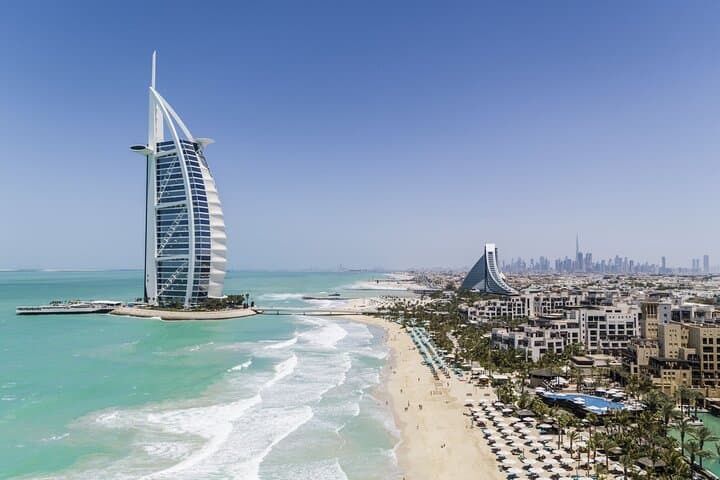
Opened in 1999 on a purpose-built island, the Burj Al Arab is as much a cultural statement as an accommodation: engineered on reclaimed land, designed by Tom Wright, and built to project Dubai’s rapid transformation. Geologically this is reclaimed coast — sand and rock hugged from the Persian Gulf — so views favor glass, steel and engineered shoreline rather than natural headlands. The hotel’s interiors borrow motifs from Arab design and hospitality traditions, polished into contemporary luxury.
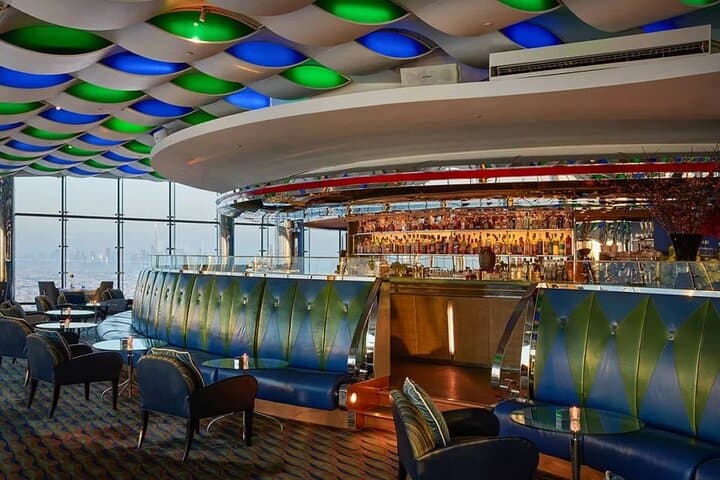
On a guided 90-minute tour you’ll pass the atrium, peek into select suites, and learn construction anecdotes and design choices that set the hotel apart. Local insights: ask about the helipad stories and the restaurant options for the best skyline views. Practical guidance: book in advance — limited tickets sell fast — and plan for 1.5–3 hours if you add dining. Dress smart-casual; security checks require ID. Photography is permitted in public spaces but respect staff and guest privacy. The heat outside can be intense year-round; travel between stops in air-conditioned comfort where possible.
This experience is a short, accessible immersion into Dubai’s modern identity: part architecture tour, part cultural primer, and part indulgent urban outing.
easy.
1.5–3 hours.
Suitable for travellers of all fitness levels; mostly standing and short walks on level surfaces.
The guided interior tour runs about 90 minutes; if you add transfers and dining, plan 1.5–3 hours total.
Photography is generally allowed in public areas, but always respect guests and staff and follow guide instructions.
Yes — the property and transfer options noted in the tour listing are wheelchair accessible; notify the operator of needs in advance.
Admission covers the guided tour; dining is an extra reservation and payment arranged separately through the hotel.
Commissioned as a symbol of Dubai’s global ambitions, the Burj Al Arab opened in 1999 on a man-made island and was designed by architect Tom Wright of Atkins.
Coastal development has altered local marine habitat; visitors should minimize waste and follow hotel guidelines to reduce impact.
Arabian Destination Tourism Dubai operates guided outdoor trips and adventures with an emphasis on safety, stewardship, and memorable experiences.
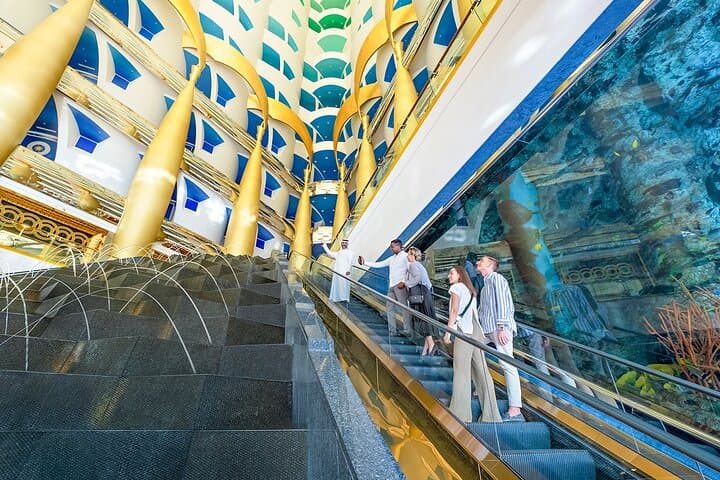
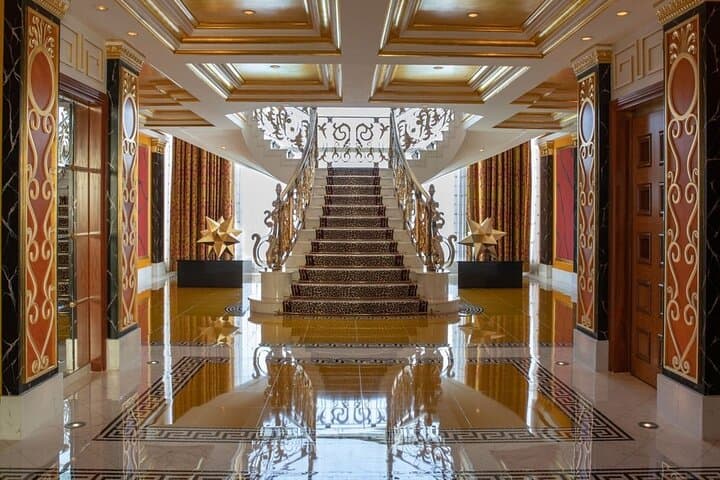
You step from the searing Dubai light into a cool, cavernous atrium where a waterfall wall and gold leaf details command attention. The building’s sail silhouette waits outside, but inside the Burj Al Arab the scale is what arrests you — ceilings that seem to climb, marbled floors that reflect chandeliers, and staff who move with practiced precision.
You step from the searing Dubai light into a cool, cavernous atrium where a waterfall wall and gold leaf details command attention. The building’s sail silhouette waits outside, but inside the Burj Al Arab the scale is what arrests you — ceilings that seem to climb, marbled floors that reflect chandeliers, and staff who move with practiced precision.
Opened in 1999 on a purpose-built island, the Burj Al Arab is as much a cultural statement as an accommodation: engineered on reclaimed land, designed by Tom Wright, and built to project Dubai’s rapid transformation. Geologically this is reclaimed coast — sand and rock hugged from the Persian Gulf — so views favor glass, steel and engineered shoreline rather than natural headlands. The hotel’s interiors borrow motifs from Arab design and hospitality traditions, polished into contemporary luxury.
On a guided 90-minute tour you’ll pass the atrium, peek into select suites, and learn construction anecdotes and design choices that set the hotel apart. Local insights: ask about the helipad stories and the restaurant options for the best skyline views. Practical guidance: book in advance — limited tickets sell fast — and plan for 1.5–3 hours if you add dining. Dress smart-casual; security checks require ID. Photography is permitted in public spaces but respect staff and guest privacy. The heat outside can be intense year-round; travel between stops in air-conditioned comfort where possible.
This experience is a short, accessible immersion into Dubai’s modern identity: part architecture tour, part cultural primer, and part indulgent urban outing.