THE ADVENTURE COLLECTIVE® · Independent discovery and booking for outdoor travel

Step beyond the exterior photos and into Dubai’s most theatrical hotel. This 90–120 minute guided tour walks the atrium, Experience Suite and Royal Suite while explaining the design and stories behind the Burj Al Arab.
Step beyond the exterior photos and into Dubai’s most theatrical hotel. This 90–120 minute guided tour walks the atrium, Experience Suite and Royal Suite while explaining the design and stories behind the Burj Al Arab.
A salt breeze cuts across the causeway as the sail-shaped profile of the Burj Al Arab grows from low skyline to dominant silhouette. Visitors step from the Jumeirah Beach Hotel transfer buggy onto private grounds and into a lobby that reorients scale—an atrium so vast it measures like a city street, gilded balconies looking down like tiers of a theater.
Verified experiences and guided adventures in the surrounding area.
Operated by Good Sky Tourism · Dubai, Dubai
A salt breeze cuts across the causeway as the sail-shaped profile of the Burj Al Arab grows from low skyline to dominant silhouette. Visitors step from the Jumeirah Beach Hotel transfer buggy onto private grounds and into a lobby that reorients scale—an atrium so vast it measures like a city street, gilded balconies looking down like tiers of a theater.
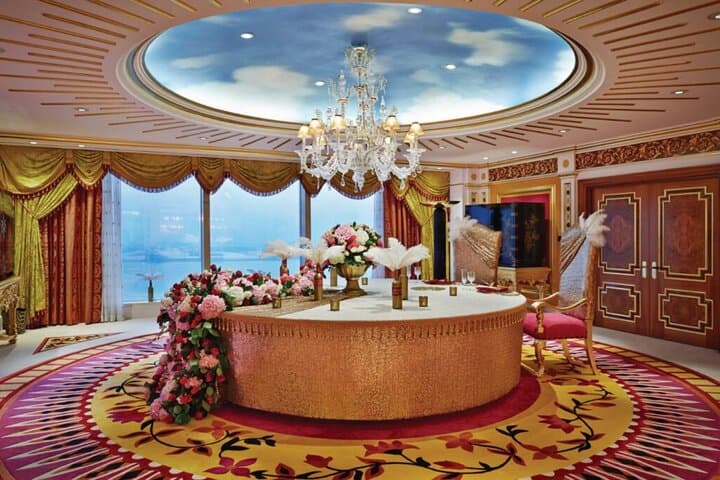
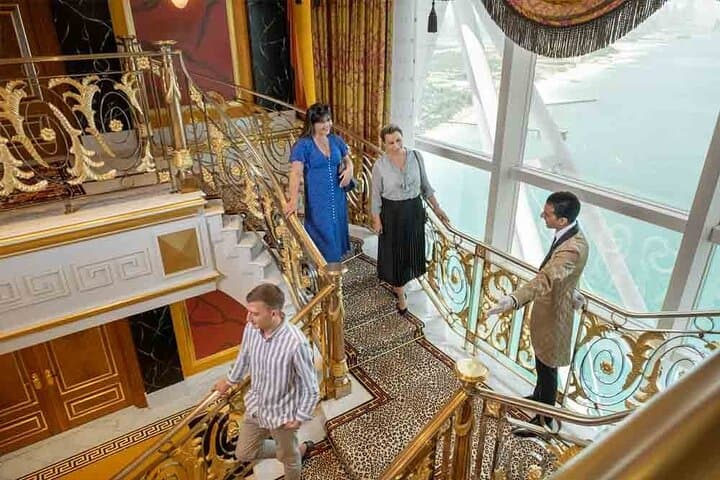
The 90–120 minute guided tour threads through that atrium to curated spaces few non-residents see: the digital Experience Suite, the lavish Royal Suite, and vantage points over the beach and Persian Gulf. Built in the 1990s and opened in 1999, the Burj Al Arab was designed by Atkins to read as a billowing dhow sail—an architectural bold stroke meant to announce Dubai’s modern ambition amid a coastal, desert landscape. Nearby, the artificial coastline and reclaimed islands tell a second story of rapid urban engineering and coastal intervention.
Culturally, the hotel is as much a showpiece as a service economy: expect polished hospitality, strict access routes, and areas reserved for guests and events. The guide illuminates design details—original sketches, materials choices, and how the atrium’s scale shapes light and acoustics.
Practical guidance: bring government ID, arrive 15 minutes early, and wear smart-casual attire; some areas restrict photography or require advance permission. The tour is wheelchair accessible and suitable for most fitness levels, but bookings are non-refundable—confirm time and transfer options when you reserve. Early morning or late afternoon visits make for softer light and cooler transfer waits.
easy.
90–120 minutes.
Suitable for most fitness levels; mostly walking on flat, indoor surfaces
The guided visit runs approximately 90–120 minutes, including a buggy transfer from Jumeirah Beach Hotel to the Burj Al Arab grounds.
The tour includes a view of the Royal Suite and many photo opportunities; however, some spaces require staff permission and flash or tripod use may be restricted.
Yes—information from the operator indicates wheelchair accessibility and stroller access; advise the tour operator of any special requirements when booking.
No—this ticket grants access for the guided tour only and does not include overnight accommodation or room access beyond the areas included in the itinerary.
Opened in 1999 and designed by Atkins, the Burj Al Arab was conceived as a landmark symbol of Dubai’s global ambitions and features one of the world’s largest hotel atriums.
Access is controlled and tours limit wear on private spaces; visitors are asked to follow staff guidance to reduce disturbance and waste in this high-profile coastal setting.
Good Sky Tourism operates guided outdoor trips and adventures with an emphasis on safety, stewardship, and memorable experiences.
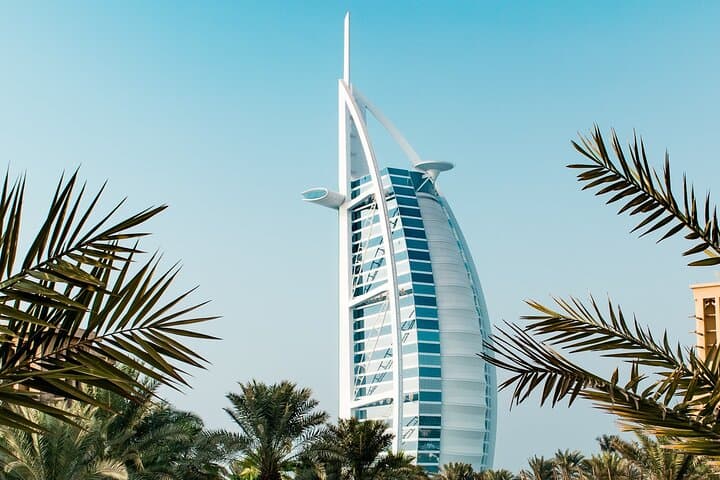
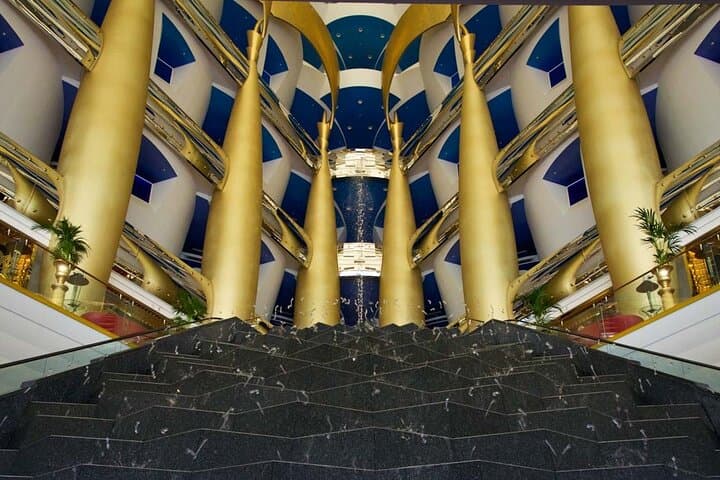
A salt breeze cuts across the causeway as the sail-shaped profile of the Burj Al Arab grows from low skyline to dominant silhouette. Visitors step from the Jumeirah Beach Hotel transfer buggy onto private grounds and into a lobby that reorients scale—an atrium so vast it measures like a city street, gilded balconies looking down like tiers of a theater.
A salt breeze cuts across the causeway as the sail-shaped profile of the Burj Al Arab grows from low skyline to dominant silhouette. Visitors step from the Jumeirah Beach Hotel transfer buggy onto private grounds and into a lobby that reorients scale—an atrium so vast it measures like a city street, gilded balconies looking down like tiers of a theater.
The 90–120 minute guided tour threads through that atrium to curated spaces few non-residents see: the digital Experience Suite, the lavish Royal Suite, and vantage points over the beach and Persian Gulf. Built in the 1990s and opened in 1999, the Burj Al Arab was designed by Atkins to read as a billowing dhow sail—an architectural bold stroke meant to announce Dubai’s modern ambition amid a coastal, desert landscape. Nearby, the artificial coastline and reclaimed islands tell a second story of rapid urban engineering and coastal intervention.
Culturally, the hotel is as much a showpiece as a service economy: expect polished hospitality, strict access routes, and areas reserved for guests and events. The guide illuminates design details—original sketches, materials choices, and how the atrium’s scale shapes light and acoustics.
Practical guidance: bring government ID, arrive 15 minutes early, and wear smart-casual attire; some areas restrict photography or require advance permission. The tour is wheelchair accessible and suitable for most fitness levels, but bookings are non-refundable—confirm time and transfer options when you reserve. Early morning or late afternoon visits make for softer light and cooler transfer waits.