THE ADVENTURE COLLECTIVE® · Independent discovery and booking for outdoor travel

Get uncommon access to the Burj Al Arab’s public interiors and select suites on a guided architectural tour. Experience the scale, history and service of Dubai’s most photographed hotel while learning practical tips for visiting.
Get uncommon access to the Burj Al Arab’s public interiors and select suites on a guided architectural tour. Experience the scale, history and service of Dubai’s most photographed hotel while learning practical tips for visiting.
Step through security and you’re immediately inside a building that dares to be seen from the sea — a white sail arcing from a private island into the Persian Gulf. Light pools across marble floors, gold leaf trims catch the light, and the scale of the atrium makes conversation feel intimate and ceremonious.
Verified experiences and guided adventures in the surrounding area.
Operated by we share · Dubai, Dubai
Step through security and you’re immediately inside a building that dares to be seen from the sea — a white sail arcing from a private island into the Persian Gulf. Light pools across marble floors, gold leaf trims catch the light, and the scale of the atrium makes conversation feel intimate and ceremonious.
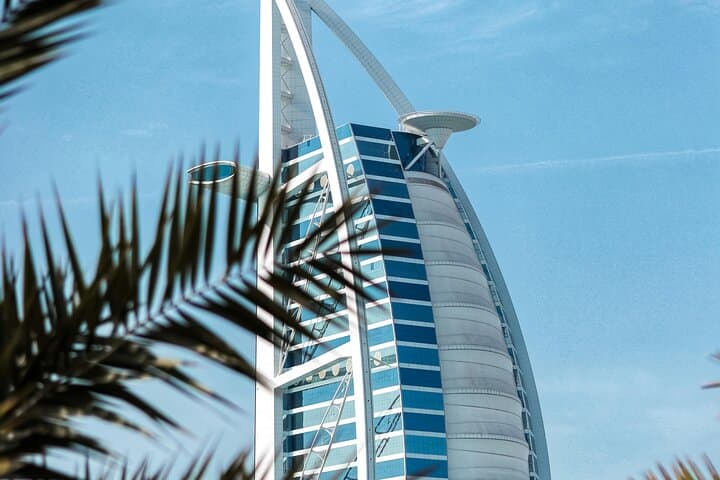
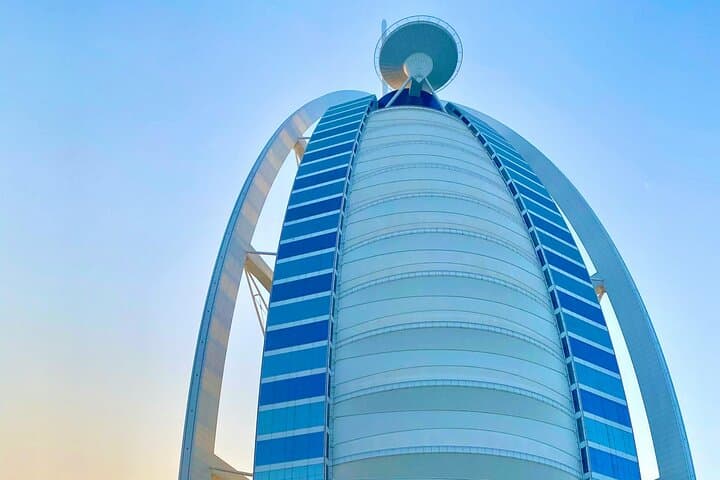
The Burj Al Arab opened in 1999 as Dubai’s statement of luxury and modern engineering. Designed by Tom Wright for Atkins and built on reclaimed land, its 321‑metre silhouette anchors Jumeirah’s coastline. Inside, layered interiors borrow from Arabian motifs and contemporary hospitality, while behind the gilded surfaces are structural feats: a tensioned fabric façade, a helipad that has hosted global publicity stunts, and suites that stack vertical living like urban villas.
Culturally, the property reflects Dubai’s rapid transformation from pearling town to global hub — a place where tradition is referenced in décor as global luxury standards set the service. For visitors, the tour is both museum and invitation: expect designated public areas, curated stories about construction and design, and access to showpiece rooms normally closed to walk‑in guests.
Practical guidance: tours run about 1–3 hours and require a mobile ticket and photo ID; arrivals pass through tight security and some spaces restrict photography. The route involves short walks on flat indoor surfaces — light mobility needs only — but the tour is not recommended for people with spinal, cardiovascular conditions, or pregnant guests. Bring ID, wear smart‑casual attire, and plan transport to the private bridge entrance. This is a controlled, high‑service visit — move deliberately, respect staff directions, and you’ll leave with a fresh view of Dubai’s architectural ambition.
easy.
1–3 hours.
Light walking on flat indoor surfaces; suitable for most fitness levels but not for those with certain medical restrictions
Yes — access is controlled and tickets are sold per booking; a mobile ticket is required and admission is not sold on arrival.
Children may join, but infants must sit on a lap; check age or ID requirements when booking.
All sales are final and non‑refundable; confirm details at booking and verify voucher delivery to your WhatsApp/email.
The route covers flat indoor areas, but some guests with spinal, cardiovascular conditions or who are pregnant are advised not to participate; contact the operator about specific accessibility needs.
Opened in 1999 and designed by Tom Wright for Atkins, the Burj Al Arab was constructed on reclaimed land as a signature symbol of Dubai’s late‑20th‑century boom.
Large luxury hotels have significant energy footprints; visitors can reduce impact by declining single‑use amenities, using public or shared transport, and following on‑site recycling and sustainability guidance.
we share operates guided outdoor trips and adventures with an emphasis on safety, stewardship, and memorable experiences.
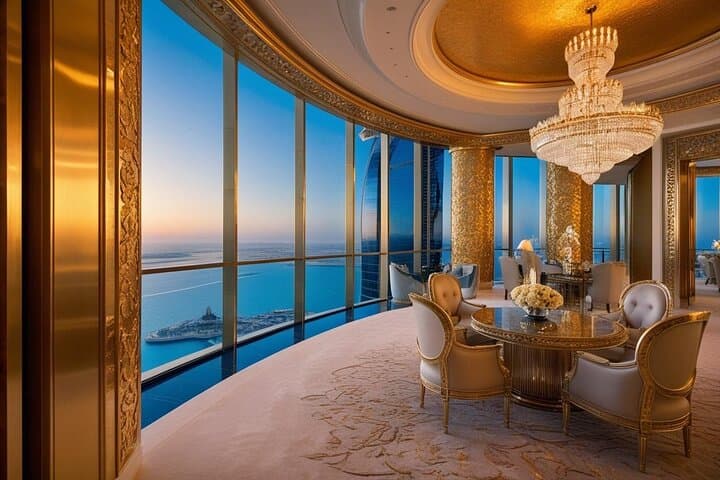
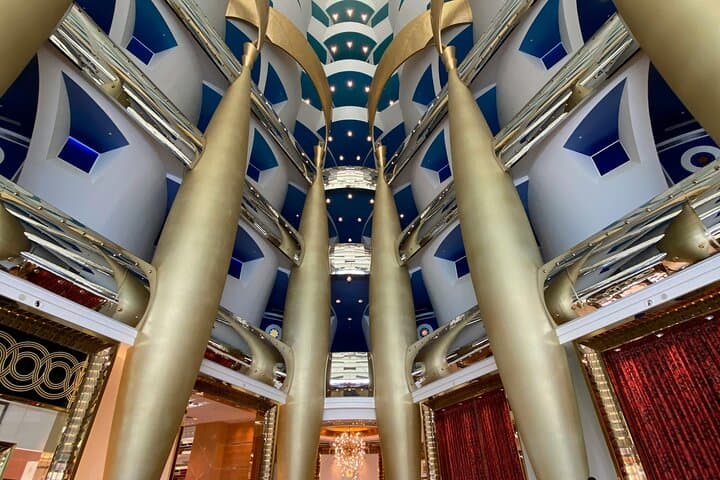
Step through security and you’re immediately inside a building that dares to be seen from the sea — a white sail arcing from a private island into the Persian Gulf. Light pools across marble floors, gold leaf trims catch the light, and the scale of the atrium makes conversation feel intimate and ceremonious.
Step through security and you’re immediately inside a building that dares to be seen from the sea — a white sail arcing from a private island into the Persian Gulf. Light pools across marble floors, gold leaf trims catch the light, and the scale of the atrium makes conversation feel intimate and ceremonious.
The Burj Al Arab opened in 1999 as Dubai’s statement of luxury and modern engineering. Designed by Tom Wright for Atkins and built on reclaimed land, its 321‑metre silhouette anchors Jumeirah’s coastline. Inside, layered interiors borrow from Arabian motifs and contemporary hospitality, while behind the gilded surfaces are structural feats: a tensioned fabric façade, a helipad that has hosted global publicity stunts, and suites that stack vertical living like urban villas.
Culturally, the property reflects Dubai’s rapid transformation from pearling town to global hub — a place where tradition is referenced in décor as global luxury standards set the service. For visitors, the tour is both museum and invitation: expect designated public areas, curated stories about construction and design, and access to showpiece rooms normally closed to walk‑in guests.
Practical guidance: tours run about 1–3 hours and require a mobile ticket and photo ID; arrivals pass through tight security and some spaces restrict photography. The route involves short walks on flat indoor surfaces — light mobility needs only — but the tour is not recommended for people with spinal, cardiovascular conditions, or pregnant guests. Bring ID, wear smart‑casual attire, and plan transport to the private bridge entrance. This is a controlled, high‑service visit — move deliberately, respect staff directions, and you’ll leave with a fresh view of Dubai’s architectural ambition.