THE ADVENTURE COLLECTIVE® · Independent discovery and booking for outdoor travel

Skip the lines and move through the Forbidden City with a private guide who decodes its rituals, symbols and hidden corners. This 2–3 hour walking tour combines focused history with practical logistics for a smoother visit to Beijing’s imperial core.
Skip the lines and move through the Forbidden City with a private guide who decodes its rituals, symbols and hidden corners. This 2–3 hour walking tour combines focused history with practical logistics for a smoother visit to Beijing’s imperial core.
You step through a narrow gate and the city’s noise compresses into distant hums; flagstones lay out a centuries-old line toward vermilion walls and golden roofs. The Forbidden City opens not as a single monument but as a compound of courtyards, thresholds and roof ridges that seem to hold conversation with the sky.
Verified experiences and guided adventures in the surrounding area.
Operated by Leo's Guide & Driver Service · Beijing, Beijing
You step through a narrow gate and the city’s noise compresses into distant hums; flagstones lay out a centuries-old line toward vermilion walls and golden roofs. The Forbidden City opens not as a single monument but as a compound of courtyards, thresholds and roof ridges that seem to hold conversation with the sky.
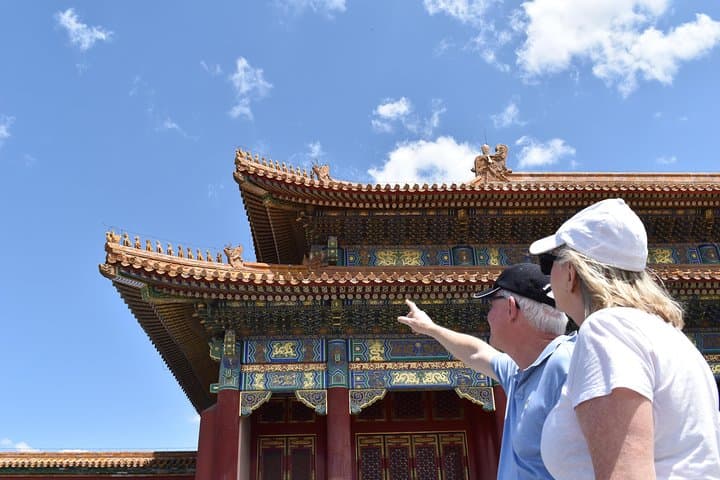
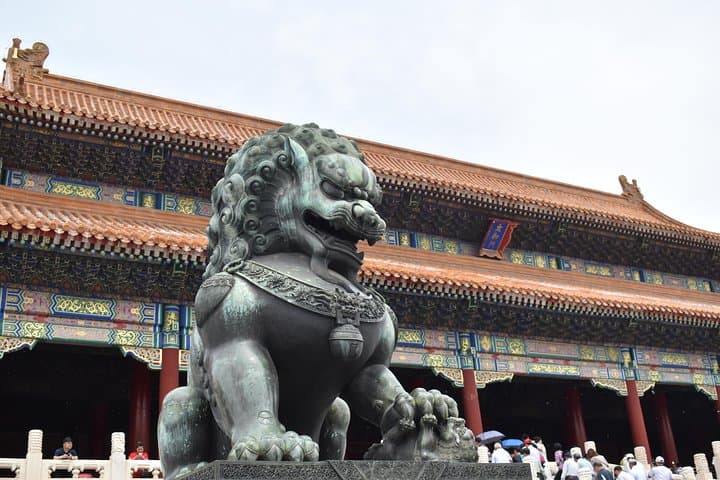
Built in the early 15th century under the Ming dynasty and later expanded by Qing rulers, the Palace Museum occupies the imperial heart of Beijing. Its architecture encodes rank and ritual: roofs capped with nine mythical beast sculptures, a numerical language that once regulated access and authority. Stone lions, carved screens and painted beams bring cultural meaning to plain travelogue facts; your guide turns motifs and measurements into stories that clarify why the complex was closed to commoners for nearly 500 years.
Today the site requires careful logistics — passports for pre-purchased tickets, timed entries and crowd management — but rewards focused exploration. Expect mostly flat, paved walking between major halls and smaller, quieter side courtyards like the Imperial Garden where details concentrate: carved brackets, restrained colors and the odd blocked ear of a guardian lion tied to tradition.
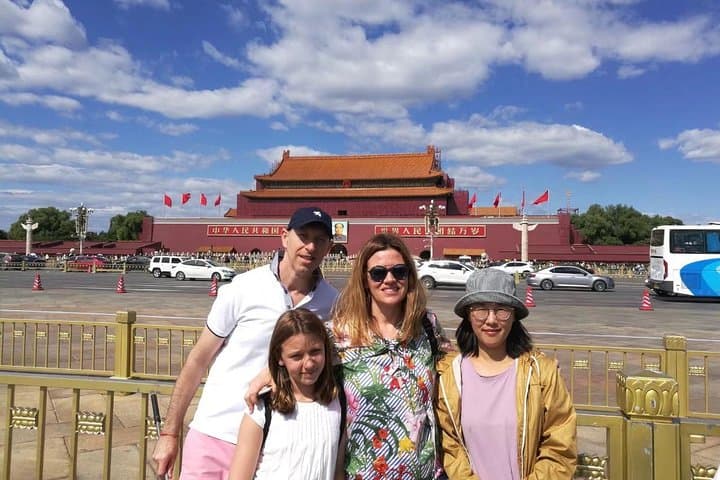
Practical advice: book at least 2–7 days ahead in peak season, carry a physical ID, wear comfortable shoes for 2–3 hours on hard surfaces, and bring water and a light layer for changing light and shade. If you want quieter photos, aim for the early morning meeting time to avoid the swell from Tiananmen Square. Guides usually finish at an exit close to the city center, leaving you well placed to continue exploring Beijing on foot.
easy.
2–3 hours.
Light walking fitness; able to stand and walk on flat, hard surfaces for the tour length.
Book at least 2 days ahead in quieter times and up to 7 days in peak season to guarantee skip-the-line tickets and guide availability.
Yes — passport details are required at booking and the original passport must be presented on the tour day for ticket validation.
The tour is listed as wheelchair accessible, but some thresholds and paved surfaces may be uneven; contact the operator about specific accessibility needs before booking.
This product’s policy is all sales final with no refunds; check the operator’s notes about last-minute guide availability and potential date changes.
Constructed beginning in 1406 and completed in 1420, the Forbidden City served as the Ming and Qing dynasties’ imperial palace and remained largely closed to the public until the 20th century.
High visitor numbers stress fragile surfaces and painted details; following pathing rules and booking timed entries helps reduce wear and supports conservation efforts.
Leo's Guide & Driver Service operates guided outdoor trips and adventures with an emphasis on safety, stewardship, and memorable experiences.
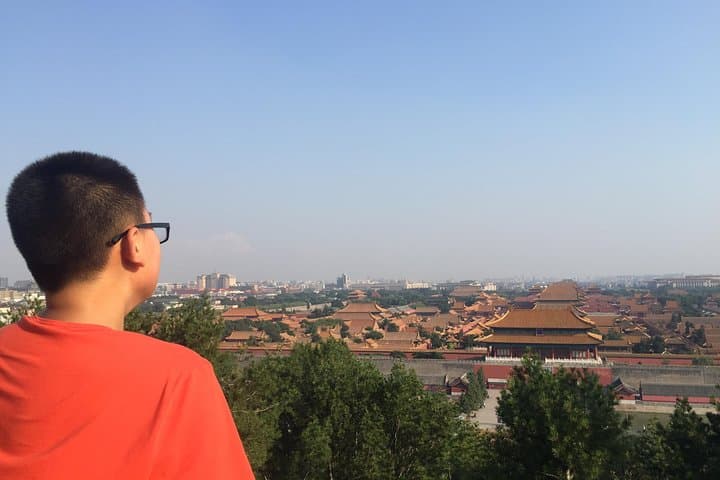
You step through a narrow gate and the city’s noise compresses into distant hums; flagstones lay out a centuries-old line toward vermilion walls and golden roofs. The Forbidden City opens not as a single monument but as a compound of courtyards, thresholds and roof ridges that seem to hold conversation with the sky.
You step through a narrow gate and the city’s noise compresses into distant hums; flagstones lay out a centuries-old line toward vermilion walls and golden roofs. The Forbidden City opens not as a single monument but as a compound of courtyards, thresholds and roof ridges that seem to hold conversation with the sky.
Built in the early 15th century under the Ming dynasty and later expanded by Qing rulers, the Palace Museum occupies the imperial heart of Beijing. Its architecture encodes rank and ritual: roofs capped with nine mythical beast sculptures, a numerical language that once regulated access and authority. Stone lions, carved screens and painted beams bring cultural meaning to plain travelogue facts; your guide turns motifs and measurements into stories that clarify why the complex was closed to commoners for nearly 500 years.
Today the site requires careful logistics — passports for pre-purchased tickets, timed entries and crowd management — but rewards focused exploration. Expect mostly flat, paved walking between major halls and smaller, quieter side courtyards like the Imperial Garden where details concentrate: carved brackets, restrained colors and the odd blocked ear of a guardian lion tied to tradition.
Practical advice: book at least 2–7 days ahead in peak season, carry a physical ID, wear comfortable shoes for 2–3 hours on hard surfaces, and bring water and a light layer for changing light and shade. If you want quieter photos, aim for the early morning meeting time to avoid the swell from Tiananmen Square. Guides usually finish at an exit close to the city center, leaving you well placed to continue exploring Beijing on foot.