THE ADVENTURE COLLECTIVE® · Independent discovery and booking for outdoor travel

Explore Barcelona Cathedral with skip-the-line tickets and a practical guide to the nave, cloister and rooftop views. This quick-read tells you what to expect, when to go, and how to prepare for a calm, informed visit.
Explore Barcelona Cathedral with skip-the-line tickets and a practical guide to the nave, cloister and rooftop views. This quick-read tells you what to expect, when to go, and how to prepare for a calm, informed visit.
You step through a narrow Gothic street and the cathedral rises: a cool stone mouth opening onto stained glass and shadow. Light slices through medieval windows, painting the nave in bands of blue and ochre. The air smells faintly of incense and old stone; footsteps echo where centuries of visitors have paused to look up.
Verified experiences and guided adventures in the surrounding area.
You step through a narrow Gothic street and the cathedral rises: a cool stone mouth opening onto stained glass and shadow. Light slices through medieval windows, painting the nave in bands of blue and ochre. The air smells faintly of incense and old stone; footsteps echo where centuries of visitors have paused to look up.
Barcelona Cathedral (Catedral de la Santa Creu i Santa Eulàlia) was built across the 13th–15th centuries and sits at the heart of the Gothic Quarter. Its façade and spires recall the High Gothic style common to Catalonia while the cloister shelters thirteen white geese tied to the cathedral’s legends. Underfoot are traces of Roman and medieval Barcelona; the church’s stones hold layers of the city’s civic and ecclesiastical history.
This visit mixes architecture, quiet courtyards, and a chance to access the rooftop for broad city views (often an extra ticket). Expect vaulted ceilings, carved choir stalls, and centuries-old sculptures; the cloister’s small garden and geese offer photographic moments away from the main nave.
Practical notes: plan 60–180 minutes depending on roof access and queues. Dress respectfully—shoulders and knees covered inside—and bring a lightweight layer since interiors stay cool. Morning or late-afternoon slots reduce crowds; summer afternoons can be busy. Photography without flash is generally allowed, but guided or audio options change seasonally.
Respect restricted areas and follow signage—the cathedral is both active place of worship and fragile historic site. With simple planning this visit becomes an immersive, manageable window into Barcelona’s layered past.
easy.
1–3 hours.
Low; requires walking and some standing on uneven stone floors and steps
Skip-the-line options speed entry to the nave; rooftop access is often an add-on and may be limited by capacity or services.
Yes—modest attire is required for entry during visiting hours; avoid sleeveless tops and very short shorts.
Non-flash photography is generally allowed in public areas; filming, tripods, or flash may be restricted—follow signage.
Main areas have limited access due to historic steps and thresholds; contact the cathedral in advance for current accessibility options and assistance.
Constructed between the 13th and 15th centuries on earlier medieval foundations, the cathedral honors Saint Eulalia and reflects Barcelona’s Gothic-era civic growth.
Ongoing conservation balances visitor access with preservation—follow signage, avoid touching stonework, and support official restoration efforts.
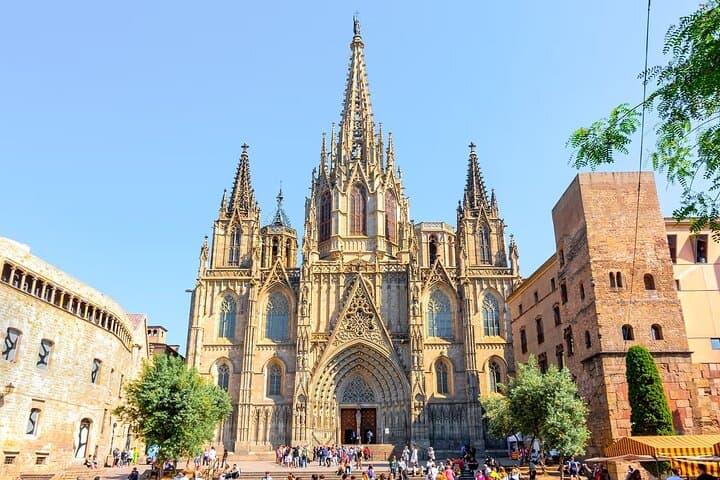
You step through a narrow Gothic street and the cathedral rises: a cool stone mouth opening onto stained glass and shadow. Light slices through medieval windows, painting the nave in bands of blue and ochre. The air smells faintly of incense and old stone; footsteps echo where centuries of visitors have paused to look up.
You step through a narrow Gothic street and the cathedral rises: a cool stone mouth opening onto stained glass and shadow. Light slices through medieval windows, painting the nave in bands of blue and ochre. The air smells faintly of incense and old stone; footsteps echo where centuries of visitors have paused to look up.
Barcelona Cathedral (Catedral de la Santa Creu i Santa Eulàlia) was built across the 13th–15th centuries and sits at the heart of the Gothic Quarter. Its façade and spires recall the High Gothic style common to Catalonia while the cloister shelters thirteen white geese tied to the cathedral’s legends. Underfoot are traces of Roman and medieval Barcelona; the church’s stones hold layers of the city’s civic and ecclesiastical history.
This visit mixes architecture, quiet courtyards, and a chance to access the rooftop for broad city views (often an extra ticket). Expect vaulted ceilings, carved choir stalls, and centuries-old sculptures; the cloister’s small garden and geese offer photographic moments away from the main nave.
Practical notes: plan 60–180 minutes depending on roof access and queues. Dress respectfully—shoulders and knees covered inside—and bring a lightweight layer since interiors stay cool. Morning or late-afternoon slots reduce crowds; summer afternoons can be busy. Photography without flash is generally allowed, but guided or audio options change seasonally.
Respect restricted areas and follow signage—the cathedral is both active place of worship and fragile historic site. With simple planning this visit becomes an immersive, manageable window into Barcelona’s layered past.