THE ADVENTURE COLLECTIVE® · Independent discovery and booking for outdoor travel

Explore Cambodia’s freshwater and marine life at Angkor Wildlife & Aquarium, where rescued tigers, crocodiles, otters and Mekong species share curated habitats. This full-day pass pairs hands-on displays with conservation-focused interpretation for visitors of all ages.
Explore Cambodia’s freshwater and marine life at Angkor Wildlife & Aquarium, where rescued tigers, crocodiles, otters and Mekong species share curated habitats. This full-day pass pairs hands-on displays with conservation-focused interpretation for visitors of all ages.
You step through a shaded gate and the humid air of the Cambodian lowlands meets you first — a mix of warm soil, wet wood, and distant water. Glass tanks throw light onto faces bent over the freshwater exhibit while a nearby enclosure rumbles with the quiet authority of a Bengal tiger. The place moves between aquarium hush and wildlife reserve energy, inviting slow study and careful attention.
Verified experiences and guided adventures in the surrounding area.
Operated by Angkor Wildlife & Aquarium · Siem Reap, Siem Reap Province
You step through a shaded gate and the humid air of the Cambodian lowlands meets you first — a mix of warm soil, wet wood, and distant water. Glass tanks throw light onto faces bent over the freshwater exhibit while a nearby enclosure rumbles with the quiet authority of a Bengal tiger. The place moves between aquarium hush and wildlife reserve energy, inviting slow study and careful attention.
Angkor Wildlife & Aquarium (AWA) traces its mission to protecting species tied to the Mekong and Tonle Sap floodplain. Geologically, you’re on alluvial plains shaped by seasonal flooding; the exhibits mirror that transition from riverine freshwater systems to coastal marine habitats. Culturally, conservation here connects to livelihoods that depend on fish, wetlands, and forests — AWA interprets that relationship through rescued animals, local education programs, and species recovery work.
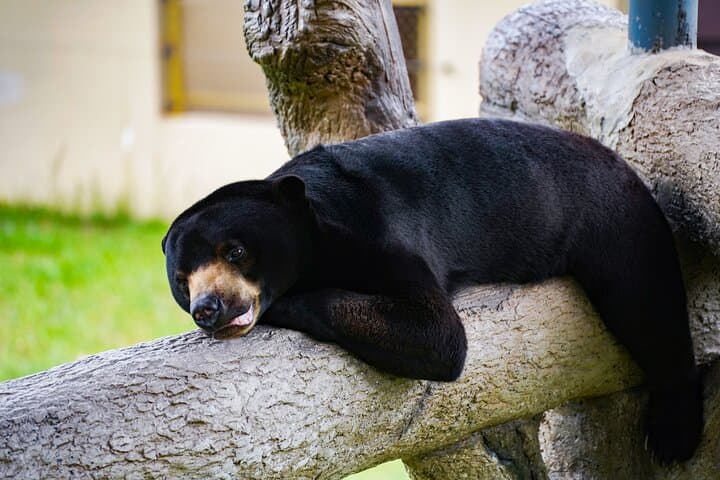
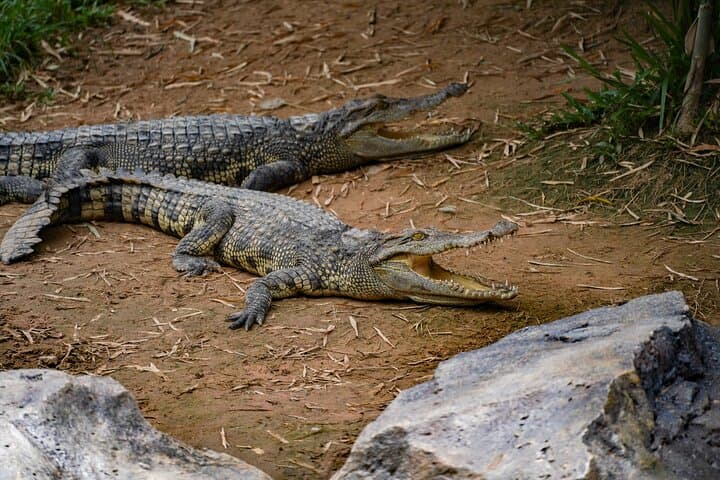
Expect concentrated exhibits: a freshwater tank showcasing Mekong giants, an ocean gallery, reptile enclosures, sun bears, otters, crocodiles and a touch pool for supervised interactions. Staff-led talks and feeding windows provide context; signage explains threats such as habitat loss and illegal trade.
Practical notes: plan 2–4 hours, aim for morning or late afternoon to avoid midday heat, and allow extra time for keeper talks. Wear breathable clothes, bring insect repellent and a refillable water bottle, and keep cameras ready but observe no-flash rules near nocturnal species. Accessibility is good across primary paths, but follow staff directions near enclosures. Your visit supports on-site conservation work — come prepared to learn and stay attentive to animal welfare guidelines.
easy.
2–5 hours.
Suitable for most fitness levels; the site is mostly flat with paved paths but expect some standing and walking.
Most visitors spend 2–4 hours to see main exhibits and attend at least one keeper talk or feeding demonstration.
There is a supervised touch pool and scheduled keeper interactions; follow staff guidance and rules posted at each exhibit.
Primary paths and many exhibit areas are wheelchair and stroller accessible; contact the venue for specific accessibility requests.
Yes — ticket revenue contributes to animal care, rescue efforts and educational programs run by the facility.
The site connects the region’s ecological story to the Mekong-Tonle Sap system, a floodplain that has shaped local fisheries and communities for centuries.
AWA operates rescue, rehabilitation and education programs; visitor fees and responsible behavior help fund animal care and anti-trafficking outreach.
Angkor Wildlife & Aquarium operates guided outdoor trips and adventures with an emphasis on safety, stewardship, and memorable experiences.


You step through a shaded gate and the humid air of the Cambodian lowlands meets you first — a mix of warm soil, wet wood, and distant water. Glass tanks throw light onto faces bent over the freshwater exhibit while a nearby enclosure rumbles with the quiet authority of a Bengal tiger. The place moves between aquarium hush and wildlife reserve energy, inviting slow study and careful attention.
You step through a shaded gate and the humid air of the Cambodian lowlands meets you first — a mix of warm soil, wet wood, and distant water. Glass tanks throw light onto faces bent over the freshwater exhibit while a nearby enclosure rumbles with the quiet authority of a Bengal tiger. The place moves between aquarium hush and wildlife reserve energy, inviting slow study and careful attention.
Angkor Wildlife & Aquarium (AWA) traces its mission to protecting species tied to the Mekong and Tonle Sap floodplain. Geologically, you’re on alluvial plains shaped by seasonal flooding; the exhibits mirror that transition from riverine freshwater systems to coastal marine habitats. Culturally, conservation here connects to livelihoods that depend on fish, wetlands, and forests — AWA interprets that relationship through rescued animals, local education programs, and species recovery work.
Expect concentrated exhibits: a freshwater tank showcasing Mekong giants, an ocean gallery, reptile enclosures, sun bears, otters, crocodiles and a touch pool for supervised interactions. Staff-led talks and feeding windows provide context; signage explains threats such as habitat loss and illegal trade.
Practical notes: plan 2–4 hours, aim for morning or late afternoon to avoid midday heat, and allow extra time for keeper talks. Wear breathable clothes, bring insect repellent and a refillable water bottle, and keep cameras ready but observe no-flash rules near nocturnal species. Accessibility is good across primary paths, but follow staff directions near enclosures. Your visit supports on-site conservation work — come prepared to learn and stay attentive to animal welfare guidelines.