THE ADVENTURE COLLECTIVE® · Independent discovery and booking for outdoor travel

A concise, practical guide to visiting Angkor National Museum with included transport. Learn what to expect from the collections, how to plan logistics, and tips to pair the museum with nearby temple visits.
A concise, practical guide to visiting Angkor National Museum with included transport. Learn what to expect from the collections, how to plan logistics, and tips to pair the museum with nearby temple visits.
You step from a humid Siem Reap street into a cool hall where carved lintels and Buddha figures fall into measured pools of light. The hum of tuk-tuks fades; stone eyes and bas-reliefs take over. The museum orients you—geography, ritual, empire—before you head north to the temples themselves.
Verified experiences and guided adventures in the surrounding area.
Operated by Bayon Tabi Tour · Siem Reap, Siem Reap Province
You step from a humid Siem Reap street into a cool hall where carved lintels and Buddha figures fall into measured pools of light. The hum of tuk-tuks fades; stone eyes and bas-reliefs take over. The museum orients you—geography, ritual, empire—before you head north to the temples themselves.
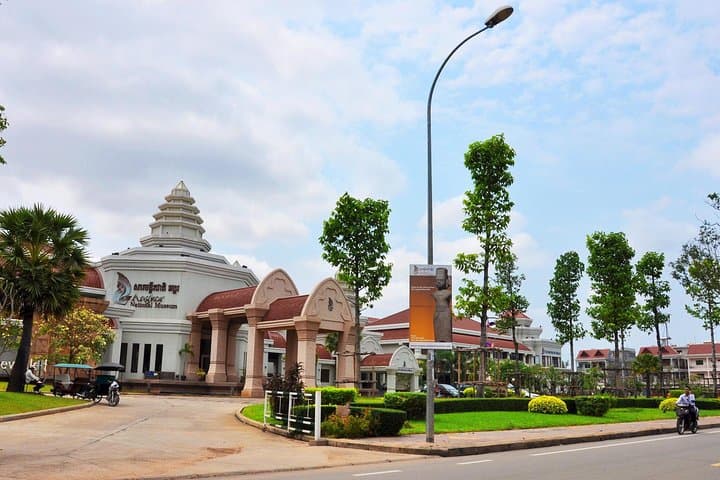
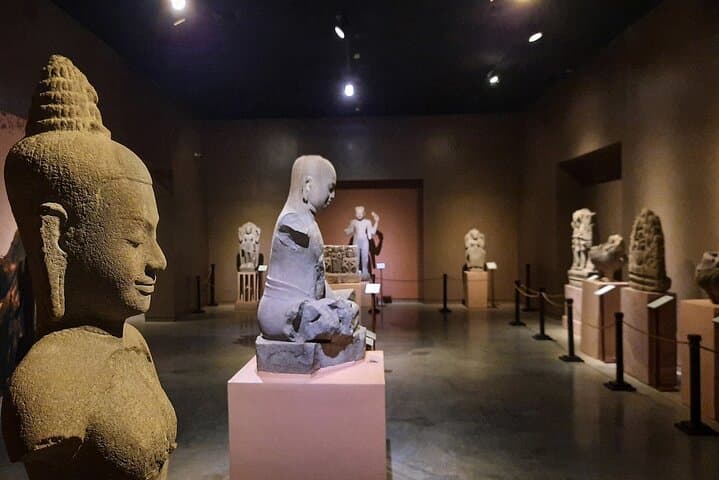
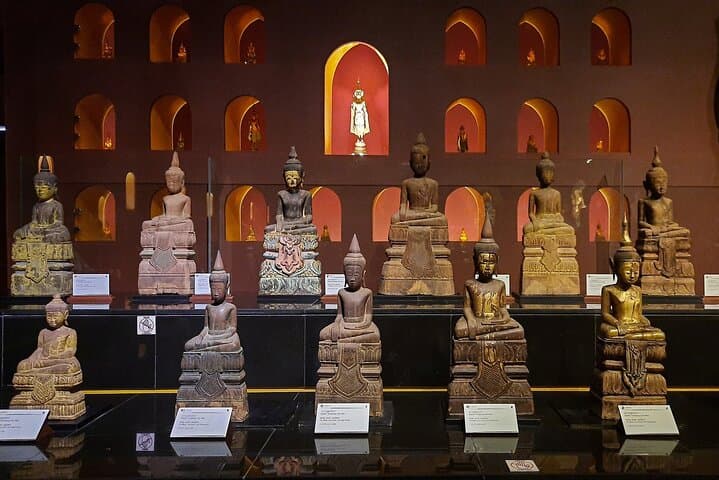
The Angkor National Museum assembles artifacts from the Angkorian period (9th–14th centuries): lintels, statues, ritual objects and explanatory displays that trace Khmer cosmology and statecraft. Much of the carved sandstone on display originally came from nearby temple complexes; the museum’s climate-controlled rooms protect softer pigments and fragile bas-reliefs that weathered centuries outdoors.
Beyond artifacts, the exhibits place Angkor within a living culture: temple-building as royal performance, irrigation and the hydraulic systems that shaped the plain, and the continuing role of Buddhism and local artisans.
Practical guidance: plan 2–3 hours for a focused visit; audio guides and labeled galleries make unguided visits productive. Transport is included with this product—expect hotel pickup by car or tuk-tuk and drop-off on the route toward the Angkor archaeological park. The site is wheelchair accessible and physically easy, but allow time for walking between galleries and queuing for entry.
Visitor tips: avoid flash photography near painted or sensitive objects, carry water (one bottle may be provided), wear respectful clothing for nearby temple visits, and schedule morning or late-afternoon slots to pair the museum with on-site temple visits to reduce midday heat. The museum is a practical primer—read the rooms, then let the stones of Angkor answer the rest.
easy.
2–3 hours.
Suitable for all fitness levels; involves light walking and standing
This product offers transport only; the museum visit is unguided—audio guides or labeled displays provide context inside the galleries.
Most visitors spend 2–3 hours exploring the permanent galleries; combine with nearby temple visits for a full day.
Yes—the museum reports wheelchair-accessible entrances and surfaces, but contact the operator if you need special assistance during pickup or transport.
Full refunds are typically available if you cancel at least 24 hours before the scheduled departure time; check the booking confirmation for exact terms.
The museum concentrates material from the Angkorian era (9th–14th centuries), illustrating temple rites, royal iconography and the hydraulic systems that supported the Khmer capital.
By housing fragile artifacts indoors, the museum reduces weathering and supports conservation; buying tickets and following rules (no flash, no touching) helps protect objects for future study.
Bayon Tabi Tour operates guided outdoor trips and adventures with an emphasis on safety, stewardship, and memorable experiences.
You step from a humid Siem Reap street into a cool hall where carved lintels and Buddha figures fall into measured pools of light. The hum of tuk-tuks fades; stone eyes and bas-reliefs take over. The museum orients you—geography, ritual, empire—before you head north to the temples themselves.
You step from a humid Siem Reap street into a cool hall where carved lintels and Buddha figures fall into measured pools of light. The hum of tuk-tuks fades; stone eyes and bas-reliefs take over. The museum orients you—geography, ritual, empire—before you head north to the temples themselves.
The Angkor National Museum assembles artifacts from the Angkorian period (9th–14th centuries): lintels, statues, ritual objects and explanatory displays that trace Khmer cosmology and statecraft. Much of the carved sandstone on display originally came from nearby temple complexes; the museum’s climate-controlled rooms protect softer pigments and fragile bas-reliefs that weathered centuries outdoors.
Beyond artifacts, the exhibits place Angkor within a living culture: temple-building as royal performance, irrigation and the hydraulic systems that shaped the plain, and the continuing role of Buddhism and local artisans.
Practical guidance: plan 2–3 hours for a focused visit; audio guides and labeled galleries make unguided visits productive. Transport is included with this product—expect hotel pickup by car or tuk-tuk and drop-off on the route toward the Angkor archaeological park. The site is wheelchair accessible and physically easy, but allow time for walking between galleries and queuing for entry.
Visitor tips: avoid flash photography near painted or sensitive objects, carry water (one bottle may be provided), wear respectful clothing for nearby temple visits, and schedule morning or late-afternoon slots to pair the museum with on-site temple visits to reduce midday heat. The museum is a practical primer—read the rooms, then let the stones of Angkor answer the rest.