THE ADVENTURE COLLECTIVE® · Independent discovery and booking for outdoor travel

Board a luxury Tour Trekker from Las Vegas and get a guided look at Hoover Dam’s sweeping viewpoints, interior power plant, and the human stories that built it. This 4-hour outing blends big-picture geology and engineering with practical tips for touring in high desert heat.
Board a luxury Tour Trekker from Las Vegas and get a guided look at Hoover Dam’s sweeping viewpoints, interior power plant, and the human stories that built it. This 4-hour outing blends big-picture geology and engineering with practical tips for touring in high desert heat.
You step out of a luxury Tour Trekker into Mojave air that presses warm against your face, the concrete monolith of Hoover Dam rising like an engineered cliff ahead. Guides point you to the edge where the Colorado River narrows and the water below dares you to look straight down; the Mike O’Callaghan–Pat Tillman Bridge frames the scene and the sheer scale finally clicks.
Verified experiences and guided adventures in the surrounding area.
Operated by Pink Jeep Tours Las Vegas · Boulder City, Nevada
You step out of a luxury Tour Trekker into Mojave air that presses warm against your face, the concrete monolith of Hoover Dam rising like an engineered cliff ahead. Guides point you to the edge where the Colorado River narrows and the water below dares you to look straight down; the Mike O’Callaghan–Pat Tillman Bridge frames the scene and the sheer scale finally clicks.
Built in the 1930s at the height of the Great Depression, Hoover Dam reshaped the Southwest — rerouting river, power, and population. Geologically, the dam sits where black volcanic rocks meet ancient river-cut canyons; you’ll see the sculpted layers that tell a story of tectonics and erosion. Boulder City, created to house the workforce, still carries that industrial culture in its low-slung brick buildings and museum exhibits.
The tour moves from sweeping viewpoints on the Arizona side to a walking tour across the dam’s crest and then, if Bureau of Reclamation access permits, into the power plant. Inside, original construction tunnels and massive generators give a sense of human scale against raw concrete and humming machinery. Guides layer in stories of engineering improvisation, labor camps, and the long-term effects on Lake Mead’s water management.
Practical notes: this is a paved, moderately paced experience with stairs and enclosed spaces below. Wear comfortable walking shoes, bring sun protection and water, and expect security screening at the visitor center. Pick morning or late-afternoon departures to avoid peak heat in summer; hotel pickup in Las Vegas makes logistics simple. The tour balances spectacle with practical context — an accessible way to experience one of America’s most consequential engineering works.
easy.
4 hours.
Suitable for most fitness levels; includes walking on paved surfaces, stairs, and brief standing periods
The tour is approximately 4 hours and includes hotel pickup, a guided drive to Hoover Dam, walking tours across the dam, Visitor Center time, and a Bureau of Reclamation–led power plant tour when available.
Yes — the tour and transportation are wheelchair accessible, though some interior power plant areas may have limited access; collapsible wheelchairs are acceptable when accompanied by another adult.
Yes — the itinerary includes a stop on the Arizona side for panoramic views and photos of the dam and Colorado River below.
If Bureau of Reclamation access to the generator room is restricted, the tour substitutes visits to the Mike O’Callaghan–Pat Tillman Memorial Bridge overlook and the Boulder City Hoover Dam Museum.
Completed in 1936, Hoover Dam was built by thousands of workers during the Great Depression and created Lake Mead, the nation’s largest reservoir at the time.
Lake Mead’s declining water levels and regional water-management challenges are central conservation issues; stay on marked paths, pack out trash, and respect sensitive desert flora.
Pink Jeep Tours Las Vegas operates guided outdoor trips and adventures with an emphasis on safety, stewardship, and memorable experiences.
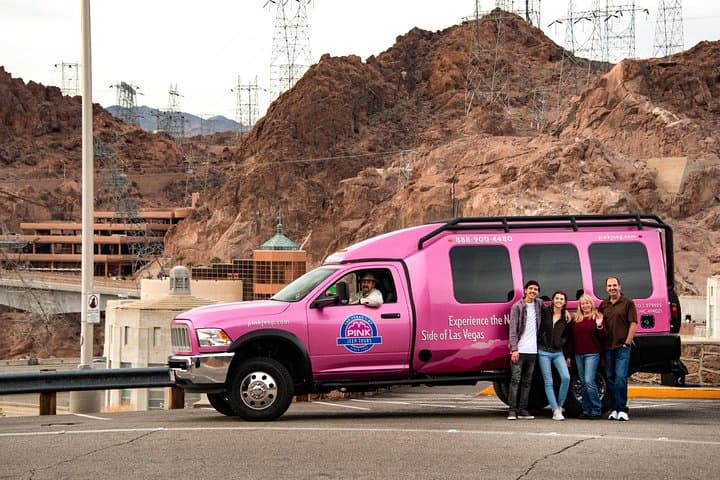
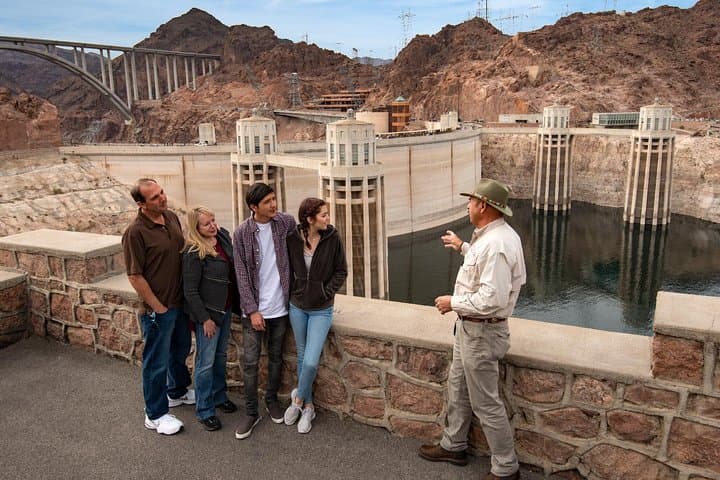
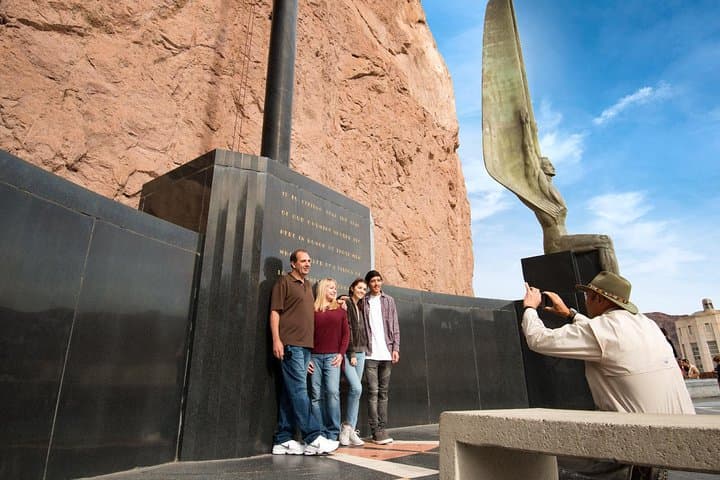
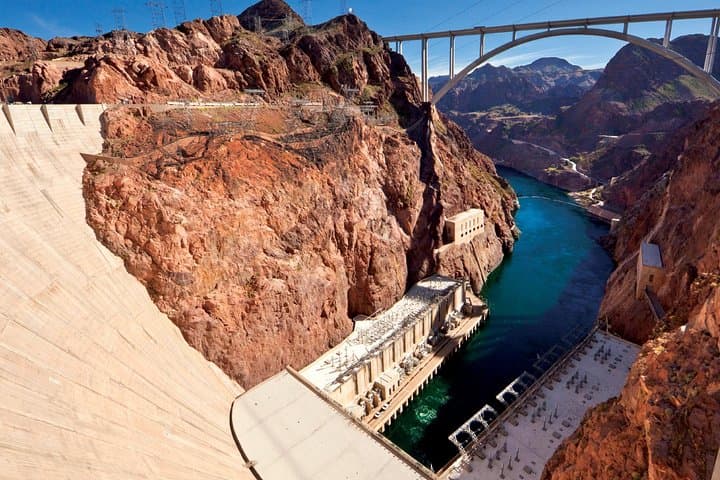
You step out of a luxury Tour Trekker into Mojave air that presses warm against your face, the concrete monolith of Hoover Dam rising like an engineered cliff ahead. Guides point you to the edge where the Colorado River narrows and the water below dares you to look straight down; the Mike O’Callaghan–Pat Tillman Bridge frames the scene and the sheer scale finally clicks.
You step out of a luxury Tour Trekker into Mojave air that presses warm against your face, the concrete monolith of Hoover Dam rising like an engineered cliff ahead. Guides point you to the edge where the Colorado River narrows and the water below dares you to look straight down; the Mike O’Callaghan–Pat Tillman Bridge frames the scene and the sheer scale finally clicks.
Built in the 1930s at the height of the Great Depression, Hoover Dam reshaped the Southwest — rerouting river, power, and population. Geologically, the dam sits where black volcanic rocks meet ancient river-cut canyons; you’ll see the sculpted layers that tell a story of tectonics and erosion. Boulder City, created to house the workforce, still carries that industrial culture in its low-slung brick buildings and museum exhibits.
The tour moves from sweeping viewpoints on the Arizona side to a walking tour across the dam’s crest and then, if Bureau of Reclamation access permits, into the power plant. Inside, original construction tunnels and massive generators give a sense of human scale against raw concrete and humming machinery. Guides layer in stories of engineering improvisation, labor camps, and the long-term effects on Lake Mead’s water management.
Practical notes: this is a paved, moderately paced experience with stairs and enclosed spaces below. Wear comfortable walking shoes, bring sun protection and water, and expect security screening at the visitor center. Pick morning or late-afternoon departures to avoid peak heat in summer; hotel pickup in Las Vegas makes logistics simple. The tour balances spectacle with practical context — an accessible way to experience one of America’s most consequential engineering works.