THE ADVENTURE COLLECTIVE® · Independent discovery and booking for outdoor travel

Fly into the Chugach Range and step into an ice cave hewn by melt and time. This winter helicopter landing on Knik Glacier pairs dramatic aerial views with minutes of hands-on glacier exploration.
Fly into the Chugach Range and step into an ice cave hewn by melt and time. This winter helicopter landing on Knik Glacier pairs dramatic aerial views with minutes of hands-on glacier exploration.
You lift off from the Anchorage area and the city’s edge falls away beneath a ribbon of braided river. The helicopter banks into the Knik River Valley and the Chugach Range opens up: serrated ridgelines, frozen waterfalls, and a plain of pale, compacted snow leading to an opening in blue ice. The pilot sets down near the toe of Knik Glacier and the air feels different—crisper, almost musical—inside the cave opening.
Verified experiences and guided adventures in the surrounding area.
Operated by Outbound Heli Adventures, LLC · Anchorage, Alaska
You lift off from the Anchorage area and the city’s edge falls away beneath a ribbon of braided river. The helicopter banks into the Knik River Valley and the Chugach Range opens up: serrated ridgelines, frozen waterfalls, and a plain of pale, compacted snow leading to an opening in blue ice. The pilot sets down near the toe of Knik Glacier and the air feels different—crisper, almost musical—inside the cave opening.
Geology here is active and obvious. Knik Glacier, carved over millennia, exposes layers of compressed ice punctuated by moulins and crevasses; the caves form when meltwater tunnels through winter ice and refreezes into sculpted passages. Human history in the valley spans Dena’ina Athabascan travel routes, gold rush-era trails, and modern flight-based access; pilots and glacier guides now bridge vast terrain once traversed on sled or foot.
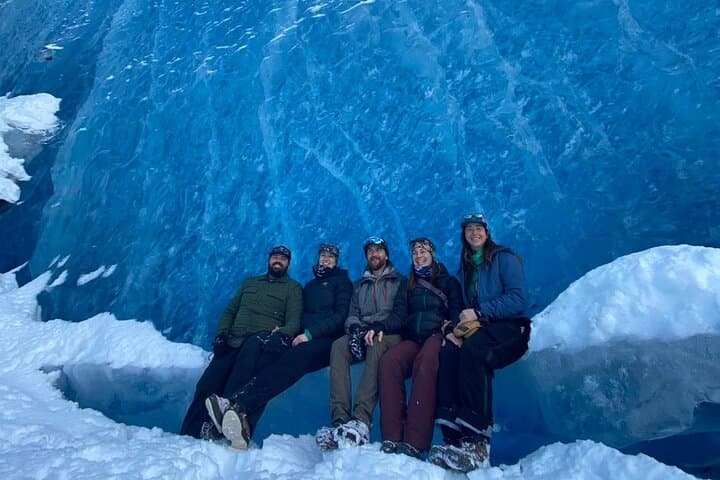
Expect brilliant blue ice walls, echoing chambers and a tactile sense of scale: the cave’s ceiling and floor whisper of seasonal melt and freeze cycles. Wildlife keeps its distance—an occasional eagle circles the ridges while distant mountain goats pick routes on basalt.
Practically, this is a guided aerial landing with roughly 50 minutes of flight time and about 45 minutes to explore on the ice within a two-hour booking window. Dress in insulated layers, wear sturdy, crampon-capable boots, and keep electronics protected from cold. Weather dictates safety and schedule; tours run only in colder months when caves are stable. Respect the fragile ice: follow guide directions, avoid hammering or removing ice, and carry out all trash. The payoff is rare—walking inside a living glacier, framed by the Chugach’s raw winter light.
easy.
2 hours.
Suitable for most people who can board a helicopter and walk short distances on uneven icy ground; low aerobic demand.
The full booking window is about two hours; expect roughly 50 minutes of flight time and about 45 minutes allocated to on-ice exploration, depending on conditions.
There’s a 300 lb per-seat weight limit and aircraft-specific maximums; infants must sit on laps—confirm at booking and declare weights during check-in.
Flights are weather-dependent; operators cancel unsafe flights and offer refunds or rescheduling—check the 24-hour cancellation policy for specifics.
Ground facilities may be wheelchair accessible, but the glacier landing and cave exploration require mobility on uneven ice; contact the operator to discuss accommodations.
The Chugach and Knik corridor has long been used by Dena’ina people; later it saw mining and transport routes before aviation made deep-glacier access routine.
Glaciers here are sensitive to warming; stick to guide-designated paths, avoid taking ice samples, and pack out all waste to minimize impact.
Outbound Heli Adventures, LLC operates guided outdoor trips and adventures with an emphasis on safety, stewardship, and memorable experiences.
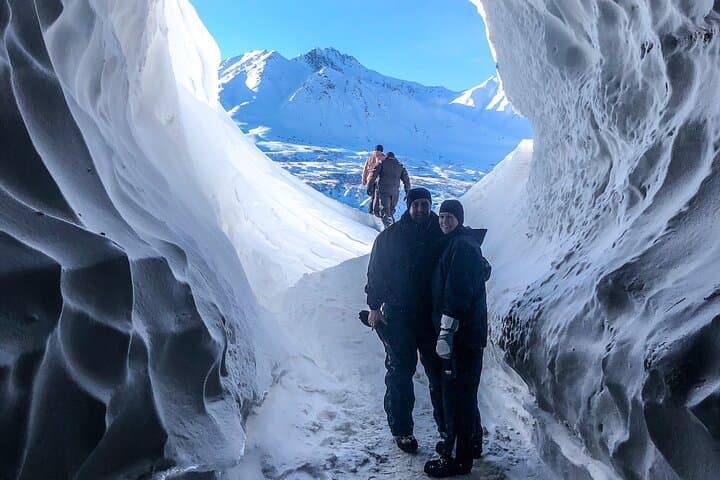

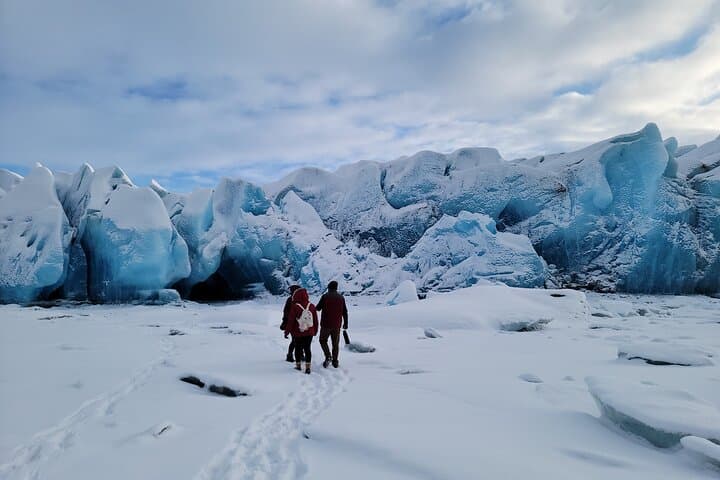
You lift off from the Anchorage area and the city’s edge falls away beneath a ribbon of braided river. The helicopter banks into the Knik River Valley and the Chugach Range opens up: serrated ridgelines, frozen waterfalls, and a plain of pale, compacted snow leading to an opening in blue ice. The pilot sets down near the toe of Knik Glacier and the air feels different—crisper, almost musical—inside the cave opening.
You lift off from the Anchorage area and the city’s edge falls away beneath a ribbon of braided river. The helicopter banks into the Knik River Valley and the Chugach Range opens up: serrated ridgelines, frozen waterfalls, and a plain of pale, compacted snow leading to an opening in blue ice. The pilot sets down near the toe of Knik Glacier and the air feels different—crisper, almost musical—inside the cave opening.
Geology here is active and obvious. Knik Glacier, carved over millennia, exposes layers of compressed ice punctuated by moulins and crevasses; the caves form when meltwater tunnels through winter ice and refreezes into sculpted passages. Human history in the valley spans Dena’ina Athabascan travel routes, gold rush-era trails, and modern flight-based access; pilots and glacier guides now bridge vast terrain once traversed on sled or foot.
Expect brilliant blue ice walls, echoing chambers and a tactile sense of scale: the cave’s ceiling and floor whisper of seasonal melt and freeze cycles. Wildlife keeps its distance—an occasional eagle circles the ridges while distant mountain goats pick routes on basalt.
Practically, this is a guided aerial landing with roughly 50 minutes of flight time and about 45 minutes to explore on the ice within a two-hour booking window. Dress in insulated layers, wear sturdy, crampon-capable boots, and keep electronics protected from cold. Weather dictates safety and schedule; tours run only in colder months when caves are stable. Respect the fragile ice: follow guide directions, avoid hammering or removing ice, and carry out all trash. The payoff is rare—walking inside a living glacier, framed by the Chugach’s raw winter light.