THE ADVENTURE COLLECTIVE® · Independent discovery and booking for outdoor travel

Step through a giant croc head and into a cultivated jungle where more than 300 Nile crocodiles and glassed anaconda enclosures await. Crocoparc is an accessible, three-hour wildlife experience an hour from Agadir with botanical displays, interpretive talks and family-friendly paths.
Step through a giant croc head and into a cultivated jungle where more than 300 Nile crocodiles and glassed anaconda enclosures await. Crocoparc is an accessible, three-hour wildlife experience an hour from Agadir with botanical displays, interpretive talks and family-friendly paths.
The path arrives alive before you: a massive sculpted crocodile head marks the entrance and, beyond it, a green interior where water channels murmur and palms shade raised viewing platforms. Visitors step from the sun of Agadir into a controlled, almost theatrical jungle where the slow, deliberate eyes of Nile crocodiles watch from shaded basins and anacondas coil in glassed exhibits.
Verified experiences and guided adventures in the surrounding area.
Operated by Union Tours · Agadir, Souss-Massa
The path arrives alive before you: a massive sculpted crocodile head marks the entrance and, beyond it, a green interior where water channels murmur and palms shade raised viewing platforms. Visitors step from the sun of Agadir into a controlled, almost theatrical jungle where the slow, deliberate eyes of Nile crocodiles watch from shaded basins and anacondas coil in glassed exhibits.
Built in the early 2000s as a conservation-education attraction on the Agadir–Marrakech heights, Crocoparc showcases more than 300 Crocodylus niloticus alongside curated plantings that mimic Atlantic-zone vegetation. The site blends horticulture and herpetology: terraced ponds, rock-lined enclosures and winding paths echo local geology—red-earth slopes giving way to irrigated garden beds—and reflect Morocco’s long history of botanical exchange across Mediterranean and Saharan climates.
Culturally, the park sits within the Souss-Massa region where coastal fishing towns and Berber highland routes meet; it’s a short, scenic hour from Agadir or Taghazout over coastal ridgelines. The design emphasizes safe, close viewing for families while offering interpretation about species, habitat and human impact.
Practicalities: visits run about three hours, the site is wheelchair accessible and open daily from mid-morning to late afternoon. Expect gravel paths and stairs—comfortable, closed-toe shoes and water are wise. Photography is encouraged but avoid flash near animals. For quieter observations, plan mornings or late afternoons and consider the provided transfers from Agadir hotels. The park delivers a compact, accessible wildlife encounter that pairs observational thrill with practical conservation messaging.
easy.
3 hours.
Suitable for most fitness levels; involves short walks and some stairs.
The standard visit runs about three hours including transport from Agadir or Taghazout when arranged.
Yes—families are welcome; the park is stroller- and wheelchair-accessible, and infants may need to sit on an adult’s lap in provided transport.
Yes—pick-up from Agadir and Taghazout hotels is commonly offered, with about a one-hour drive to the park on the Agadir–Marrakech heights.
No—interactions are observation-only for safety and conservation; feeding is strictly prohibited.
Crocoparc was developed in the 2000s as a private initiative combining species exhibition with botanical landscaping, sited on slopes historically used for small-scale agriculture.
The park frames exhibition around species management and education; visitors are encouraged to follow rules that minimize stress to animals and reduce single-use plastic waste.
Union Tours operates guided outdoor trips and adventures with an emphasis on safety, stewardship, and memorable experiences.
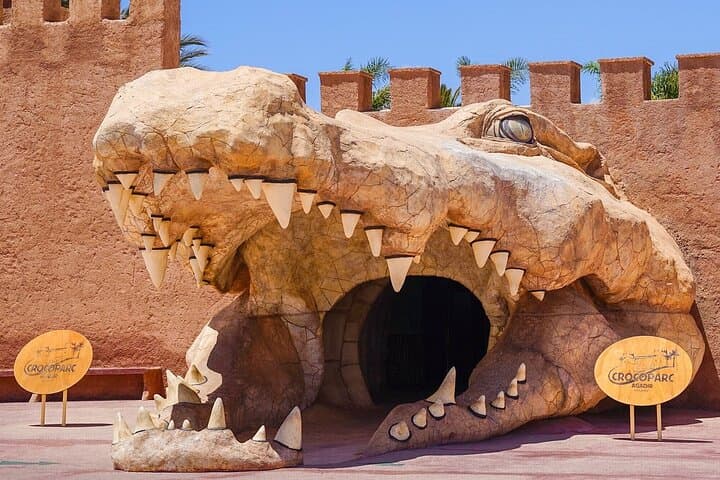
The path arrives alive before you: a massive sculpted crocodile head marks the entrance and, beyond it, a green interior where water channels murmur and palms shade raised viewing platforms. Visitors step from the sun of Agadir into a controlled, almost theatrical jungle where the slow, deliberate eyes of Nile crocodiles watch from shaded basins and anacondas coil in glassed exhibits.
The path arrives alive before you: a massive sculpted crocodile head marks the entrance and, beyond it, a green interior where water channels murmur and palms shade raised viewing platforms. Visitors step from the sun of Agadir into a controlled, almost theatrical jungle where the slow, deliberate eyes of Nile crocodiles watch from shaded basins and anacondas coil in glassed exhibits.
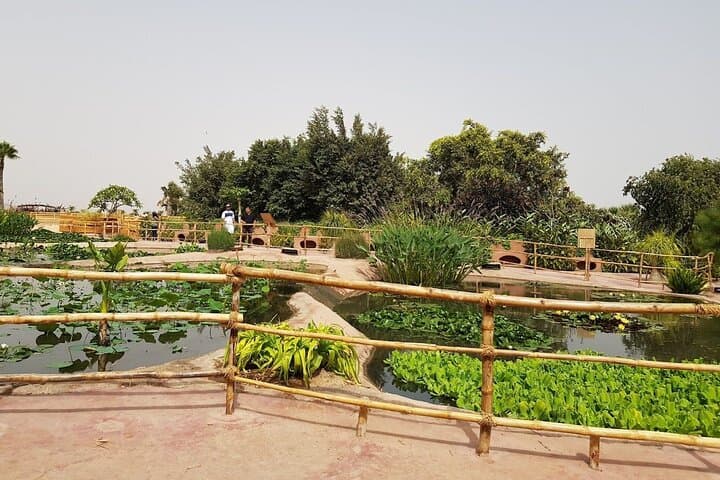
Built in the early 2000s as a conservation-education attraction on the Agadir–Marrakech heights, Crocoparc showcases more than 300 Crocodylus niloticus alongside curated plantings that mimic Atlantic-zone vegetation. The site blends horticulture and herpetology: terraced ponds, rock-lined enclosures and winding paths echo local geology—red-earth slopes giving way to irrigated garden beds—and reflect Morocco’s long history of botanical exchange across Mediterranean and Saharan climates.
Culturally, the park sits within the Souss-Massa region where coastal fishing towns and Berber highland routes meet; it’s a short, scenic hour from Agadir or Taghazout over coastal ridgelines. The design emphasizes safe, close viewing for families while offering interpretation about species, habitat and human impact.
Practicalities: visits run about three hours, the site is wheelchair accessible and open daily from mid-morning to late afternoon. Expect gravel paths and stairs—comfortable, closed-toe shoes and water are wise. Photography is encouraged but avoid flash near animals. For quieter observations, plan mornings or late afternoons and consider the provided transfers from Agadir hotels. The park delivers a compact, accessible wildlife encounter that pairs observational thrill with practical conservation messaging.