THE ADVENTURE COLLECTIVE® · Independent discovery and booking for outdoor travel

Meet the UAE’s national emblem up close at the Abu Dhabi Falcon Hospital. This guided, four- to five-hour visit combines veterinary care demonstrations, museum displays and supervised photo opportunities with these iconic birds.
Meet the UAE’s national emblem up close at the Abu Dhabi Falcon Hospital. This guided, four- to five-hour visit combines veterinary care demonstrations, museum displays and supervised photo opportunities with these iconic birds.
You step from the air-conditioned minivan into a sunlit compound where wings and history meet — the Abu Dhabi Falcon Hospital hums with focused activity and the low, deliberate presence of birds bred for speed and partnership.
Verified experiences and guided adventures in the surrounding area.
You step from the air-conditioned minivan into a sunlit compound where wings and history meet — the Abu Dhabi Falcon Hospital hums with focused activity and the low, deliberate presence of birds bred for speed and partnership.
The hospital grew from centuries-old Bedouin falconry culture and was formally opened in the late 1990s to provide specialized veterinary care, rehabilitation and public education. The grounds show both clinical precision and cultural display: two small museums chart falconry tools, sporting history and the role these raptors play across the Arabian Peninsula.
Geologically the site sits on flat coastal desert plains; the landscape outside feels spare, yet the air carries the crackle of heat that falcons cut through on the hunt. Culturally, the tour connects visitors to Emirati tradition — handlers in white kanduras, the hush-and-hum of careful bird handling, and a chance (under staff supervision) to meet perched falcons for photographs.
Practical guidance: tours last about four to five hours including hotel transfers. Wear breathable, sun-protective clothing and closed-toe shoes; expect short walks on paved and gravel surfaces. Photography is allowed but follow handlers’ directions — the birds are patients first. If you add the optional traditional Arabic lunch, budget extra time.
The experience is low-impact physically but high in sensory detail: the leather of a hood, the steady grip of a glove, the sudden clack of a beak. This is an educational encounter that blends veterinary care, conservation messaging and living tradition into one accessible, memorable outing.
easy.
4–5 hours.
No special fitness required beyond standing and short, flat walks; suitable for most ages.
Yes; the advertised tour includes free hotel pickup and drop-off within Abu Dhabi—confirm your pickup window when booking.
Interaction rules vary; handlers may allow supervised photo opportunities where you wear a glove while a trained falcon perches on your arm.
Yes—families are welcome, but young children should remain calm, follow instructions, and not approach birds without staff permission.
Entrance and narration are included; the traditional Arabic tent lunch is optional and usually available for an extra fee.
Falconry is a centuries-old practice in the Arabian Peninsula; the Abu Dhabi Falcon Hospital was established in the late 1990s to professionalize care for these culturally important birds.
The hospital focuses on rehabilitation, research and public education to reduce illegal trade and improve veterinary standards across the region.
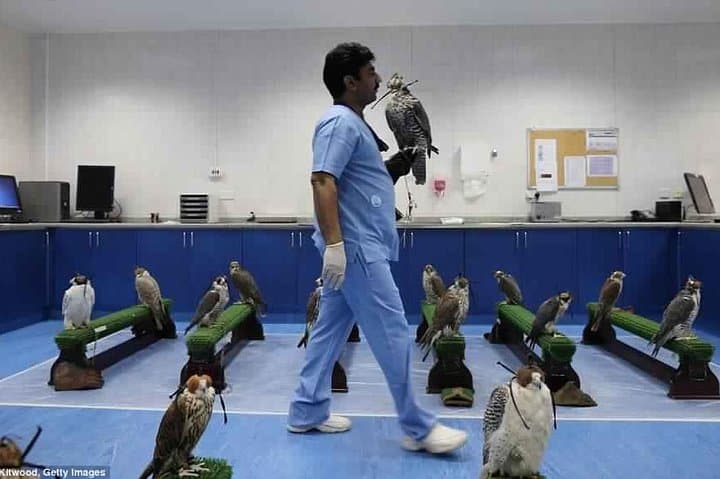
You step from the air-conditioned minivan into a sunlit compound where wings and history meet — the Abu Dhabi Falcon Hospital hums with focused activity and the low, deliberate presence of birds bred for speed and partnership.
You step from the air-conditioned minivan into a sunlit compound where wings and history meet — the Abu Dhabi Falcon Hospital hums with focused activity and the low, deliberate presence of birds bred for speed and partnership.
The hospital grew from centuries-old Bedouin falconry culture and was formally opened in the late 1990s to provide specialized veterinary care, rehabilitation and public education. The grounds show both clinical precision and cultural display: two small museums chart falconry tools, sporting history and the role these raptors play across the Arabian Peninsula.
Geologically the site sits on flat coastal desert plains; the landscape outside feels spare, yet the air carries the crackle of heat that falcons cut through on the hunt. Culturally, the tour connects visitors to Emirati tradition — handlers in white kanduras, the hush-and-hum of careful bird handling, and a chance (under staff supervision) to meet perched falcons for photographs.
Practical guidance: tours last about four to five hours including hotel transfers. Wear breathable, sun-protective clothing and closed-toe shoes; expect short walks on paved and gravel surfaces. Photography is allowed but follow handlers’ directions — the birds are patients first. If you add the optional traditional Arabic lunch, budget extra time.
The experience is low-impact physically but high in sensory detail: the leather of a hood, the steady grip of a glove, the sudden clack of a beak. This is an educational encounter that blends veterinary care, conservation messaging and living tradition into one accessible, memorable outing.