THE ADVENTURE COLLECTIVE® · Independent discovery and booking for outdoor travel

Watch rikishi train up close, hear live commentary via headsets, and share tea and chanko nabe with wrestlers after practice. This small-group, four-hour visit offers a rare, respectful look inside a working sumo stable.
Watch rikishi train up close, hear live commentary via headsets, and share tea and chanko nabe with wrestlers after practice. This small-group, four-hour visit offers a rare, respectful look inside a working sumo stable.
The low morning light slips across the dohyo as wrestlers move through ritual and repetition — a steady, physical meditation that fills the room with a sense of focused momentum. Visitors sit on cushions or low chairs, audio headsets crackling softly as an expert guide names techniques and explains the cadence of a sumo morning practice.
Verified experiences and guided adventures in the surrounding area.
Operated by Japan Awaits · Saitama, Saitama Prefecture
The low morning light slips across the dohyo as wrestlers move through ritual and repetition — a steady, physical meditation that fills the room with a sense of focused momentum. Visitors sit on cushions or low chairs, audio headsets crackling softly as an expert guide names techniques and explains the cadence of a sumo morning practice.
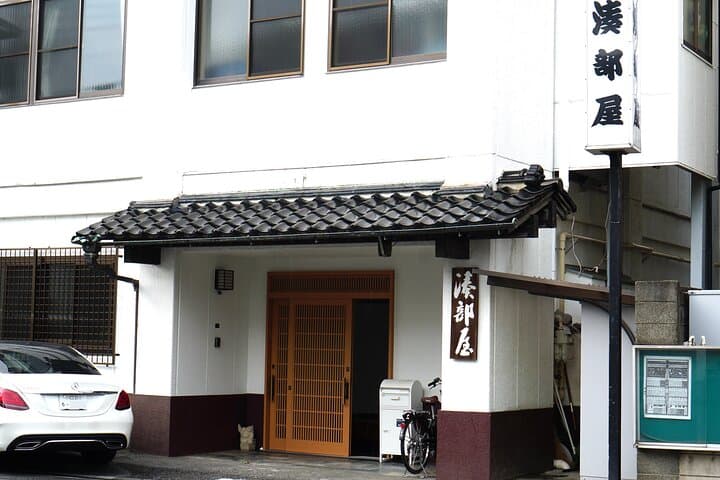
Sumo traces its roots to Shinto rites and the feudal era; the stable (heya) is both gym and household where lineage, rank and simple daily routines shape life. In Saitama and greater Tokyo, many stables occupy narrow blocks on the Kanto Plain, their wooden timbers and concrete floors absorbing generations of footsteps. The culture around sumo emphasizes respect: how to enter, where to sit, and why wrestlers perform specific rituals before practice.
This intimate four‑hour experience typically runs later than some tours — starting around 8:00 AM — and limits groups for clearer commentary, photo opportunities and a seat at a shared chanko nabe lunch. Expect close views of shiko (leg stamping), matawari (stretching) and spirited practice bouts, followed by casual conversation and tea with rikishi (wrestlers).
Practical notes: arrive 10 minutes early, silence phone flashes, and follow stable etiquette such as not showing the soles of your feet to the ring. Wear modest, comfortable clothing — knees and shoulders covered are appreciated — and bring a compact camera (no flash). The tour is wheelchair accessible with modest stair requirements; notify the operator in advance for seating needs. For a clear, respectful, and memorable introduction to Japan’s oldest ring, this visit balances cultural depth with easy logistics.
easy.
4 hours.
Suitable for most fitness levels; requires brief periods of sitting on low seating and short stair negotiation.
Yes — children age 6 and over may join but must be accompanied by an adult; adult pricing applies to all guests.
No — flash is not permitted inside the stable; still photos and video without flash are generally allowed with respect.
The stable has some accessible areas and a wheelchair storage area; guests must be able to climb one short flight (about 5 steps) or bring an aide.
Lunch is an authentic chanko nabe served by wrestlers; menu varies daily but reflects the high‑calorie, hearty meals rikishi eat to maintain mass and strength.
Sumo evolved from Shinto ritual and court entertainment into a professional sport by the Edo period; stables preserve lineage, training methods and communal living practices.
Respecting the stable’s rituals and limits on numbers helps preserve training conditions; visitors should follow rules to minimize disturbance and support sustainable cultural tourism.
Japan Awaits operates guided outdoor trips and adventures with an emphasis on safety, stewardship, and memorable experiences.
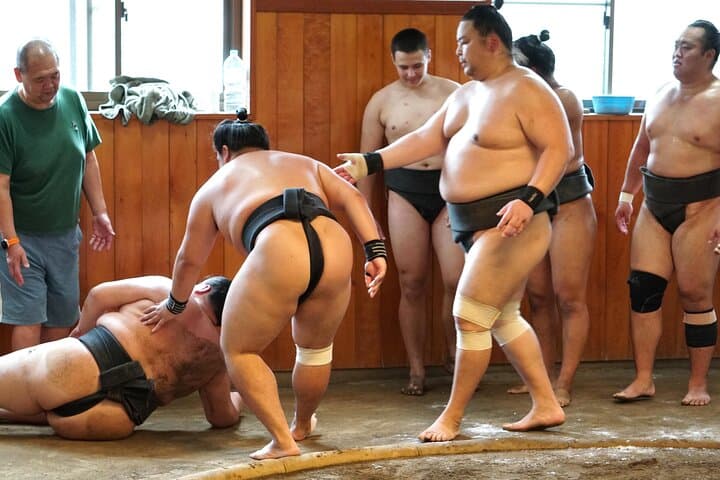
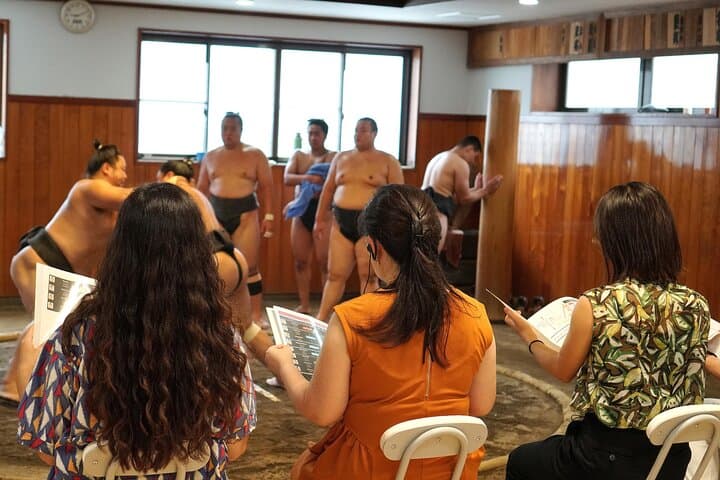
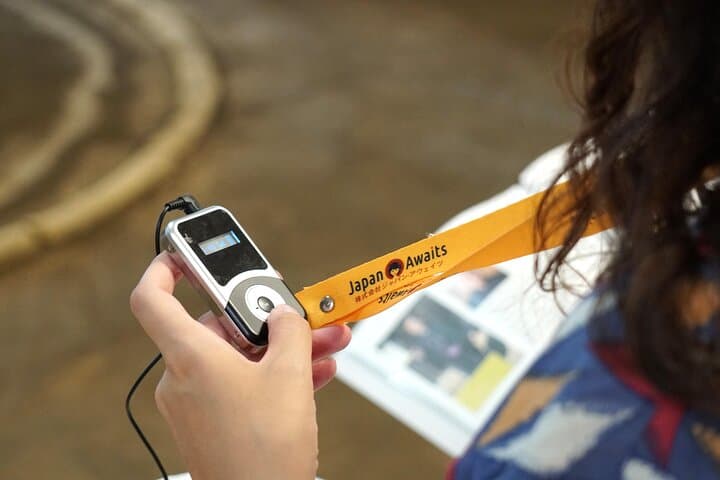
The low morning light slips across the dohyo as wrestlers move through ritual and repetition — a steady, physical meditation that fills the room with a sense of focused momentum. Visitors sit on cushions or low chairs, audio headsets crackling softly as an expert guide names techniques and explains the cadence of a sumo morning practice.
The low morning light slips across the dohyo as wrestlers move through ritual and repetition — a steady, physical meditation that fills the room with a sense of focused momentum. Visitors sit on cushions or low chairs, audio headsets crackling softly as an expert guide names techniques and explains the cadence of a sumo morning practice.
Sumo traces its roots to Shinto rites and the feudal era; the stable (heya) is both gym and household where lineage, rank and simple daily routines shape life. In Saitama and greater Tokyo, many stables occupy narrow blocks on the Kanto Plain, their wooden timbers and concrete floors absorbing generations of footsteps. The culture around sumo emphasizes respect: how to enter, where to sit, and why wrestlers perform specific rituals before practice.
This intimate four‑hour experience typically runs later than some tours — starting around 8:00 AM — and limits groups for clearer commentary, photo opportunities and a seat at a shared chanko nabe lunch. Expect close views of shiko (leg stamping), matawari (stretching) and spirited practice bouts, followed by casual conversation and tea with rikishi (wrestlers).
Practical notes: arrive 10 minutes early, silence phone flashes, and follow stable etiquette such as not showing the soles of your feet to the ring. Wear modest, comfortable clothing — knees and shoulders covered are appreciated — and bring a compact camera (no flash). The tour is wheelchair accessible with modest stair requirements; notify the operator in advance for seating needs. For a clear, respectful, and memorable introduction to Japan’s oldest ring, this visit balances cultural depth with easy logistics.