THE ADVENTURE COLLECTIVE® · Independent discovery and booking for outdoor travel

Spend four hours inside one of Rio’s legendary samba schools: visit the trophy room, meet different school segments, and learn basic percussion in a Bateria workshop. This hands-on session mixes cultural history with practical drumming instruction.
Spend four hours inside one of Rio’s legendary samba schools: visit the trophy room, meet different school segments, and learn basic percussion in a Bateria workshop. This hands-on session mixes cultural history with practical drumming instruction.
The workshop opens with the court’s door and the pulse: drums tuning, practiced hands, and the low hum of voices practicing calls. Participants step into a working samba school where trophies line a room and the Bateria stage waits—alive with rhythm that pushes you forward.
Verified experiences and guided adventures in the surrounding area.
Operated by gembatiuk · Rio de Janeiro, Rio de Janeiro
The workshop opens with the court’s door and the pulse: drums tuning, practiced hands, and the low hum of voices practicing calls. Participants step into a working samba school where trophies line a room and the Bateria stage waits—alive with rhythm that pushes you forward.
Acadêmicos do Salgueiro is one of Rio de Janeiro’s storied samba schools, shaped by decades of Carnival competition and Afro-Brazilian musical tradition. The tour visits the trophy room and different segments of the school, then moves to the Furious Drums Room for a focused mini-workshop on a percussion instrument common to the Bateria. Expect a short lecture on history and structure—how enredos (parade themes) and percussion sections move a whole neighborhood—and a close-up look at costume and float preparation.
The setting is urban but communal: concrete courtyards give way to color, and the sound of the drums becomes almost architectural. Cultural context is emphasized—how samba schools form neighborhood identity and social networks in Rio.
Practical notes: the session runs about four hours, is wheelchair accessible, and suitable for most fitness levels. Bring water, closed-toe shoes for standing and basic footwork, and an openness to follow Portuguese cues; instructors often translate or demonstrate. Photography is usually allowed during non-performance moments—ask first in the trophy room. This experience pairs well with an evening out at a local samba bar to hear the rhythms continue beyond the workshop.
easy.
4 hours.
Suitable for most fitness levels—light standing, clapping, and basic footwork; no prior experience required
Yes—sessions teach basic rhythms and instrument technique and are designed for people with no prior drumming experience.
The activity is suitable for most ages but not recommended for infants; organizers may require participant age information at booking.
No—many instructors demonstrate and use simple phrases; bringing a translation app or asking for basic English help is advised.
Yes—according to the listing the school’s court and most surfaces are wheelchair accessible; contact the operator if you have specific mobility needs.
Acadêmicos do Salgueiro grew into prominence through mid-20th-century Carnival competition and remains a central cultural institution reflecting Afro-Brazilian musical traditions.
Support the school by buying local merchandise and following venue rules; avoid single-use plastics and respect noise curfews in residential neighborhoods.
gembatiuk operates guided outdoor trips and adventures with an emphasis on safety, stewardship, and memorable experiences.

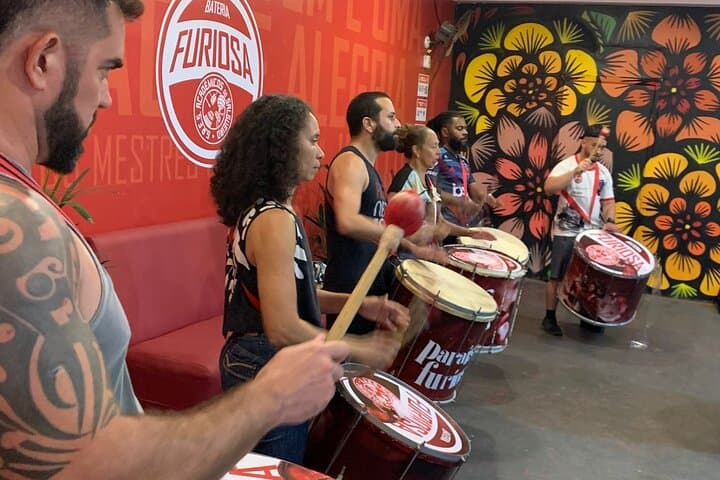
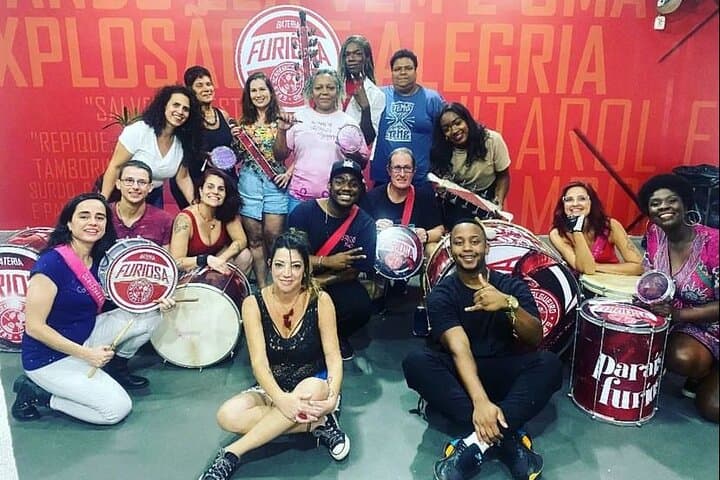
The workshop opens with the court’s door and the pulse: drums tuning, practiced hands, and the low hum of voices practicing calls. Participants step into a working samba school where trophies line a room and the Bateria stage waits—alive with rhythm that pushes you forward.
The workshop opens with the court’s door and the pulse: drums tuning, practiced hands, and the low hum of voices practicing calls. Participants step into a working samba school where trophies line a room and the Bateria stage waits—alive with rhythm that pushes you forward.
Acadêmicos do Salgueiro is one of Rio de Janeiro’s storied samba schools, shaped by decades of Carnival competition and Afro-Brazilian musical tradition. The tour visits the trophy room and different segments of the school, then moves to the Furious Drums Room for a focused mini-workshop on a percussion instrument common to the Bateria. Expect a short lecture on history and structure—how enredos (parade themes) and percussion sections move a whole neighborhood—and a close-up look at costume and float preparation.
The setting is urban but communal: concrete courtyards give way to color, and the sound of the drums becomes almost architectural. Cultural context is emphasized—how samba schools form neighborhood identity and social networks in Rio.
Practical notes: the session runs about four hours, is wheelchair accessible, and suitable for most fitness levels. Bring water, closed-toe shoes for standing and basic footwork, and an openness to follow Portuguese cues; instructors often translate or demonstrate. Photography is usually allowed during non-performance moments—ask first in the trophy room. This experience pairs well with an evening out at a local samba bar to hear the rhythms continue beyond the workshop.