THE ADVENTURE COLLECTIVE® · Independent discovery and booking for outdoor travel

Step beyond the mist of Victoria Falls and into a living village where maize is ground by hand, elders share stories, and simple skills are taught with warmth. This two-hour guided visit balances cultural meaning with practical access—ideal for travelers seeking connection beyond the viewpoint.
Step beyond the mist of Victoria Falls and into a living village where maize is ground by hand, elders share stories, and simple skills are taught with warmth. This two-hour guided visit balances cultural meaning with practical access—ideal for travelers seeking connection beyond the viewpoint.
You leave the thrum of tour buses and the spray-scent of the Falls and step onto a footpath where everyday life moves at a human pace. Children run ahead, a goat bleats a greeting, and a narrow dirt lane threads between round huts—smoke curling from a cooking fire that seems to mark time as much as it warms bread.
Verified experiences and guided adventures in the surrounding area.
Operated by Mr B · Victoria Falls, Matabeleland North
You leave the thrum of tour buses and the spray-scent of the Falls and step onto a footpath where everyday life moves at a human pace. Children run ahead, a goat bleats a greeting, and a narrow dirt lane threads between round huts—smoke curling from a cooking fire that seems to mark time as much as it warms bread.
The area around Victoria Falls has long been home to Tonga and related groups whose subsistence rhythms follow the Zambezi’s moods. Earthen huts, thatched roofs and hand-turned maize reflect building and foodways shaped by seasonal floods and savanna soils. Geologically, the nearby basalt and sandstone escarpments that form the Falls also shape local soils and water access, influencing where fields and homesteads sit.
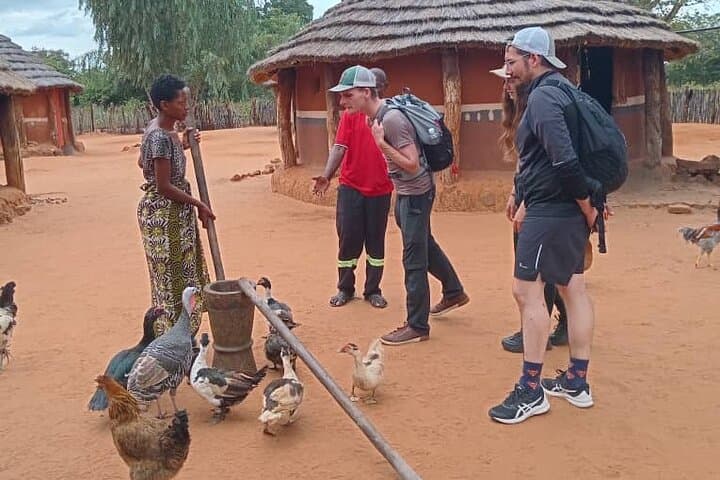
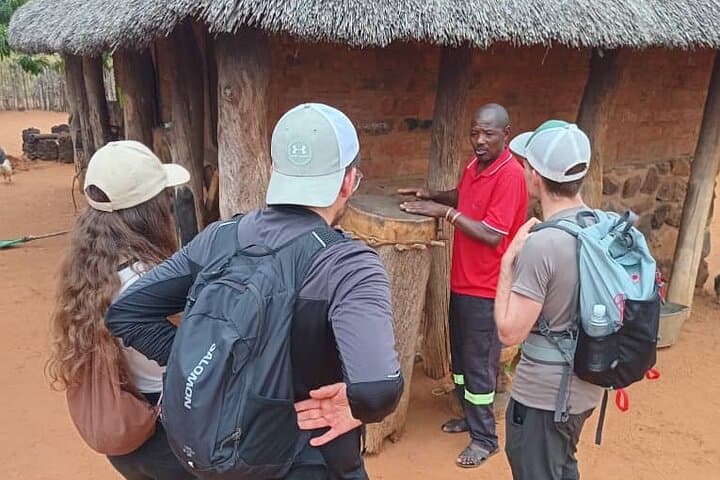
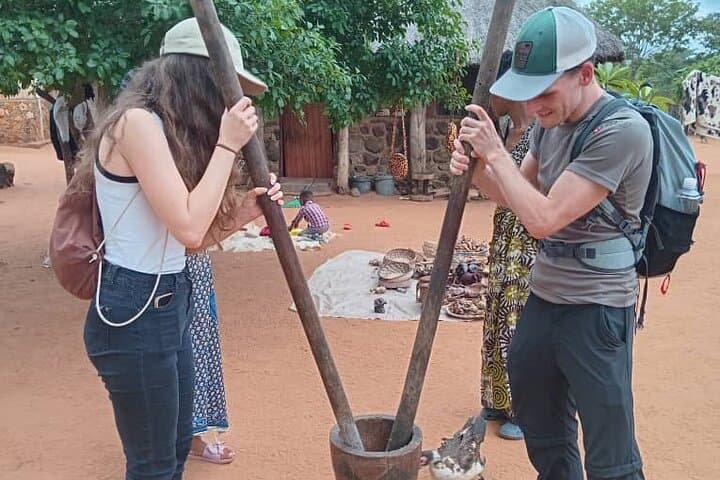
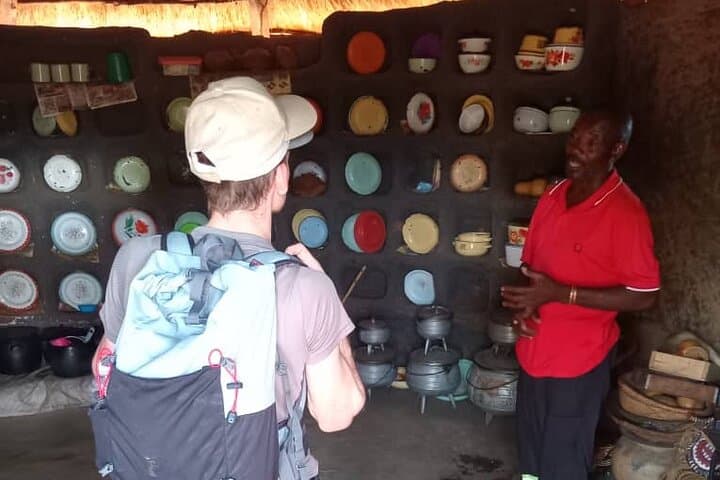
On a two-hour guided visit you’ll grind maize, try basket weaving and hear elders recount local healing practices and stories tied to place. This is not a staged performance but a chance for respectful exchange; small group sizes preserve privacy and authenticity.
Practical notes: wear sturdy shoes for uneven paths, bring sun protection and a refillable water bottle—the tour provides bottled water but shade is limited. Expect light physical activity and open-air conditions; children and wheelchair users can often participate, but ask about specific mobility needs when booking. Timing mid-morning avoids the hottest hours and increases the chance of seeing daily chores and a communal dance when in season.
Leave space in your itinerary to visit a nearby craft market and the Zambezi foreshore—the village visit gives context to the landscape you came to see, humanizing the thunder of the Falls with conversation, craft and quiet rituals.
easy.
2 hours.
Suitable for most fitness levels; involves short walks on uneven ground and occasional crouching for demonstrations.
The guided visit is approximately two hours from arrival to return and typically includes demonstrations and time to speak with residents.
The tour listing notes stroller and wheelchair accessibility, but availability can vary by specific homestead—notify the operator in advance to confirm access and support.
A light seasonal snack or bottled water is commonly offered, but full meals are not included; bring snacks if you need them.
Many visits stop near local craftmakers; small purchases support host families, so carry local cash and ask if purchases support the household directly.
The villages around the Falls are traditionally occupied by Tonga-speaking communities whose agricultural and fishing practices have adapted to the Zambezi’s seasonal cycles for generations.
Tours limit group sizes and encourage visitors to avoid single-use plastics and to purchase crafts directly from makers to ensure benefits flow to local households.
Mr B operates guided outdoor trips and adventures with an emphasis on safety, stewardship, and memorable experiences.
You leave the thrum of tour buses and the spray-scent of the Falls and step onto a footpath where everyday life moves at a human pace. Children run ahead, a goat bleats a greeting, and a narrow dirt lane threads between round huts—smoke curling from a cooking fire that seems to mark time as much as it warms bread.
You leave the thrum of tour buses and the spray-scent of the Falls and step onto a footpath where everyday life moves at a human pace. Children run ahead, a goat bleats a greeting, and a narrow dirt lane threads between round huts—smoke curling from a cooking fire that seems to mark time as much as it warms bread.
The area around Victoria Falls has long been home to Tonga and related groups whose subsistence rhythms follow the Zambezi’s moods. Earthen huts, thatched roofs and hand-turned maize reflect building and foodways shaped by seasonal floods and savanna soils. Geologically, the nearby basalt and sandstone escarpments that form the Falls also shape local soils and water access, influencing where fields and homesteads sit.
On a two-hour guided visit you’ll grind maize, try basket weaving and hear elders recount local healing practices and stories tied to place. This is not a staged performance but a chance for respectful exchange; small group sizes preserve privacy and authenticity.
Practical notes: wear sturdy shoes for uneven paths, bring sun protection and a refillable water bottle—the tour provides bottled water but shade is limited. Expect light physical activity and open-air conditions; children and wheelchair users can often participate, but ask about specific mobility needs when booking. Timing mid-morning avoids the hottest hours and increases the chance of seeing daily chores and a communal dance when in season.
Leave space in your itinerary to visit a nearby craft market and the Zambezi foreshore—the village visit gives context to the landscape you came to see, humanizing the thunder of the Falls with conversation, craft and quiet rituals.