THE ADVENTURE COLLECTIVE® · Independent discovery and booking for outdoor travel

Spend a day living alongside Maasai families outside Nairobi—learning beadwork, milking goats, lighting fires the traditional way and joining in communal dance. This private cultural visit blends hands-on participation with practical insights into local life and seasonal markets.
Spend a day living alongside Maasai families outside Nairobi—learning beadwork, milking goats, lighting fires the traditional way and joining in communal dance. This private cultural visit blends hands-on participation with practical insights into local life and seasonal markets.
You step from the van into heat that smells faintly of smoke and earth; red clay paths lead to round manyattas ringed with low thorn fences and the low profile of acacia trees frames the horizon. The air carries a rhythm of conversation, goat bells and the high, clear chant of Maasai song that will punctuate the day.
Verified experiences and guided adventures in the surrounding area.
Operated by Gemfinders Safaris · Nairobi, Nairobi County
You step from the van into heat that smells faintly of smoke and earth; red clay paths lead to round manyattas ringed with low thorn fences and the low profile of acacia trees frames the horizon. The air carries a rhythm of conversation, goat bells and the high, clear chant of Maasai song that will punctuate the day.
This is a living pastoral landscape shaped by geology and migration—sparse soils over volcanic highland and escarpment country where people have grazed cattle for generations. The Maasai are Nilotic pastoralists whose social systems, beadwork and songs reflect a history of mobility, livestock economy and negotiated French colonial-era borders that left communities on both sides of modern towns and protected areas.
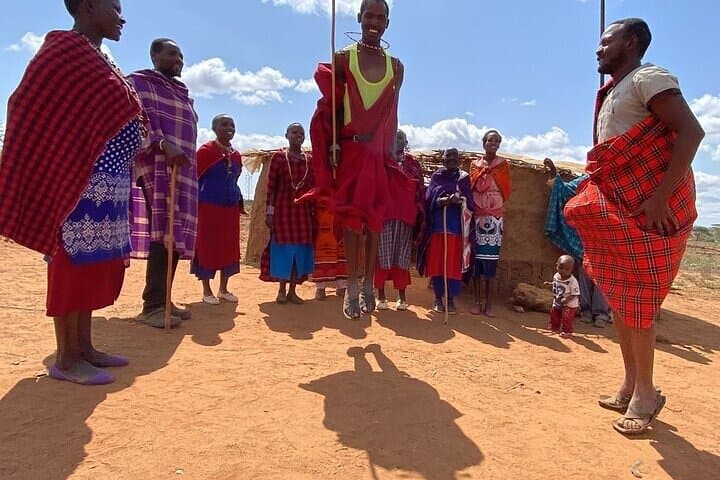
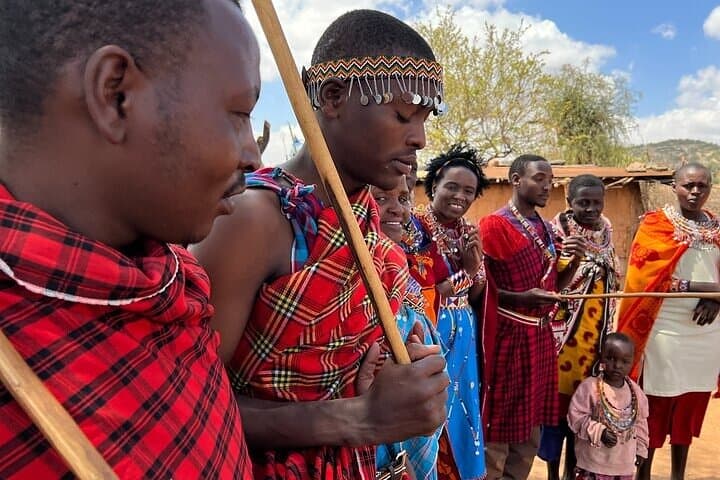
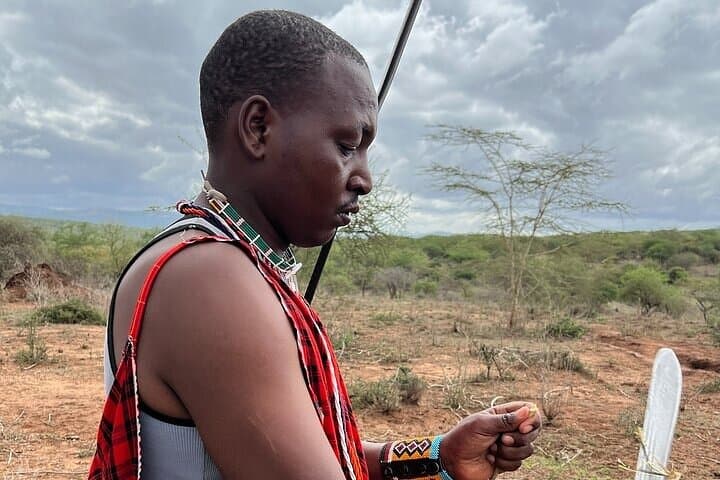
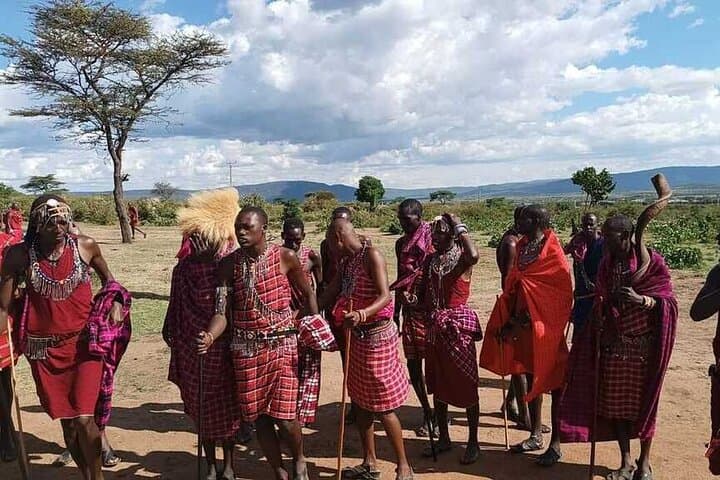
On the visit you’ll try traditional fire-making with sticks and cow dung, learn bead-string patterns that encode age-set and family, milk a goat, cook ugali in a manyatta and join the jumping dance. If your visit coincides with market day (often Monday or Friday) you’ll see livestock trading and local herbal medicine stalls.
Practical note: the program is typically a private, half- to full-day excursion from Nairobi (6–7 hours). Wear closed shoes for uneven courtyards, bring cash for handcrafted beadwork, and ask before photographing people—respect and consent are essential. Hydrate before and during the visit; shade is limited midday. For accessibility, hosts often accommodate but pathways are unpaved. This experience is best approached with curiosity, clear photography etiquette and a readiness to listen: the most valuable souvenir is a better understanding of daily life here, not just a photograph.
easy.
6–7 hours.
Light walking on uneven ground; suitable for most fitness levels but not for those with serious mobility limitations
Yes—private transportation from Nairobi is included in the standard tour price.
Yes; the tour is family-friendly but children should be supervised around animals and open fires.
This tour emphasizes interaction with community members who demonstrate and share everyday practices, not a staged tourist performance.
Hosts often accommodate mobility needs, but paths and surfaces are unpaved—contact the operator to confirm arrangements in advance.
The Maasai are semi-nomadic pastoralists whose social structure and bead traditions evolved to manage cattle-based livelihoods across the East African highlands and rangelands.
Sustainable visits support household incomes and encourage cultural preservation; avoid buying mass-produced goods and ask hosts how proceeds are shared to ensure tourism benefits communities.
Gemfinders Safaris operates guided outdoor trips and adventures with an emphasis on safety, stewardship, and memorable experiences.
You step from the van into heat that smells faintly of smoke and earth; red clay paths lead to round manyattas ringed with low thorn fences and the low profile of acacia trees frames the horizon. The air carries a rhythm of conversation, goat bells and the high, clear chant of Maasai song that will punctuate the day.
You step from the van into heat that smells faintly of smoke and earth; red clay paths lead to round manyattas ringed with low thorn fences and the low profile of acacia trees frames the horizon. The air carries a rhythm of conversation, goat bells and the high, clear chant of Maasai song that will punctuate the day.
This is a living pastoral landscape shaped by geology and migration—sparse soils over volcanic highland and escarpment country where people have grazed cattle for generations. The Maasai are Nilotic pastoralists whose social systems, beadwork and songs reflect a history of mobility, livestock economy and negotiated French colonial-era borders that left communities on both sides of modern towns and protected areas.
On the visit you’ll try traditional fire-making with sticks and cow dung, learn bead-string patterns that encode age-set and family, milk a goat, cook ugali in a manyatta and join the jumping dance. If your visit coincides with market day (often Monday or Friday) you’ll see livestock trading and local herbal medicine stalls.
Practical note: the program is typically a private, half- to full-day excursion from Nairobi (6–7 hours). Wear closed shoes for uneven courtyards, bring cash for handcrafted beadwork, and ask before photographing people—respect and consent are essential. Hydrate before and during the visit; shade is limited midday. For accessibility, hosts often accommodate but pathways are unpaved. This experience is best approached with curiosity, clear photography etiquette and a readiness to listen: the most valuable souvenir is a better understanding of daily life here, not just a photograph.