THE ADVENTURE COLLECTIVE® · Independent discovery and booking for outdoor travel

Lift from Cairns and see the Great Barrier Reef unfold beneath you: coral gardens, tiny sand cays and marine life in a vivid 30‑minute helicopter loop. This scenic flight packs history, geology and wildlife spotting into a short, photo-ready airborne tour.
Lift from Cairns and see the Great Barrier Reef unfold beneath you: coral gardens, tiny sand cays and marine life in a vivid 30‑minute helicopter loop. This scenic flight packs history, geology and wildlife spotting into a short, photo-ready airborne tour.
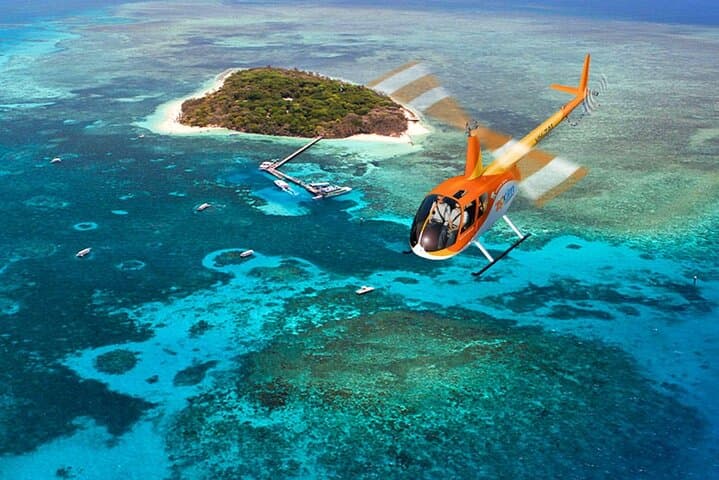
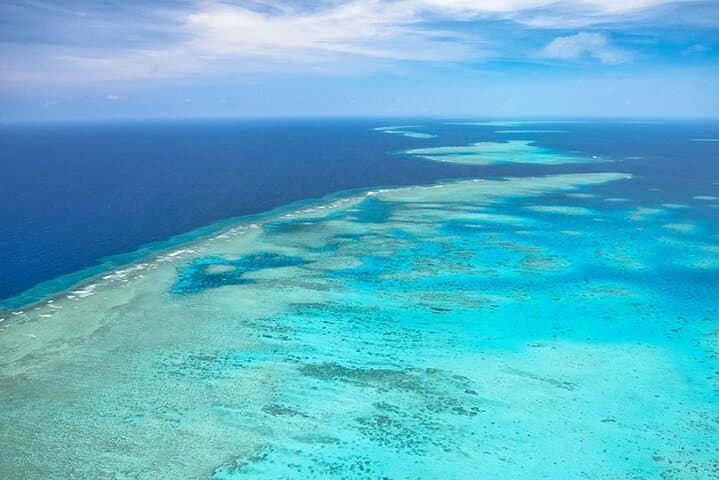
A low thrum builds beneath you as the helicopter lifts from Cairns Airport, the city’s grid sliding away while Trinity Inlet and the green knives of the coastal ranges pull into view. In thirty minutes the mainland becomes a receding margin and the Great Barrier Reef unfolds: mosaic patches of turquoise, Vlasoff Cay’s tiny white dot, and the rainforest-dark silhouette of Green Island—a six-thousand-year-old coral sand cay with its own pocket of native trees.
Verified experiences and guided adventures in the surrounding area.
Operated by Zoom Helicopters · Cairns, Queensland
A low thrum builds beneath you as the helicopter lifts from Cairns Airport, the city’s grid sliding away while Trinity Inlet and the green knives of the coastal ranges pull into view. In thirty minutes the mainland becomes a receding margin and the Great Barrier Reef unfolds: mosaic patches of turquoise, Vlasoff Cay’s tiny white dot, and the rainforest-dark silhouette of Green Island—a six-thousand-year-old coral sand cay with its own pocket of native trees.
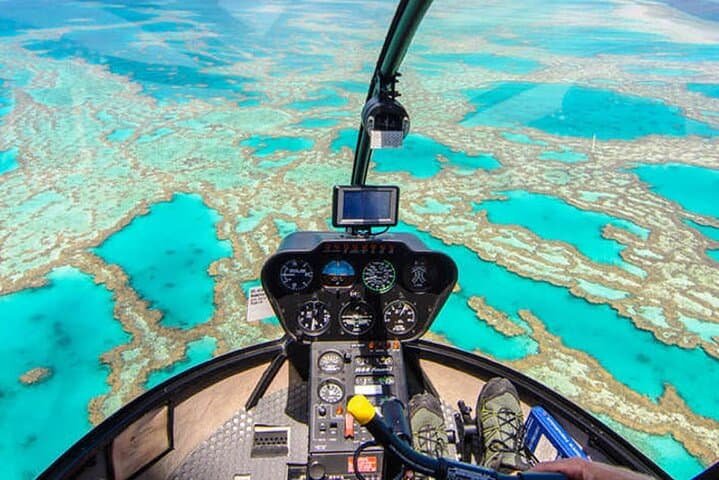
The flight traces visible history: the rubble of WWII defences at False Cape, the weathered headlands of Cape Grafton, and the traditional sea-country of the Gimuy Walubara Yidinji people along these shores. Geologically the reef is living carbonate—coral atop a continental shelf—its shapes dictated by currents and tidal wash. From the air you can read reefs like maps, spotting turtle beds, ray lanes and shark gullies.
Expect sharp, photographic views and informative in-flight commentary that points out biological and cultural highlights. Wildlife sightings depend on season: humpback whales pass north between July and November; turtles and rays are year-round possibilities.
Practicalities: arrive early at the General Aviation entrance, bring a camera with a polarizer, and stow loose items—rotor wash is real. Weight and safety briefings are standard; infants may sit on laps or use specialized seats. Flights may cancel in bad weather; operators adhere to marine park rules, so respect protected areas.
In half an hour you’ll gain a perspective that boats can’t offer: scale, pattern and movement across one of the planet’s largest living systems—quick, vivid and unmissable.
easy.
30 minutes.
Minimal fitness required; suitable for most travelers who can board a helicopter
The flight is 30 minutes and follows the inner edge of the Great Barrier Reef, passing Green Island, Arlington Reef, Vlasoff Cay and Upolu Cay with commentary.
Infants must sit on an adult’s lap; specialized infant seats are available—notify the operator when booking.
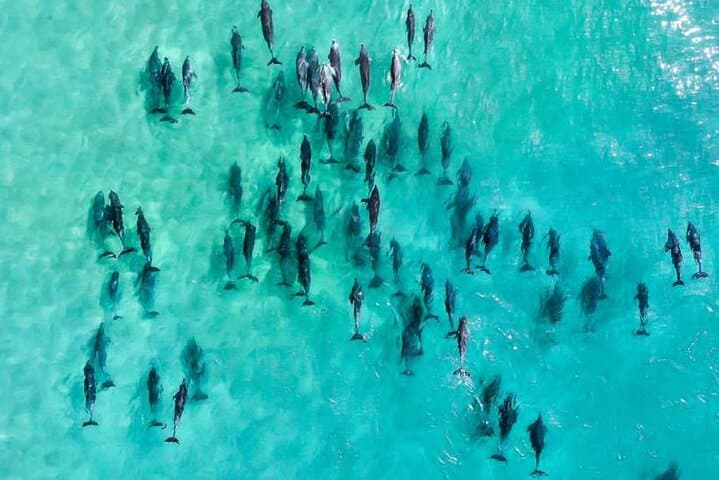
Turtles, rays and sharks are commonly seen year-round; humpback whales are most likely between July and November.
Bookings request passenger weights for balance; heavier passengers or special needs should disclose details at booking to confirm availability.
The flight path passes WWII coastal defences at False Cape and long-occupied Indigenous sea-country along the Trinity Inlet and Cape Grafton.
Flights operate above the Great Barrier Reef Marine Park; avoid dropping litter, follow viewing guidelines, and choose operators that support reef protection efforts.
Zoom Helicopters operates guided outdoor trips and adventures with an emphasis on safety, stewardship, and memorable experiences.
A low thrum builds beneath you as the helicopter lifts from Cairns Airport, the city’s grid sliding away while Trinity Inlet and the green knives of the coastal ranges pull into view. In thirty minutes the mainland becomes a receding margin and the Great Barrier Reef unfolds: mosaic patches of turquoise, Vlasoff Cay’s tiny white dot, and the rainforest-dark silhouette of Green Island—a six-thousand-year-old coral sand cay with its own pocket of native trees.
A low thrum builds beneath you as the helicopter lifts from Cairns Airport, the city’s grid sliding away while Trinity Inlet and the green knives of the coastal ranges pull into view. In thirty minutes the mainland becomes a receding margin and the Great Barrier Reef unfolds: mosaic patches of turquoise, Vlasoff Cay’s tiny white dot, and the rainforest-dark silhouette of Green Island—a six-thousand-year-old coral sand cay with its own pocket of native trees.
The flight traces visible history: the rubble of WWII defences at False Cape, the weathered headlands of Cape Grafton, and the traditional sea-country of the Gimuy Walubara Yidinji people along these shores. Geologically the reef is living carbonate—coral atop a continental shelf—its shapes dictated by currents and tidal wash. From the air you can read reefs like maps, spotting turtle beds, ray lanes and shark gullies.
Expect sharp, photographic views and informative in-flight commentary that points out biological and cultural highlights. Wildlife sightings depend on season: humpback whales pass north between July and November; turtles and rays are year-round possibilities.
Practicalities: arrive early at the General Aviation entrance, bring a camera with a polarizer, and stow loose items—rotor wash is real. Weight and safety briefings are standard; infants may sit on laps or use specialized seats. Flights may cancel in bad weather; operators adhere to marine park rules, so respect protected areas.
In half an hour you’ll gain a perspective that boats can’t offer: scale, pattern and movement across one of the planet’s largest living systems—quick, vivid and unmissable.