THE ADVENTURE COLLECTIVE® · Independent discovery and booking for outdoor travel

Join a full-day Injalak Hill tour from Jabiru led by local Indigenous guides to see world-class rock art and panoramic floodplain views. This cultural walk combines storytelling, geology, and practical fieldcraft—best in the dry season.
Join a full-day Injalak Hill tour from Jabiru led by local Indigenous guides to see world-class rock art and panoramic floodplain views. This cultural walk combines storytelling, geology, and practical fieldcraft—best in the dry season.
The morning opens with a cool, dusty road out of Jabiru and a minivan pushing west toward Arnhem Land, the horizon a low band of escarpment and monsoon country. On arrival at Injalak Hill, local Indigenous guides lead the group across warm sandstone slabs, their voices anchoring stories to painted figures and hand stencils that lean against the sky like a living map.
Verified experiences and guided adventures in the surrounding area.
Operated by Top End Day Tours · Jabiru, Northern Territory
The morning opens with a cool, dusty road out of Jabiru and a minivan pushing west toward Arnhem Land, the horizon a low band of escarpment and monsoon country. On arrival at Injalak Hill, local Indigenous guides lead the group across warm sandstone slabs, their voices anchoring stories to painted figures and hand stencils that lean against the sky like a living map.
Injalak Hill sits on Arnhem Land country, where rock shelter paintings span thousands of years and record hunting rites, ancestral beings and seasonal life. Geologically, the site is weathered sandstone and quartzite, carved by wind and occasional wet-season torrents; culturally, it remains under traditional ownership and is interpreted by custodians who maintain access and meaning.
Visitors should expect uneven ground, short steep scrambles between galleries, and long vantage views over floodplains toward Kakadu. The tour moves at a measured pace—time is given to listen, photograph, and ask questions—so the experience is as much conversation as walking.
Practically, the day is long (roughly 7–8 hours including transfers). Wear grippy shoes, bring at least 1–2 liters of water, sun protection and insect repellent; carry cash for the local arts centre. The dry season (May–October) offers the most reliable access and clear skies; the wet season can close roads and make Arnhem Land impassable.
Expect a culturally rich, low-impact excursion: an opportunity to learn from traditional owners while walking among some of Australia's most important rock art.
moderate.
7–8 hours.
Moderate fitness and agility for short steep scrambles and uneven ground; not suitable for those with serious mobility limits.
The full-day tour is about 7–8 hours including transport from Jabiru; it typically includes a guided walk, lunch, snacks, tea/coffee, national park fees and an arts centre stop.
Children must be accompanied by an adult; the walk crosses uneven ground and short scrambles so it is not recommended for people with serious mobility issues or very young children.
The dry season (May–October) offers reliable access, lower humidity and clearer roads—wet-season rains (Nov–Apr) can close access to Arnhem Land.
Yes—there is an Injalak Arts and Crafts Centre where visitors can purchase works directly from community artists; bring cash in case electronic payments are limited.
Injalak's galleries contain paintings and stencils linked to long-standing Yolngu and Kunwinjku traditions; many panels record generations of cultural practice and seasonal knowledge.
Tours operate under permits and local custodianship; visitors are asked to stay on guided routes, avoid touching art, and support the arts centre to help fund community stewardship.
Top End Day Tours operates guided outdoor trips and adventures with an emphasis on safety, stewardship, and memorable experiences.
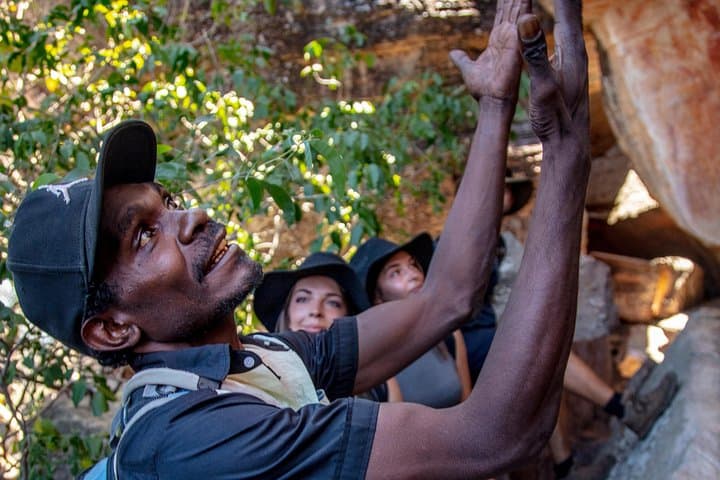
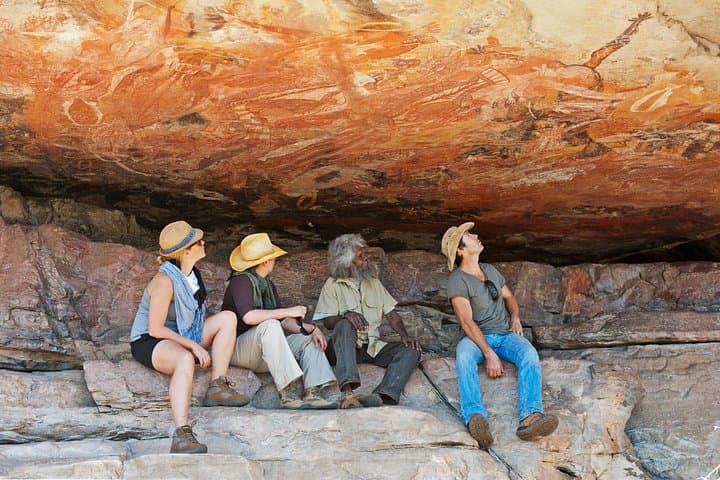
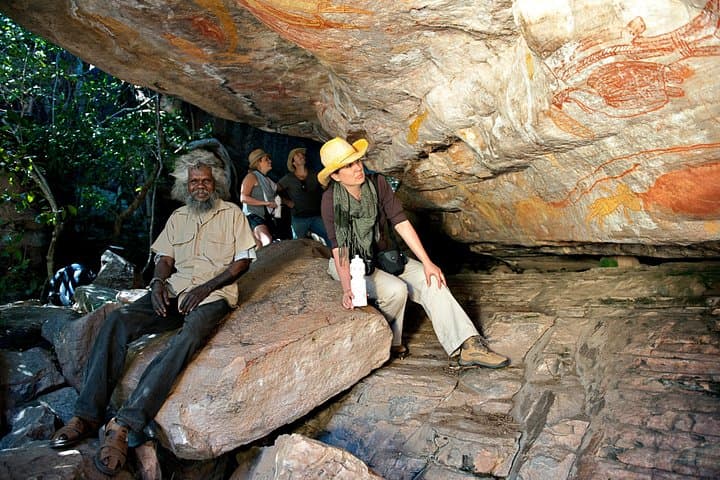
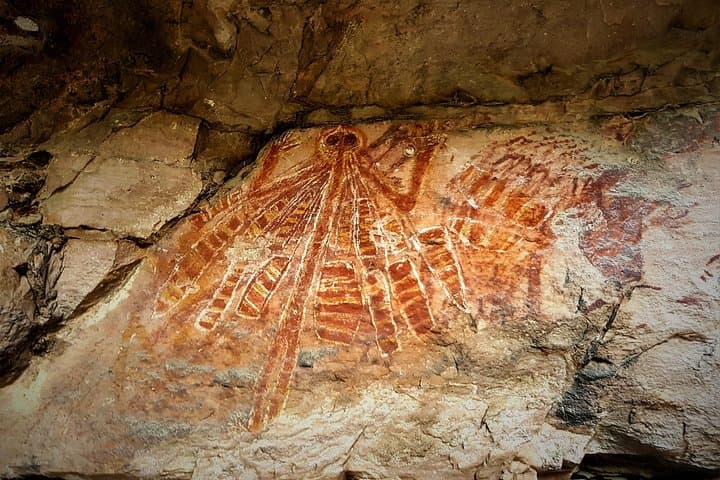
The morning opens with a cool, dusty road out of Jabiru and a minivan pushing west toward Arnhem Land, the horizon a low band of escarpment and monsoon country. On arrival at Injalak Hill, local Indigenous guides lead the group across warm sandstone slabs, their voices anchoring stories to painted figures and hand stencils that lean against the sky like a living map.
The morning opens with a cool, dusty road out of Jabiru and a minivan pushing west toward Arnhem Land, the horizon a low band of escarpment and monsoon country. On arrival at Injalak Hill, local Indigenous guides lead the group across warm sandstone slabs, their voices anchoring stories to painted figures and hand stencils that lean against the sky like a living map.
Injalak Hill sits on Arnhem Land country, where rock shelter paintings span thousands of years and record hunting rites, ancestral beings and seasonal life. Geologically, the site is weathered sandstone and quartzite, carved by wind and occasional wet-season torrents; culturally, it remains under traditional ownership and is interpreted by custodians who maintain access and meaning.
Visitors should expect uneven ground, short steep scrambles between galleries, and long vantage views over floodplains toward Kakadu. The tour moves at a measured pace—time is given to listen, photograph, and ask questions—so the experience is as much conversation as walking.
Practically, the day is long (roughly 7–8 hours including transfers). Wear grippy shoes, bring at least 1–2 liters of water, sun protection and insect repellent; carry cash for the local arts centre. The dry season (May–October) offers the most reliable access and clear skies; the wet season can close roads and make Arnhem Land impassable.
Expect a culturally rich, low-impact excursion: an opportunity to learn from traditional owners while walking among some of Australia's most important rock art.