THE ADVENTURE COLLECTIVE® · Independent discovery and booking for outdoor travel

Float a personal inflatable kayak down a scenic stretch of the Upper Colorado River. This half‑day guided trip mixes easy rapids, sandy shore stops, and wildlife viewing — ideal for first‑timers and paddlers seeking riverplay.
Float a personal inflatable kayak down a scenic stretch of the Upper Colorado River. This half‑day guided trip mixes easy rapids, sandy shore stops, and wildlife viewing — ideal for first‑timers and paddlers seeking riverplay.
The river arrives like a moving room: grassed meadows at the edge, ranch fences receding, and a channel that narrows to expose steep, weathered canyon walls. You push off from a boathouse near Bond, inflate your ducky, and let the Colorado’s current take the lead — now playful, now purposeful — as guides point out sandbars where geese brood and cliff bands that hide bighorn sheep.
Verified experiences and guided adventures in the surrounding area.
Operated by Colorado Adventure Guides · Bond, Colorado
The river arrives like a moving room: grassed meadows at the edge, ranch fences receding, and a channel that narrows to expose steep, weathered canyon walls. You push off from a boathouse near Bond, inflate your ducky, and let the Colorado’s current take the lead — now playful, now purposeful — as guides point out sandbars where geese brood and cliff bands that hide bighorn sheep.
This stretch of the Upper Colorado sits on the edge of ranch country and mountain geology shaped by uplift and repeated spring runoff. The river corridor has long supported local ranching and seasonal trout runs; its cliffs are Pleistocene fluvial terraces cut by centuries of flow. Cultural traces are simple: irrigation towers, old homesteads and a river economy that shifted from transport to recreation.
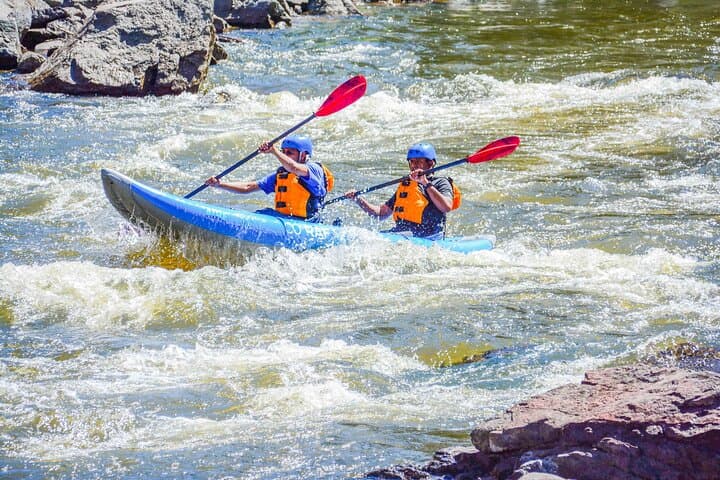
Expect steady Class I–II water with occasional Class III at high flows (mid‑June to early July). Trips run about 3–3.5 hours; guides handle logistics and safety briefings, and they shuttle boats to the put‑in. Inflatable kayaks (single or tandem) offer a personal ride: you steer your craft but follow the guide’s lines.
Practical advice: wear a splash jacket provided over quick‑dry layers, secure footwear, and a PFD at all times. Hydrate and bring sunscreen and a small dry bag for essentials. If you want bigger water, plan for peak runoff; for mellower paddling, book late summer or fall. The Upper Colorado here is straightforward to navigate but demands attention to river signals — current, eddies, and the occasional technical rapid.
moderate.
3–3.5 hours.
Moderate fitness: able to paddle intermittently, get in/out of the boat, and walk short uneven terrain
Participants must be at least 12 years old to paddle a ducky; younger guests may be able to join on guided rafts — check with the operator.
No — guides give basic paddling instruction and lead the run; basic fitness and willingness to follow commands are required.
The operator supplies a PFD, splash jacket, helmet when appropriate, and all kayaking safety gear; bring your own footwear and layers.
The trip is roughly 3–3.5 hours; meet at the boathouse (Colorado Rafting Company, Rancho Del Rio, 4199 Trough Road, Bond, CO) — confirm exact meetup details with the operator when you book.
This corridor reflects a mix of ranching and river transport history; over the 20th century recreation grew as roads and outfitter services expanded.
Stay on designated launch and exit points to protect riparian vegetation; pack out trash and avoid disturbing nesting birds or beaver lodges.
Colorado Adventure Guides operates guided outdoor trips and adventures with an emphasis on safety, stewardship, and memorable experiences.
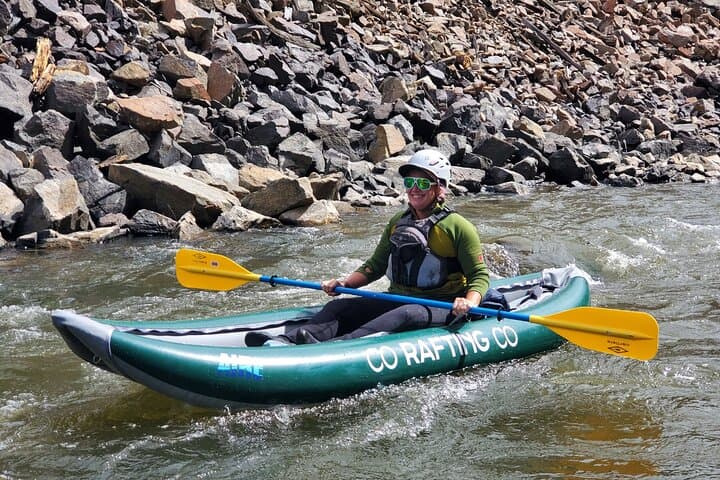
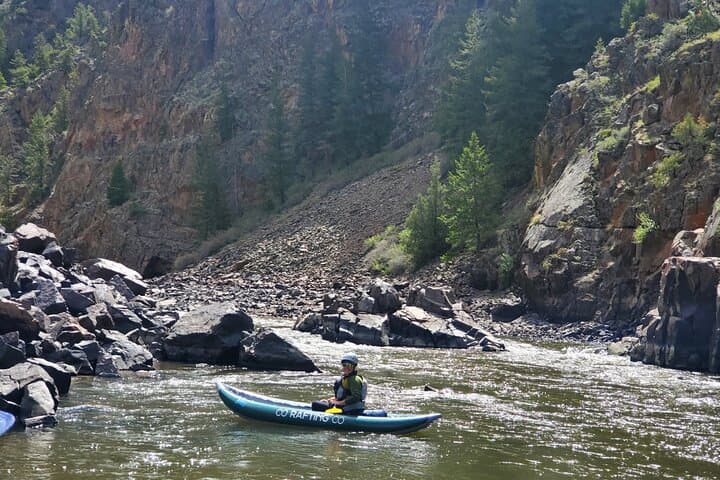
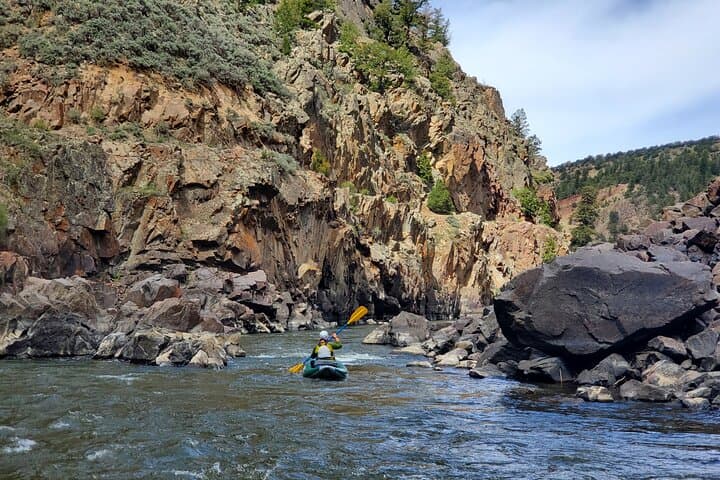
The river arrives like a moving room: grassed meadows at the edge, ranch fences receding, and a channel that narrows to expose steep, weathered canyon walls. You push off from a boathouse near Bond, inflate your ducky, and let the Colorado’s current take the lead — now playful, now purposeful — as guides point out sandbars where geese brood and cliff bands that hide bighorn sheep.
The river arrives like a moving room: grassed meadows at the edge, ranch fences receding, and a channel that narrows to expose steep, weathered canyon walls. You push off from a boathouse near Bond, inflate your ducky, and let the Colorado’s current take the lead — now playful, now purposeful — as guides point out sandbars where geese brood and cliff bands that hide bighorn sheep.
This stretch of the Upper Colorado sits on the edge of ranch country and mountain geology shaped by uplift and repeated spring runoff. The river corridor has long supported local ranching and seasonal trout runs; its cliffs are Pleistocene fluvial terraces cut by centuries of flow. Cultural traces are simple: irrigation towers, old homesteads and a river economy that shifted from transport to recreation.
Expect steady Class I–II water with occasional Class III at high flows (mid‑June to early July). Trips run about 3–3.5 hours; guides handle logistics and safety briefings, and they shuttle boats to the put‑in. Inflatable kayaks (single or tandem) offer a personal ride: you steer your craft but follow the guide’s lines.
Practical advice: wear a splash jacket provided over quick‑dry layers, secure footwear, and a PFD at all times. Hydrate and bring sunscreen and a small dry bag for essentials. If you want bigger water, plan for peak runoff; for mellower paddling, book late summer or fall. The Upper Colorado here is straightforward to navigate but demands attention to river signals — current, eddies, and the occasional technical rapid.