THE ADVENTURE COLLECTIVE® · Independent discovery and booking for outdoor travel

Float without jumping from a plane at iFLY Chicago–Rosemont. This two-flight indoor skydiving session near O’Hare pairs expert instruction with wall-to-wall airflow that simulates freefall.
Float without jumping from a plane at iFLY Chicago–Rosemont. This two-flight indoor skydiving session near O’Hare pairs expert instruction with wall-to-wall airflow that simulates freefall.
You step into a glass cylinder and the room rearranges itself around sound — a steady thunder that becomes the very thing lifting you. In Rosemont, a ten-minute drive from O’Hare’s runways, iFLY recreates freefall inside an 800-horsepower vertical wind tunnel; the air is the partner here, a push that holds you aloft while an instructor shapes each body angle.
Verified experiences and guided adventures in the surrounding area.
Operated by iFLY Indoor Skydiving · Rosemont, Illinois
You step into a glass cylinder and the room rearranges itself around sound — a steady thunder that becomes the very thing lifting you. In Rosemont, a ten-minute drive from O’Hare’s runways, iFLY recreates freefall inside an 800-horsepower vertical wind tunnel; the air is the partner here, a push that holds you aloft while an instructor shapes each body angle.
Vertical wind tunnels began as training tools for military and sport skydivers, and in recent decades commercial facilities translated that tech into an accessible rush for city-dwellers. Rosemont’s tunnel sits in a flat, urban plain where asphalt and hotel lights replace mountain ridgelines; the local culture tilts toward entertainment and convenience, with arena shows and outlet shopping a short walk away.
Expect a concise choreography: a pre-flight briefing, fitted helmet and flight suit, then two one-minute solo flights each guided by an instructor. The wind climbs to 130–175 mph to simulate terminal velocity; you’ll feel the airflow press and steady you, not unlike a strong river that refuses to let you sink. Staff video and a certificate often come with the session, and groups rotate through efficiently — arrive early.
Practicalities matter: wear snug lace-up sneakers and clothes you can move in, disclose medical restrictions, and note the facility’s weight and age limits. Flights suit families and first-timers as young as three, but anyone with neck, back, or heart issues should sit this one out. Book ahead for peak evenings; midweek mornings are calmer. Indoor skydiving is short on logistics but long on adrenaline — it’s freefall distilled to minutes, repeatable and reliably safe when you follow the instructor’s cues.
easy.
75 minutes total (flight time: 2×60 seconds).
Good for nearly all fitness levels; basic mobility and ability to follow instructor cues required
The full session runs about 75 minutes from check-in to certificate; actual flight time includes two one-minute flights per person.
Minimum age is typically 3 years; maximum allowed weight is generally 300 lbs, with additional evaluation for 260–300 lb guests.
No experience is required — certified instructors provide training and one-on-one guidance in the tunnel.
People with recent neck, back, shoulder, heart issues, or women who are pregnant cannot fly; always disclose medical history at check-in.
Commercial indoor skydiving evolved from mid-20th-century wind tunnel research used by military and competitive skydivers; facilities like iFLY adapted that technology for public experiences.
Facilities use large amounts of electricity to run high-powered fans; guests can help reduce waste by avoiding single-use plastics and following facility recycling rules.
iFLY Indoor Skydiving operates guided outdoor trips and adventures with an emphasis on safety, stewardship, and memorable experiences.
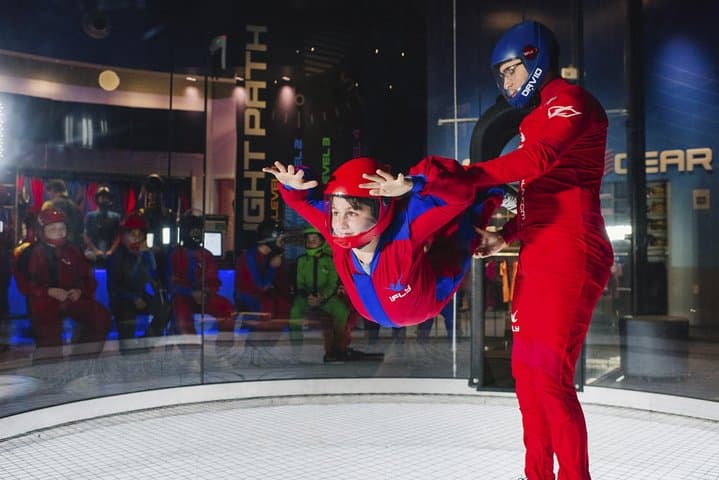
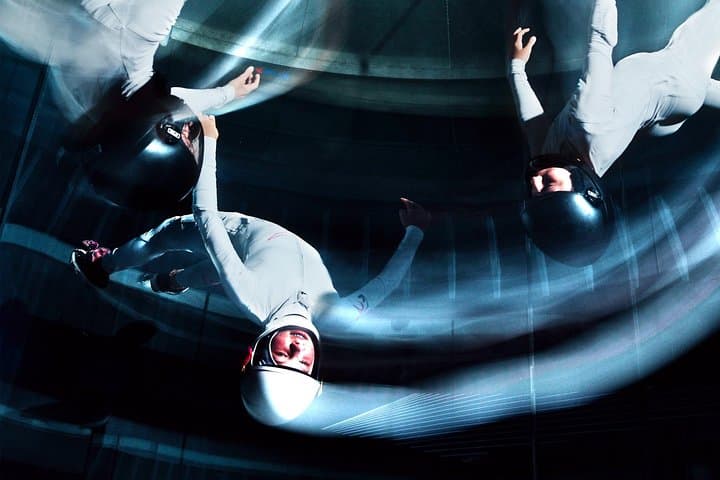
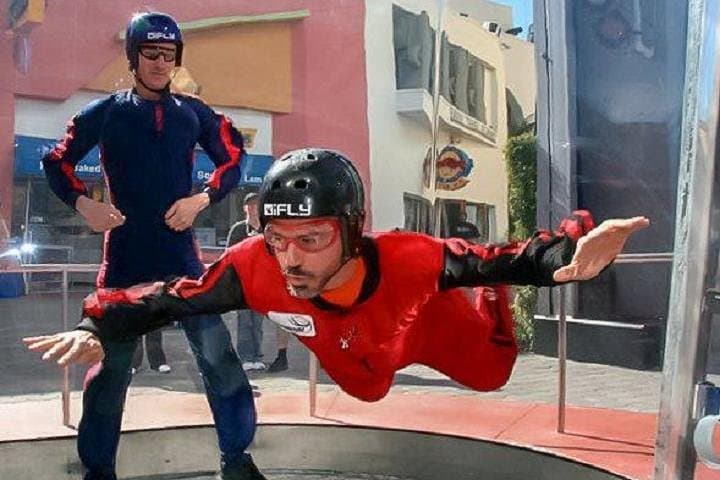

You step into a glass cylinder and the room rearranges itself around sound — a steady thunder that becomes the very thing lifting you. In Rosemont, a ten-minute drive from O’Hare’s runways, iFLY recreates freefall inside an 800-horsepower vertical wind tunnel; the air is the partner here, a push that holds you aloft while an instructor shapes each body angle.
You step into a glass cylinder and the room rearranges itself around sound — a steady thunder that becomes the very thing lifting you. In Rosemont, a ten-minute drive from O’Hare’s runways, iFLY recreates freefall inside an 800-horsepower vertical wind tunnel; the air is the partner here, a push that holds you aloft while an instructor shapes each body angle.
Vertical wind tunnels began as training tools for military and sport skydivers, and in recent decades commercial facilities translated that tech into an accessible rush for city-dwellers. Rosemont’s tunnel sits in a flat, urban plain where asphalt and hotel lights replace mountain ridgelines; the local culture tilts toward entertainment and convenience, with arena shows and outlet shopping a short walk away.
Expect a concise choreography: a pre-flight briefing, fitted helmet and flight suit, then two one-minute solo flights each guided by an instructor. The wind climbs to 130–175 mph to simulate terminal velocity; you’ll feel the airflow press and steady you, not unlike a strong river that refuses to let you sink. Staff video and a certificate often come with the session, and groups rotate through efficiently — arrive early.
Practicalities matter: wear snug lace-up sneakers and clothes you can move in, disclose medical restrictions, and note the facility’s weight and age limits. Flights suit families and first-timers as young as three, but anyone with neck, back, or heart issues should sit this one out. Book ahead for peak evenings; midweek mornings are calmer. Indoor skydiving is short on logistics but long on adrenaline — it’s freefall distilled to minutes, repeatable and reliably safe when you follow the instructor’s cues.